ERBIL, Kurdistan Region of Iraq – An ongoing integration process of the Kurdish-led Syrian Democratic Forces (SDF) into Syria’s state institutions is being hindered by power imbalances, conflicted history, and external factors, a senior official from the SDF’s political wing told The New Region on Tuesday.
SDF chief Mazloum Abdi and Syrian President Ahmed al-Sharaa signed a landmark agreement on March 10 to integrate the Kurdish-led institutions of northeast Syria (Rojava) into the state apparatus.
But the deal has since been hindered by repeated clashes between the two forces and the Damascus government’s treatment of minority groups across the country, which have repeatedly sparked condemnations from the Rojava administration. More recently, the SDF said it had presented the names of around 70 commanders to be integrated into the defense ministry.
“Relations between SDF and Damascus are not equal due to the imbalance of power, as well as old sensitivities between the former al-Nusra Front and the People’s Protection Units (YPG), which complicates the relationship, especially with several SDF offices present in Damascus and no state institutions in SDF areas,” Baqi Hamza, a member of the Syrian Democratic Council’s (SDC) foreign and general relations committees, told The New Region on Tuesday.
“These problems prevent integration,” Hamza stressed.
Sharaa, whose rebel Hay’at Tahrir al-Sham (HTS) toppled Bashar al-Assad’s Baathist regime in December 2024, has his group rooted in al-Qaeda’s Syrian branch – the al-Nusra Front – and its controversial past has been a source of concern for both secular Rojava and the international community.
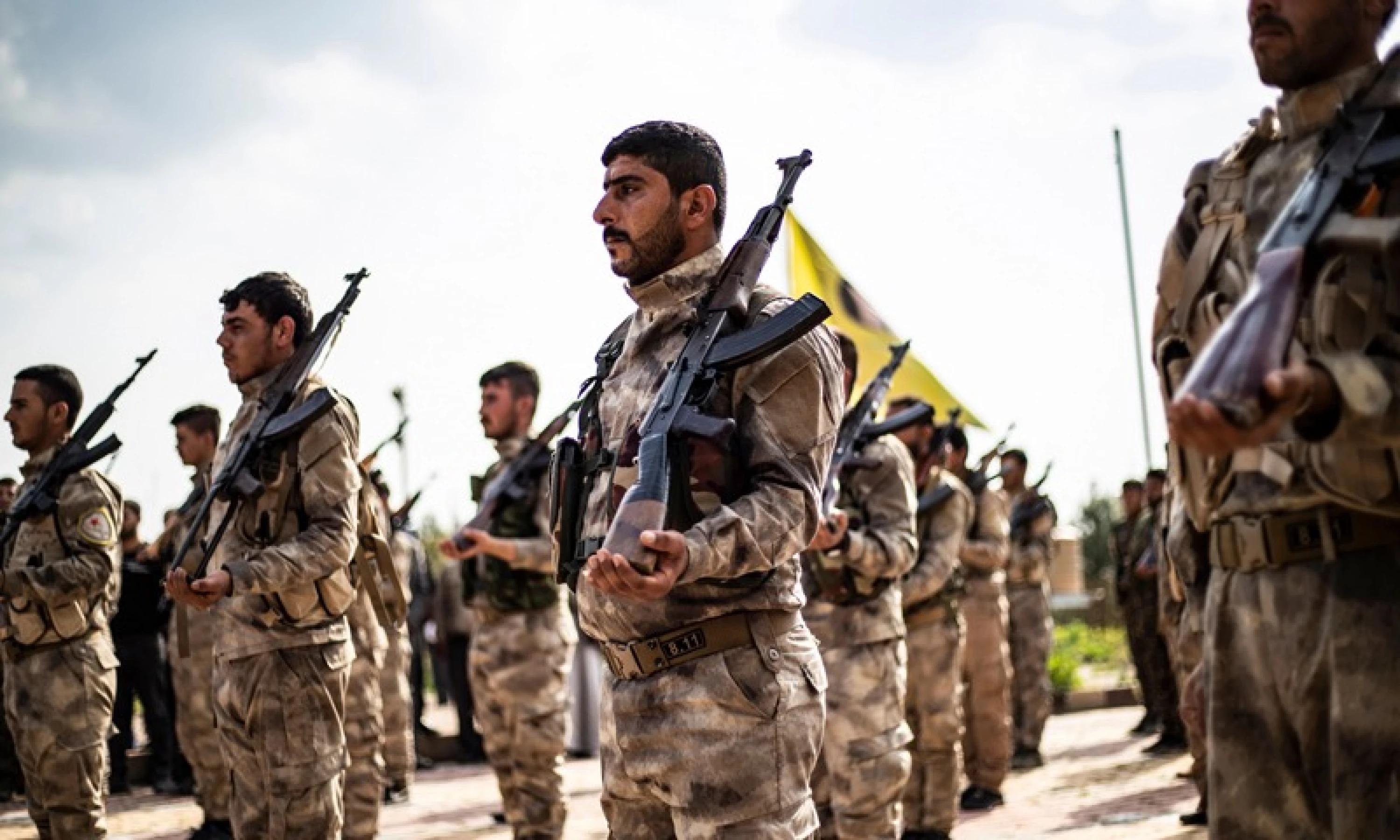
The SDF is the US-led anti-ISIS coalition’s main partner on the ground. It is also the de facto army in Rojava, with the YPG being its backbone.
Neighboring Turkey, a longtime enemy of the SDF, alleges the YPG to be the Syrian front for the Kurdistan Workers’ Party (PKK), which Ankara has designated as a terrorist organization, despite the YPG repeatedly rejecting the claims.
Baqi recommended that the YPG “be dealt with specifically by sorting them into security institutions, non-civilian courts, and even civil rehabilitation to support the economy, such as defense factories.”
He stressed that competing regional powers, including Turkey and Saudi Arabia, have made it difficult for the SDF and Damascus to balance relations.
Riyadh, a key backer of the new Syrian authorities, is seeking to counter Ankara’s increasing influence in the region, according to Baqi. He added that if the SDF increases cooperation with Turkey, it risks damaging its relations with Arab countries.
“For example, Saudi Arabia, the strongest supporter of Damascus, does not want Turkey's influential role in Syria. Damascus is currently oscillating between them, and SDF is also not in a better position between Damascus, Ankara, and Riyadh,” Baqi said.
“Openness to Turkey could expose SDF's structure to the danger of Arab splits. Relying on Saudi power could expose the region to Turkish danger with or without a pretext,” he warned.
As for the Kurdistan Region, Baqi noted that Erbil is trying to capitalize on the “golden opportunity” to cooperate with all parties, including Damascus, in a “balanced manner,” while supporting the peace process between the PKK and Ankara.
“All of this constitutes elements of the upcoming economic equation to revitalize the region,” he said.
In July, dozens of PKK fighters burned their weapons in a symbolic disarmament ceremony in the Kurdistan Region’s Sulaimani province following a call from its jailed leader Abdullah Ocalan. Last month, the group announced its complete withdrawal from Turkish soil.
Ankara has also called on Kurdish forces in Rojava to disarm.
Abdi visited the Kurdistan Region last month, where he met top officials and attended a major forum in Duhok. During his speech at the event, the SDF chief called for decentralization and dialogue with Damascus.
“We believe that after 15 years of war, Syria will not have a centralized system like the Baathist regime,” he said, adding, “We have been at war too long, and we know too well that dialogue is key.”
He stressed that the people’s fight against centralization was a catalyst in the fall of Assad, further citing “the loss of dialogue” as another reason for his fall.
Kurds and other minorities in Syria have repeatedly called for decentralization, a notion Damascus has staunchly rejected as separatism.
 Facebook
 LinkedIn
 Telegram
 X
X