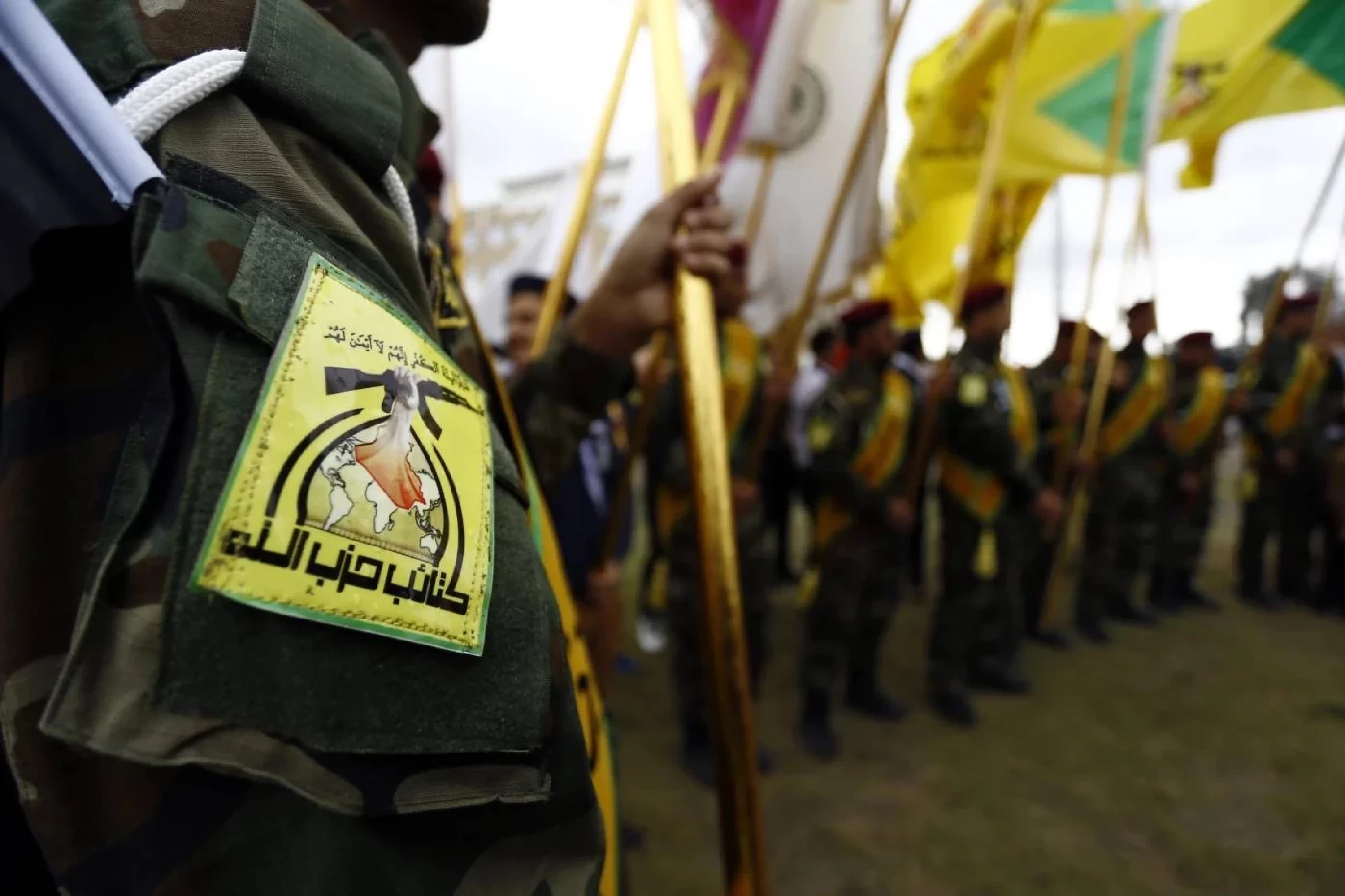
MILAN, Italy – Kataib Hezbollah, a US-designated Iran-backed militia, on Saturday highlighted its prerequisites for handing over arms to the Iraqi state, demanding the withdrawal of all foreign forces, and ensuring protection from “the Jolani and Peshmerga gangs.”
The US has ramped up efforts to curb Iranian influence in Iraq and limit the expanding role of Iran-backed Shiite armed groups in the country. Washington is reportedly pressuring Baghdad to dissolve all armed factions, including the state-integrated Popular Mobilization Forces (PMF).
In a statement on Saturday, Kataib Hezbollah said that handing over weapons to the state would be the “personal decision” of those entrusted with protecting “the people, the land, the country’s sovereignty and holy sites,” arguing that since those tasks have not been achieved, “it is better to leave the door of work open to those who believe in the necessity of remaining steadfast on this honorable path.”
“As our esteemed [religious] authorities have indicated: sovereignty, maintaining security in Iraq, and preventing foreign interference in all its forms are prerequisites for discussing the state's monopoly on weapons. We affirm that our position aligns with what our [religious] authorities have stated, whenever that is achieved,” read the statement.
The group went on to demand the withdrawal of all foreign troops from Iraq, and called for ensuring the safety of the country from the “threat” of the Kurdish Peshmerga and that of Syrian President Ahmed al-Sharaa, referring to the former Sunni jihadist by his nom de guerre of Abu Mohammed al-Jolani.
“Resistance is a right and its weapons remain in the hands of its fighters. Talk of any understanding with the government will only take place after the withdrawal of all occupation forces, NATO and the Turkish army, with the need to ensure the safety of our people and our holy sites from the threat of the Jolani and Peshmerga gangs,” the militia group added.
The Peshmerga are a legally recognized regional internal security force in Iraq, as the country’s 2005 constitution allows federal regions, such as the Kurdistan Region, to establish their own security apparatus. Kataib Hezbollah on the other hand is designated a Foreign Terrorist Organization (FTO) by the US, posing a threat not only to foreign forces in Iraq, but has also been involved in violent attacks on Iraqi state institutions and figures, including a shooting at an agriculture ministry office in Baghdad in late July, which resulted in two deaths and several injuries.
Harakat al-Nujaba, another US-designated militia, also stated on Saturday that they maintain the right for “resistance”, criticizing Washington for not complying with its agreement with Baghdad to withdraw all troops from the country, describing it as a “blatant interference” in Iraq’s internal affairs.
“The American occupation’s disregard for the alleged troop withdrawal agreement, their insistence on remaining in Iraq despite all the claims and demands to leave, and their blatant and continuous interference in internal affairs – including arming and training separatist militias and terrorist groups to destabilize the country – all of this and more constitutes a violation of Iraqi sovereignty and a blatant occupation that must be ended by all legitimate means of resistance,” said the group’s military aid Abdul Qadir al-Karbalai.
Washington has for years provided military aid and training to the Kurdistan Region’s Peshmerga forces as part of their partnership with the global coalition against the Islamic State (ISIS).
US Special Envoy to Iraq Mark Savaya in late November highlighted the need for the Iraqi government to bring weapons under state control and ensure state institutions are protected.
“No economy can grow, and no international partnership can succeed, in an environment where politics is intertwined with unofficial power. Iraq now has a historic opportunity to close this chapter and reinforce its image as a state built on the rule of law, not the power of weapons,” Savaya wrote on X.
Illegal weapons in Iraq stand out as one of the most pressing challenges to security and stability. Unofficial data puts the number of arms within the Iraqi society at around 15 million medium and light weapons, with armed groups and tribes possessing the bulk of them.
 Facebook
 LinkedIn
 Telegram
 X
X