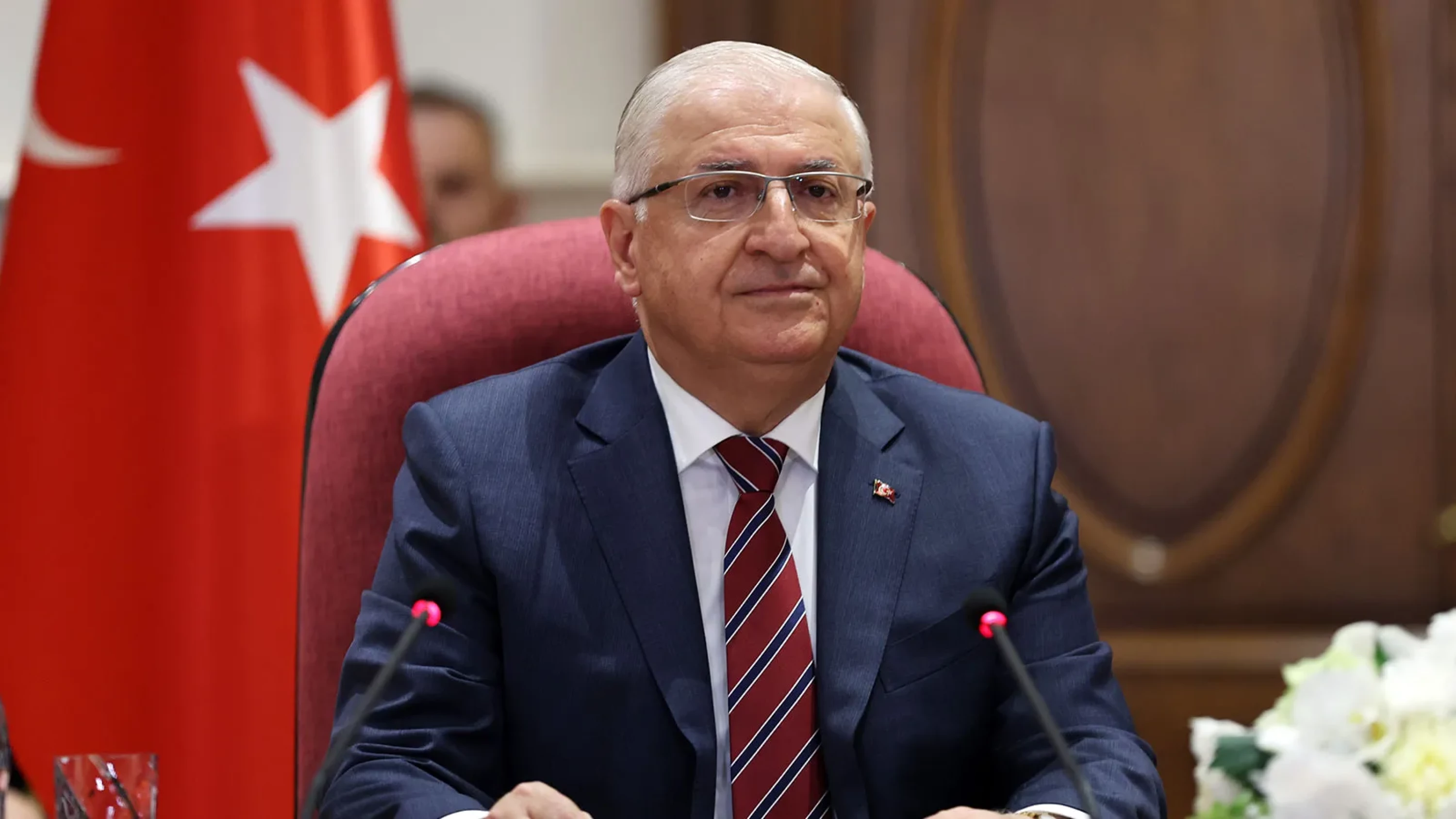
ERBIL, Kurdistan Region of Iraq – Turkish Minister of Defense Yasar Guler on Saturday alluded to launching a military operation if the Kurdish-led Syrian Democratic Forces (SDF) does not integrate into the Syrian Army, citing similar operations done in recent years.
In a meeting with media organizations, the minister addressed the question of what would happen if the SDF does not integrate into the Syrian forces, stating: “We have been carrying out our operations in Syria since 2016, the US was there, Russia was there. We did what needed to be done without asking anyone and finished it.”
“If there is a need in the coming period, we will do what is necessary without asking anyone,” Guler added.
In 2016, Turkish forces launched Operation Euphrates Shield with the support of their proxies in Syria, simultaneously targeting the Islamic State (ISIS) and the SDF, which eventually resulted in them seizing control of major parts of northern Syria.
The peak of Turkish armed mobilization in Syria was in 2018 when Turkish forces alongside their affiliated Syrian armed groups seized the Kurdish-majority city of Afrin in northeast Syria (Rojava), leading to the displacement of more than 137,000 native residents.
Human rights organizations have recorded numerous cases of human rights violations in the invaded cities of Afrin and Ras al-Ain (Sari Kani) since, including kidnappings, executions, and ethnic targeting of the native Kurdish population.
The Rojava administration previously stated that the issue of displaced individuals in Afrin and Sari Kani are at the forefront of its priorities when negotiating with the new Syrian government.
Turkish authorities have intensified call on the Kurdish forces to integrate into the Syrian army, as Ankara views the SDF as an extension of its now-dissolved domestic foe, the Kurdistan Workers’ Party (PKK).
Turkish officials accuse the SDF of not taking practical steps and being “slow” in implementing the March 10 agreement signed with the Syrian government, that would see the Kurdish-led forces and institutions in Rojava integrate into the Syrian state apparatus.
Meanwhile, Kurdish leaders in Rojava demand a democratic integration of the forces into the Syrian state, preserving SDF’s structure and leadership, and refuse a forced integration into a centralized system of governance.
“The SDF also talks about integration, but the integration they speak of is as a unit. They need to be integrated individually, not as a unit. Otherwise, this is not called integration,” Guler stressed.
While the March 10 agreement was supposed to be completed by the end of 2025, the Rojava administration’s communications office asserted that this does not indicate a fixed deadline but sets a timeline “to encourage progress.”
The administration’s clarification comes after Turkish Foreign Minister Hakan Fidan warned that Ankara is running out of patience with the Kurdish-led forces.
 Facebook
 LinkedIn
 Telegram
 X
X