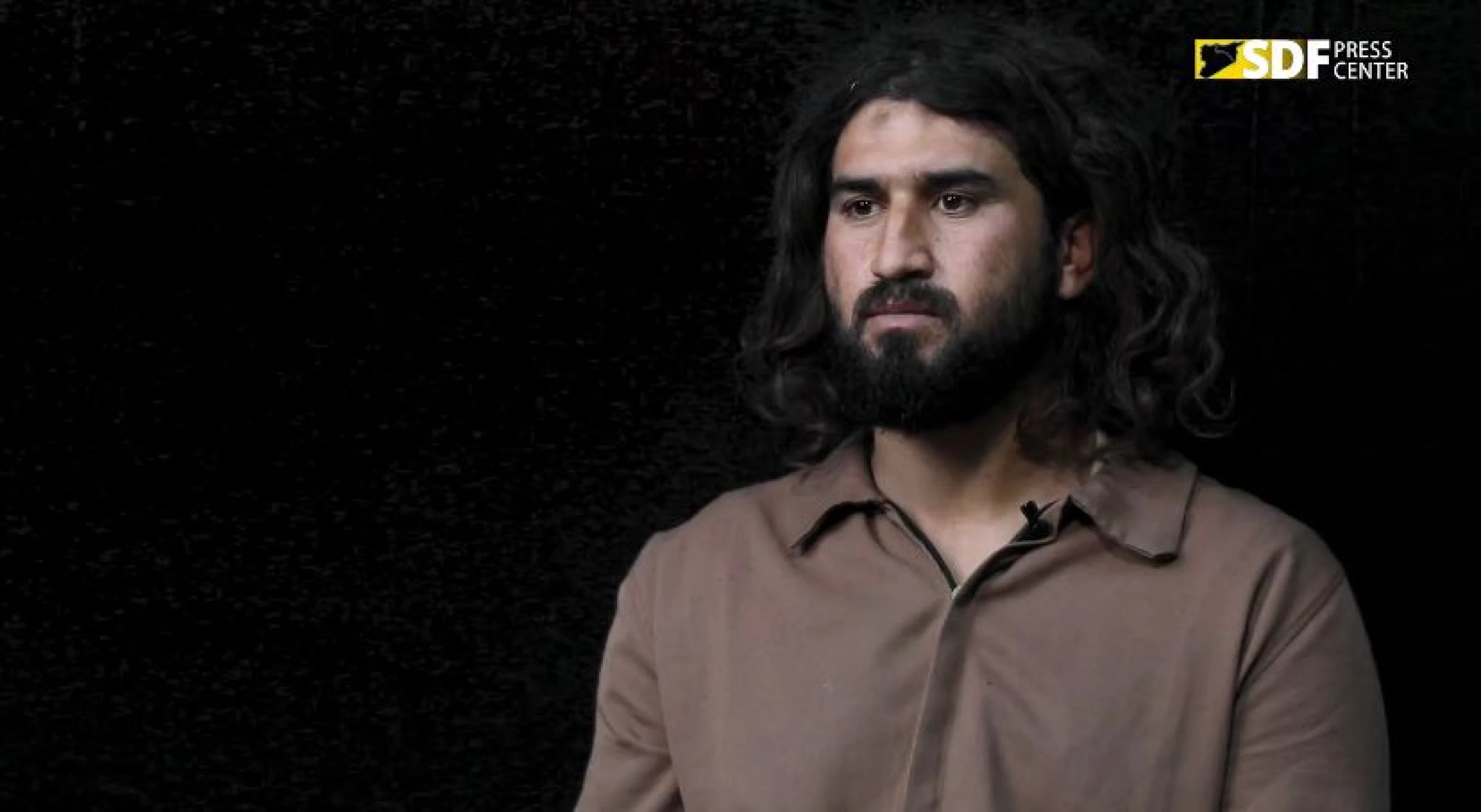
ERBIL, Kurdistan Region of Iraq - The Syrian Democratic Forces (SDF) on Sunday released a confession video of a suspected Islamic State (ISIS) leader captured in December 2024 who was allegedly in charge of supplying his cell with weapons and explosives and orchestrated numerous attacks against the Kurdish-led force.
The suspect, identified as Sahir Ahmed al-Khalaf al-Abdullah, “explicitly confessed that he was responsible for storing weapons, ammunition, and explosive devices inside his home, noting that cell members would cross the Euphrates River from the western bank as civilians without documents or weapons, then contact him to deliver the weapons and explosives to them by motorcycle,” the SDF said in a statement, adding that they hid the weapons in vegetable or clothing shipments.
The alleged ISIS leader from the eastern Deir ez-Zor province said in the confession video that he joined the group two years ago, with the SDF saying that he confessed to “carrying out and participating in about 20 terrorist operations.”
Deir ez-Zor has seen an increasing number of ISIS operations, with the group mostly resorting to hit-and-run attacks since its territorial defeat in Syria in 2019.
Abdullah’s first operation was allegedly planting an explosive device targeting internal security forces (Asayish), killing two.
In a separate operation, he said, “We opened fire with machine guns on a military Toyota vehicle, and we used motorcycles in the execution.”
Twenty days after the hit-and-run, he said his cell planted another explosive device in the same place, which injured three security personnel, according to the SDF. The cell also targeted SDF checkpoints with RPGs on several occasions.
His cell also targeted civilians because they “refused to pay zakat according to what the organization claims, and we also targeted a fuel tanker.”
Zakat is an obligatory form of charity in Islam considered one of the religion’s five pillars. Muslims are required to donate a portion of their wealth annually to help those in need, with the mechanism often being exploited by jihadist groups to garner funds for their operations.
The suspect also explained communication methods to avoid detection.
“The terrorist revealed that cell members avoided carrying phones during operations for fear of exposing their communications, because their devices contained documented audio and video recordings,” the SDF said in a statement.
“After each operation, they would document the attack and send the recording to the supervisor in exchange for monetary payments,” it added.
Abdullah said meetings were held in bigger cities such as Deir ez-Zor to avoid detection, and he did not communicate with the emir in charge in person, instead using an app to relay messages.
“On December 7, [the] Syrian Democratic Forces surrounded me in the house, and aircraft participated in the arrest operation. They first raided my brother's house, then mine, and confiscated the weapons, ammunition, and explosives,” he said.
ISIS held swathes of Syria until its territorial defeat in 2019. Since its territorial defeat, the extremist group has tried to take advantage of the security vacuum in the country after Bashar al-Assad was toppled, especially in the vast Syrian desert.
Earlier this month, an ISIS attack in the central Palmyra desert region killed two US soldiers and one civilian interpreter, prompting retaliatory airstrikes by the US and anti-ISIS coalition partners on over 70 sites.
The US strikes were welcomed by the SDF, who called it a decisive factor in stopping the extremist group's cells from regrouping.
 Facebook
 LinkedIn
 Telegram
 X
X