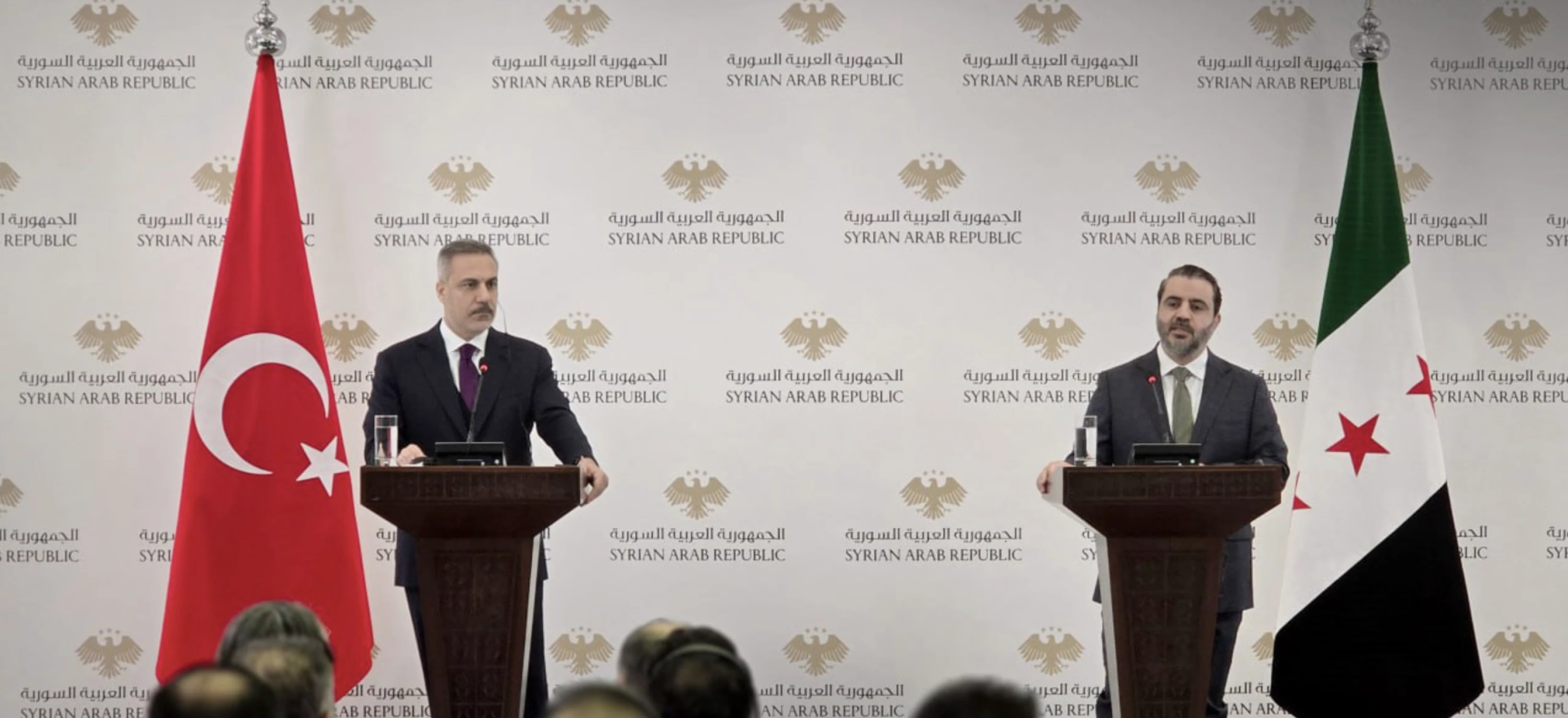
ERBIL, Kurdistan Region of Iraq – Syrian Foreign Minister Asaad al-Shaibani on Monday held the Kurdish-led Syrian Democratic Forces (SDF) accountable for delays in implementing a landmark March agreement to integrate the force with Syria's security apparatus, warning of negative consequences for the region.
Following a meeting with his Turkish counterpart Hakan Fidan in Damascus, the top Syrian diplomat told a press conference that "any delays in the integration by the Syrian Democratic Forces (SDF) will be an injustice to the region as a whole, as well as the residents of the region, that is the Arab brothers, and the Kurds and all of the components in the region."
"The Jazira area falling behind in building the new Syria and seizing this opportunity after the sanctions were lifted, will negatively affect the region," Shaibani said.
On March 10, SDF chief Mazloum Abdi and Syria’s President Ahmed al-Sharaa signed an agreement that would see the Kurdish-led forces in northeast Syria integrate into the Syrian state apparatus. The agreement was meant to be completed by the end of 2025, but has yet to be implemented.
The deal has since been hindered by repeated clashes between the two forces and the Damascus government’s treatment of minority groups across the country, which have repeatedly sparked condemnations from the northeast Syria (Rojava) administration.
The US-backed SDF functions as the de facto army of northeast Syria and played a key role in the territorial defeat of the Islamic State (ISIS) in Syria in 2019.
During the presser, Fidan said that "Syria's stability means Turkey's stability," once again pointing the finger at the SDF, who he said "have no intention of implementing" the agreement. Turkey has repeatedly demanded that the SDF be brought under the auspices of the Syrian state apparatus.
Ankara on Saturday threatened military action should the integration fail, with Defense Minister Yasar Guler saying that Turkey has been "carrying out our operations in Syria since 2016, the US was there, Russia was there. We did what needed to be done without asking anyone and finished it," warning that "if there is a need in the coming period, we will do what is necessary without asking anyone."
A senior official in the SDF's political wing, the Syrian Democratic Council (SDC), told The New Region earlier in December that power imbalances between the two sides were responsible for the delays in implementing the merger.
“Relations between SDF and Damascus are not equal due to the imbalance of power, as well as old sensitivities between the former al-Nusra Front and the People’s Protection Units (YPG), which complicates the relationship, especially with several SDF offices present in Damascus and no state institutions in SDF areas,” said Baqi Hamza, a member of the Syrian Democratic Council’s (SDC) foreign and general relations committees.
“These problems prevent integration,” Hamza stressed.
In October, the SDF stated that it had submitted the names of around 70 commanders to be integrated into the defense ministry. Abdi said a month later in November that the Kurdish-led force will play “a great role” in the to-be-formed Syrian army and will “strengthen it.”
Kurds and other minorities in Syria have called for decentralized governance, a request Damascus has firmly rejected.
 Facebook
 LinkedIn
 Telegram
 X
X