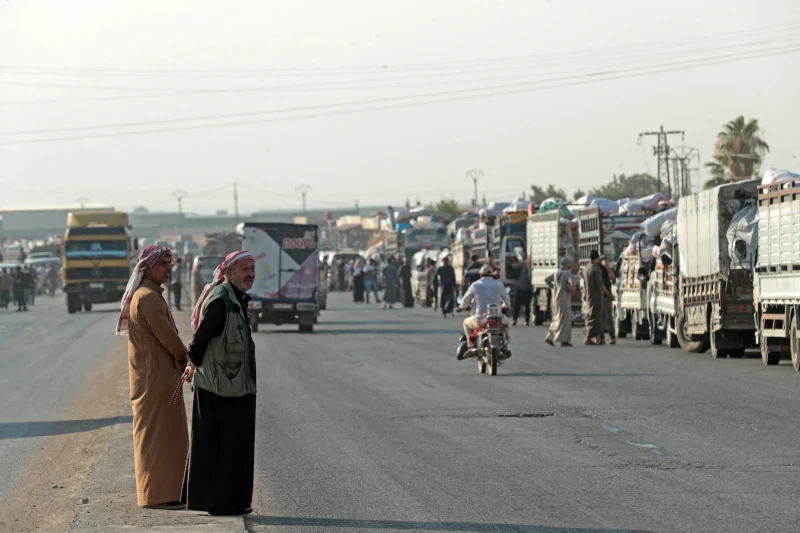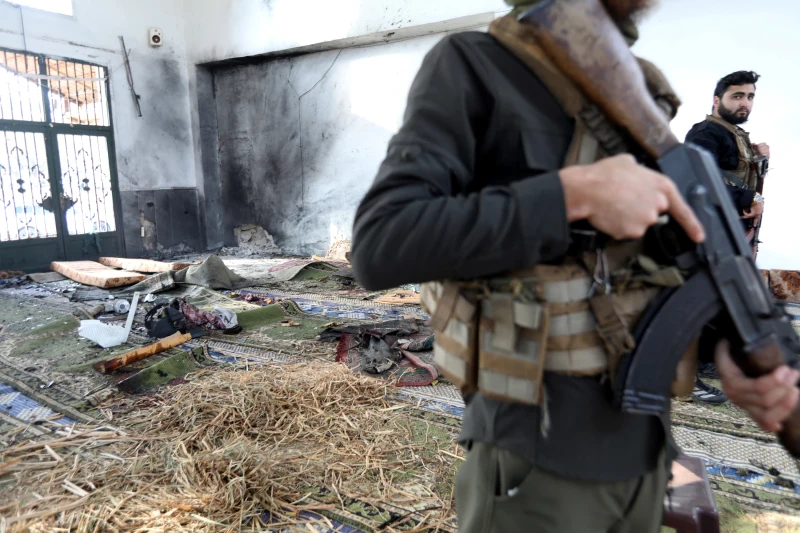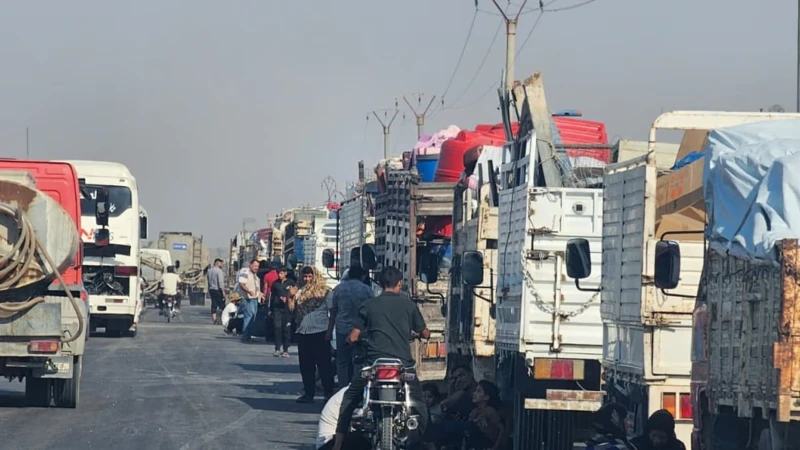

ERBIL, Kurdistan Region of Iraq - A senior member of the Kurdish-led Syrian Democratic Force’s (SDF) political wing on Wednesday accused Turkey of “very strong” involvement in deadly clashes in northern Syria’s Aleppo, adding that despite the fighting ending, the Kurdish neighborhoods are still besieged by Damascus' forces.
Tensions surged in Aleppo’s neighborhoods of Sheikh Maqsoud and Ashrafiyeh on Monday after clashes broke out between Damascus-affiliated and Kurdish-led forces, with both sides trading blame for the altercations.
The SDF said one woman was killed in the attacks, while Syrian state media reported four deaths.
“Since yesterday, the fighting has stopped, but the siege continues. There is no movement in and out [of the Kurdish neighborhoods], but the clashes have stopped,” Baqi Hamza, a member of the Syrian Democratic Council's (SDC) foreign and general relations committees, told The New Region in an interview.
In Aleppo, Sheikh Maqsoud and Ashrafiyeh are under the control of local forces affiliated with the Kurdish-led northeast Syria (Rojava) administration, while Syrian government forces control the entrances and exits.
“I assume most of the attacks have been guided by Turkey. The Turkish involvement is very strong… to put pressure on the administration to make compromises,” he noted.
The clashes erupted following a visit by a high-level Turkish delegation to Damascus on Monday, where Syrian Foreign Minister Asaad al-Shaibani held the Kurdish-led SDF accountable for delays in implementing the March 10 agreement in a joint presser with Turkish Foreign Minister Hakan Fidan, warning of negative consequences for the region.
Hamza said Damascus has failed to take any concrete steps towards implementing the March 10 agreement signed between Syrian President Ahmed al-Sharaa and SDF chief Mazloum Abdi to integrate the Kurdish forces and institutions into the Syrian apparatus.
“They [Damascus authorities] want to show that they have implemented all that is required from them, but they have not taken legal or political steps or released sick or elderly prisoners,” he stressed.
The repeated clashes between the two sides are threatening to further derail the March deal, with political tensions mounting over failures to complete the agreement.
Hamza also said there are eight points in the March 10 agreement, but the Syrian state is only focusing on the military aspect, pointing out that it has also failed to establish specialized committees to work on the points, while the committees in Rojava are ready to start their work.
Both sides have blamed each other for sparking the fighting. On Tuesday, the SDF said it had gathered “conclusive evidence” that Damascus-affiliated factions initiated the attacks, blasting the Syrian government for attempts to “fabricate misleading narratives.”
The solution for Syria should be “through dialogue and discussions, which we are emphasizing, because the problems should be solved through dialogue in general in Syria, not only for north and east Syria [Rojava], for the sake of democracy, decentralization, and the participation of all components in building a new Syria,” Hamza stressed.
Minorities in Syria have repeatedly called for decentralization, which Sharaa has firmly rejected as separatism.
The SDF is the de facto army in northeast Syria (Rojava) and the US-led anti-Islamic State (ISIS) coalition’s main partner on the ground.
In October, the SDF stated that it had submitted the names of around 70 commanders to be integrated into the defense ministry. Abdi said a month later in November that the Kurdish-led force will play “a great role” in the to-be-formed Syrian army and will “strengthen it.”
 Facebook
 LinkedIn
 Telegram
 X
X