ERBIL, Kurdistan Region of Iraq – Iraqi Prime Minister Mohammed Shia’ al-Sudani on Saturday revealed that Tehran and Washington have agreed to hold meetings in Baghdad, with Iraq urging the US to lift economic sanctions on Iran and to engage with the country “respectfully and to avoid threats.”
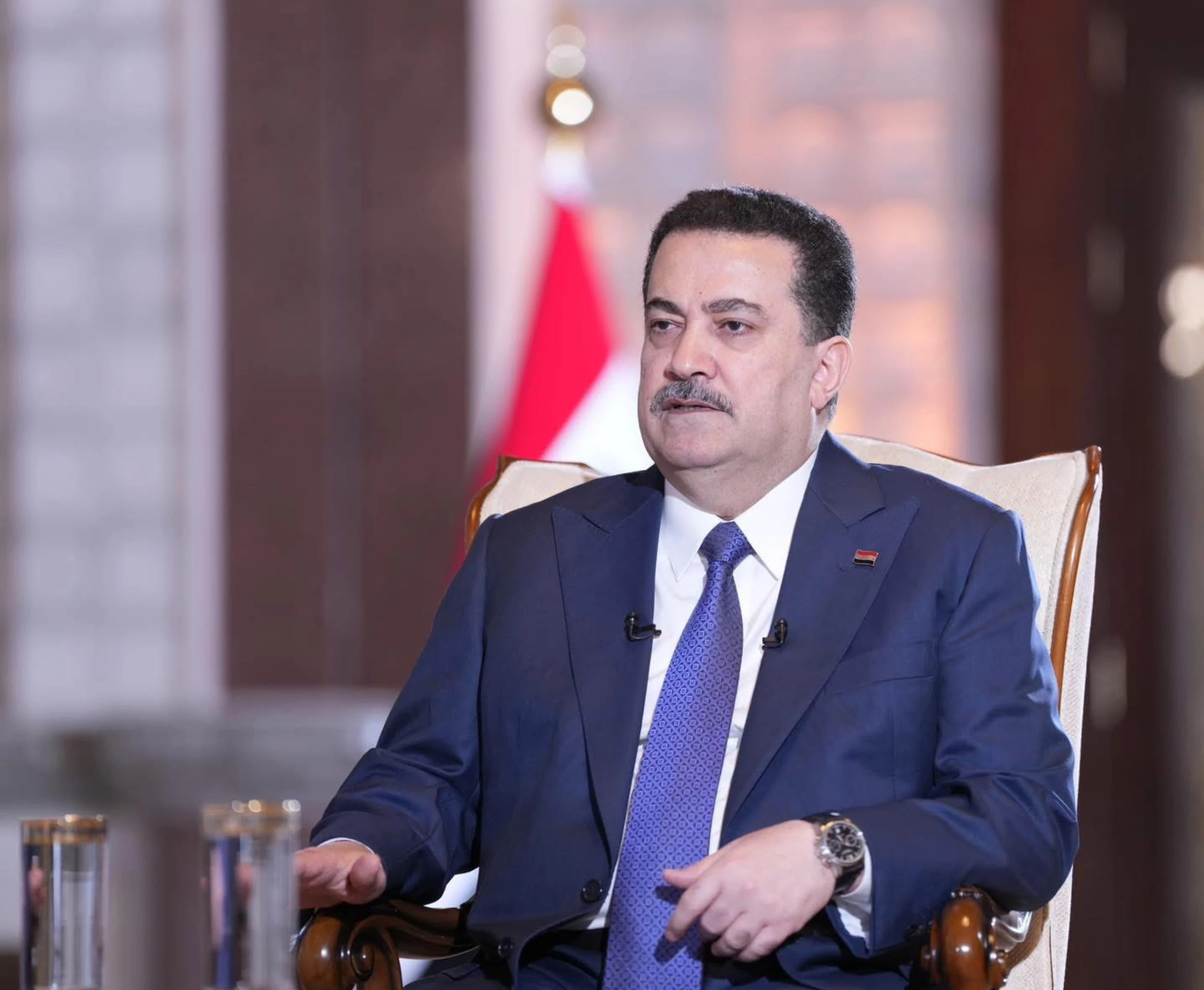
“Officials in the US administration have announced their acceptance of dialogue with Iran in Baghdad,” Sudani stated in a televised interview with the Hezbollah-affiliated Al Mayadeen, adding that Baghdad “will continue efforts to arrange a bilateral meeting.”
Iran has also accepted to engage in “serious negotiations without dictates or threats, based on trust,” according to the premier.
The Iraqi side has advised the US to get into dialogue with Iran “respectfully and avoid threats and intimidation,” stressing that negotiations require trust and cannot proceed under military pressure.
Iranian authorities have previously stressed that negotiations with Washington could be possible if the US changes its approach and the discussions are held on the basis of mutual respect and equality.
Baghdad has also stressed the need to lift crippling economic sanctions on Tehran “as a goodwill initiative” to resume negotiations between both parties, according to Sudani.
US President Donald Trump, during his first term, unilaterally withdrew from the 2015 nuclear deal that alleviated economic sanctions on Tehran in return for curbing its nuclear program. He signed a memorandum in February to restore his maximum pressure policy on Iran, introducing a series of new economic measures during his second term as president.
The two sides engaged in several rounds of indirect talks to restore the deal, but the process was halted following Israel’s large-scale offensive against Iran in June, targeting Iranian nuclear and military facilities across the country and killing dozens of high-profile military commanders and nuclear scientists.
The US demands Iran halts its nuclear and missile programs. Tehran routinely refuses the prospect of negotiating its missile system, while showing openness to engage in dialogue over its nuclear program.
Two paths for armed factions in Iraq
Also during the interview, Sudani outlined two options for the armed factions in the country: Either join the country’s security structure or move into the political system.
“Iraq is moving toward restricting weapons [to the state], and there are two paths for those who bear arms: either integration into the security institutions or entry into the political track. Some factions have entered the political process and have a significant presence,” he said.
Both choices are “acceptable to all Western parties,” according to the premier.
Faiq Zidan, President of Iraq’s Supreme Judicial Council, last week announced that the leaders of some armed factions have adhered to his call to cease military action and confine weapons to the state.
The development came amid intensified calls by Washington on Iraq to curb Iranian influence, pushing Baghdaf to dissolve all armed factions, including the state-integrated Popular Mobilization Forces (PMF).
“Restricting weapons was the result of dialogue between me and the [Shiite Coordination] Framework forces and the factions’ coordination body,” Sudani stressed, noting that the decision stems from the country’s current stable conditions and the elimination of the Islamic State (ISIS) threat.
Several Iran-backed Iraqi factions, including the Kataib Hezbollah, Asaib Ahl al-Haq (AAH), and Harakat al-Nujaba, all designated by the US as Foreign Terrorist Organizations (FTO), have rejected the call for disarmament.
US Special Envoy to Iraq Mark Savaya welcomed the steps taken towards disarmament, while asserting that practical steps must be taken to implement the process, not just statements of intent.
 Facebook
 LinkedIn
 Telegram
 X
X