ERBIL, Kurdistan Region of Iraq - The Kurdish-led Syrian Democratic Forces (SDF) said Thursday it has not intervened thus far in the clashes in northern Syria’s Aleppo, warning the escalation could lead to the war expanding to other areas in the country.
“While the Syrian Democratic Forces have not intervened so far, persistence in this aggression threatens not only Aleppo, but opens the door to the expansion of the war into other areas, placing full responsibility for any escalation and its consequences on the attacking side,” Farhad Shami, head of the SDF’s media center, said on X.
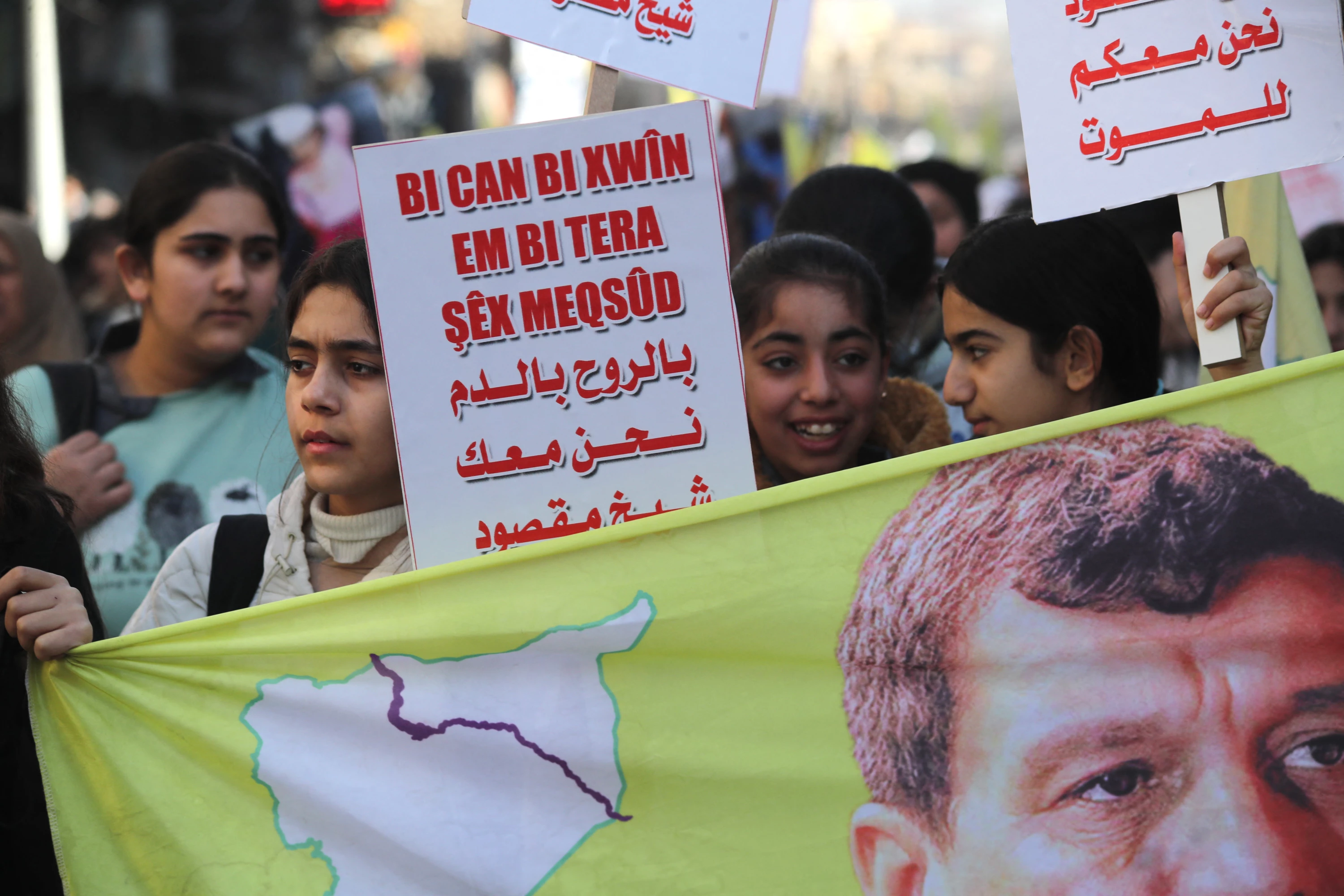
Clashes between Damascus-affiliated and Kurdish-led security forces (Asayish) are ongoing in Aleppo’s Kurdish-majority Sheikh Maqsoud and Ashrafiyeh neighborhoods. At least eight people have been killed and 57 others injured, according to Asayish figures.
Both sides have traded blame for triggering the clashes and accused one another of targeting civilian areas with heavy munitions.
The Kurdistan Communities Union (KCK) — the political umbrella group of the Kurdistan Workers’ Party (PKK) — said Thursday that attacks on Aleppo show that Damascus is preparing for war despite ongoing negotiations with the Kurds.
“The launch of attacks on Sheikh Maqsoud and Ashrafiyeh immediately after the talks between the Autonomous Administration of North and East Syria and the Damascus interim government shows that Damascus is preparing for war,” the KCK said in a statement.
“Forces opposed to the construction of a democratic Syria through negotiation and dialogue seek to dominate Syria and secure their hegemonic interests by provoking war,” it added.
The PKK is classified as a terrorist organization by Turkey and its Western allies. Ankara has accused the People’s Protection Units (YPG), which is the SDF’s backbone, of being part of the PKK, a claim rejected by the YPG.
The escalations follow a high-level meeting on Sunday between an SDF delegation headed by SDF chief Mazloum Abdi and officials in Damascus, discussing the implementation of the March 10 agreement concerned with the integration of Kurdish forces and institutions into the Syrian apparatus.
The KCK said Ankara could play a positive role in the March 10 agreement’s implementation if it “abandons its policy of threats and provocation and adopting a constructive and solution-oriented approach would serve regional peace.”
In an interview with The New Region in December, a senior member of the Syrian Democratic Council (SDC), the SDF’s political wing, Baqi Hamza, accused Turkey of “very strong” involvement in Aleppo's deadly clashes at the time.
The Asayish on Wednesday accused the Syrian units fighting in Aleppo of being Turkish-backed forces implicated in earlier sectarian atrocities in Suwayda and Latakia that are under international sanctions for egregious battlefield conduct.
While the Kurdish side asserted that the recent meeting was held in a “professional and responsible” manner, ensuring “well-considered results,” Syrian sources told state media that it did not lead to any “tangible results.”
According to the Aleppo response committee, over 140,000 people have been displaced since the clashes erupted. The Syrian government opened two humanitarian corridors, while the Asayish forces urged the citizens to remain in their homes.
“In Aleppo, the Kurdish and Arab peoples have a culture of intermingled co-existence. The attacks against the Kurds are aimed at forcibly displacing the people of Sheikh Maqsoud and Ashrafieh, purging Aleppo of Kurds, and provoking Arab-Kurdish conflict. That is why specifically civilians, women, and children are being targeted,” the KCK stressed.
The implementation of the March 10 agreement has been stalled due to the Kurdish side demanding a democratic integration while Damascus maintains its centralized stance, with frequent clashes between the two sides further escalating tensions.
“All political forces must strive to implement the March 10 agreement,” the KCK said.
 Facebook
 LinkedIn
 Telegram
 X
X