ERBIL, Kurdistan Region of Iraq - The political wing of the Syrian Democratic Forces (SDF) on Friday told The New Region that Aleppo’s Kurdish neighborhoods are being subjected to “genocide”, while a political analyst stressed the need for a political settlement to avoid an all-out military resolution.
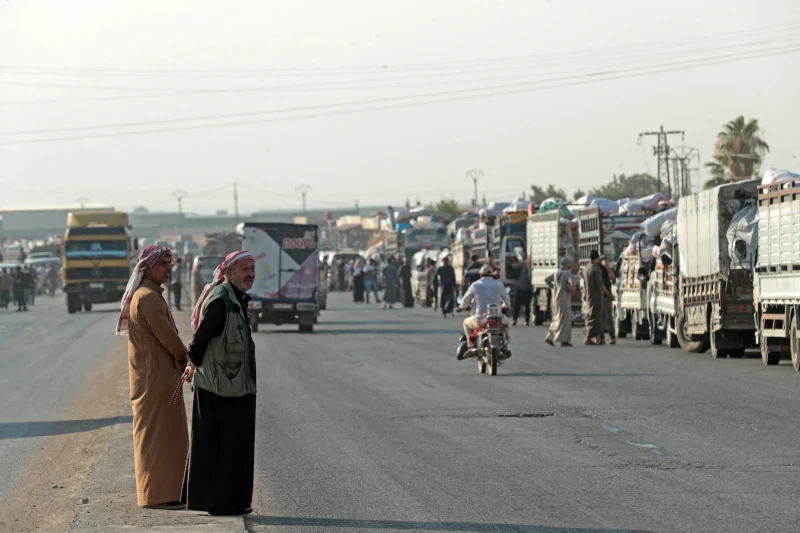
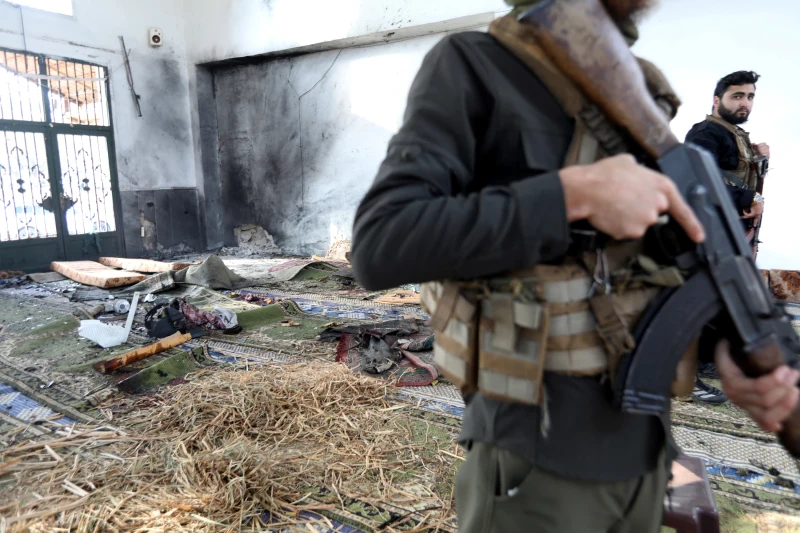
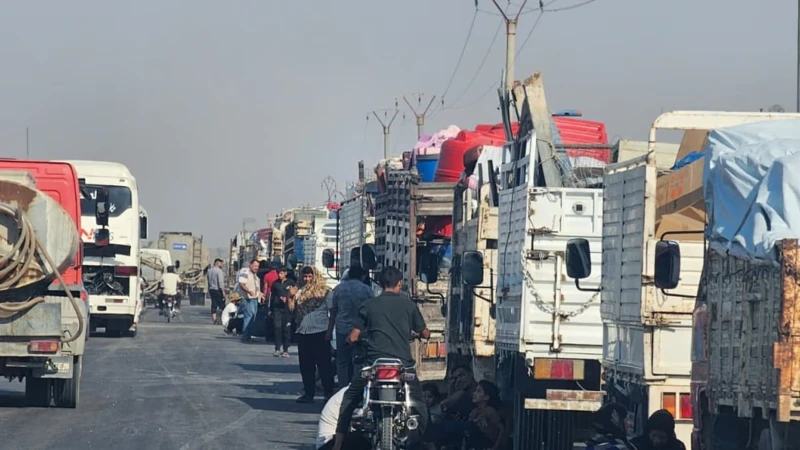
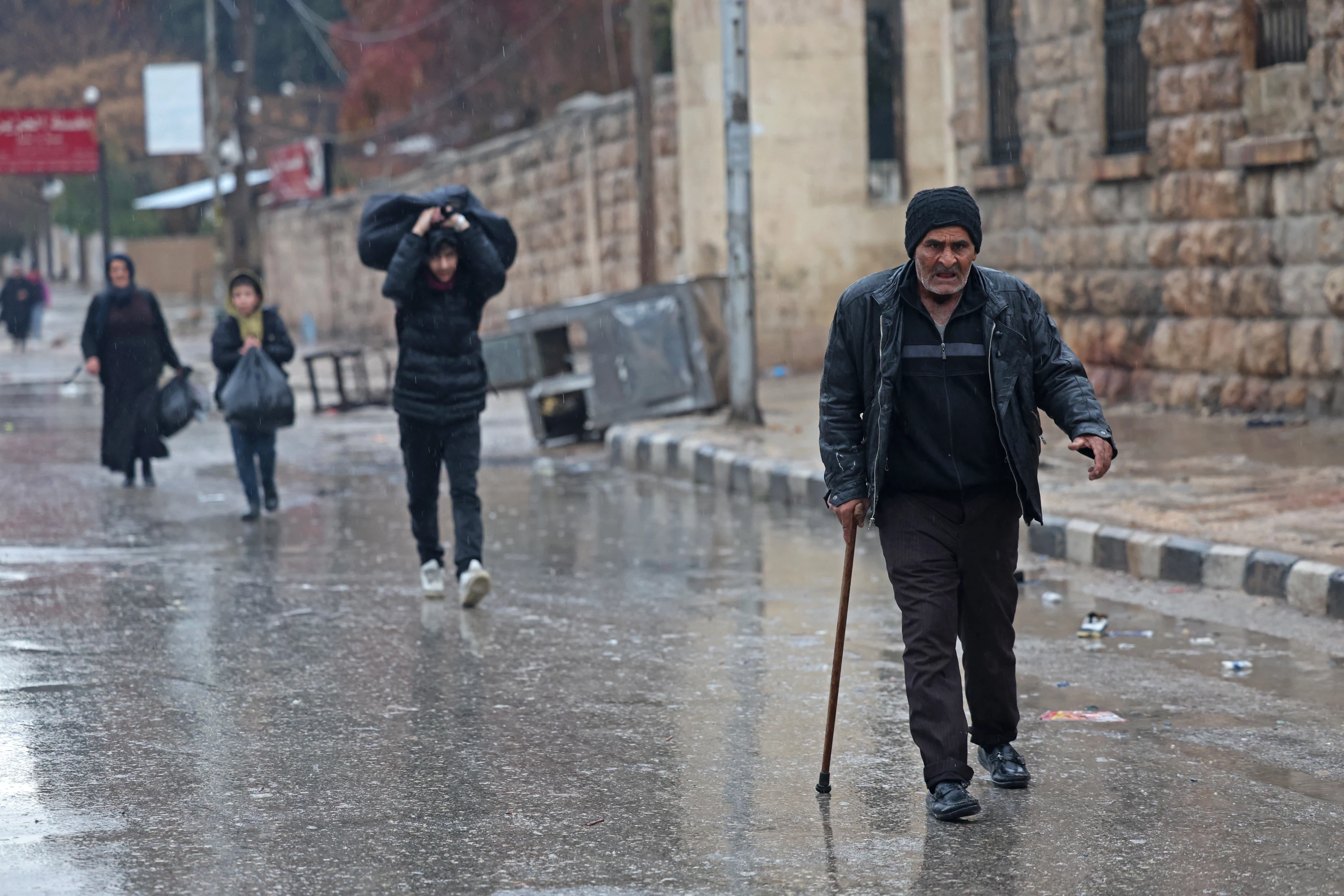
Clashes between Damascus-affiliated forces and Kurdish-led security forces (Asayish) have wracked Aleppo’s Kurdish-majority Sheikh Maqsoud and Ashrafiyeh neighborhoods in recent days, with tens of people having been killed so far and hundreds of others displaced.
The Asayish in Aleppo on Friday evening said that forces affiliated with the Syrian government have launched an “intense” bombardment campaign targeting Sheikh Maqsoud, shortly after the Syrian Army declared the neighborhood a “closed military zone.”
“The situation is extremely bad. Starting from the sixth of this month, and after a continuous siege of six months, the neighborhoods of Sheikh Maqsoud and Ashrafiyah have been subjected to genocide through attacks with heavy weapons, intense shelling, and a tight siege on the two neighborhoods,” Baqi Hamza, member of the Syrian Democratic Council's (SDC) foreign and general relations committees told The New Region.
“The goal is demographic change,” he stressed.
Damascus needs a victory, even if it is symbolic for media and political campaigning, “to cover up the agreement with Israel in Paris,” Hamza said, adding, the attacks on the Kurdish neighborhoods were because they are the “weakest points.”
Following a meeting between senior officials in Paris, under the auspices of the US, Syria and Israel on Tuesday agreed to set up a communication cell to “facilitate immediate and ongoing coordination on their intelligence sharing, military de-escalation, diplomatic engagement, and commercial opportunities,” according to a joint statement.
The agreement marks a far cry from the two neighboring countries’ historical approach toward each other, and has raised eyebrows among conservative Muslim nations given longstanding opposition to normalization with Israel amid the ongoing Gaza conflict.
Hamza also accused Turkey of playing a role in the attacks, saying that they were coordinated with Ankara.
“This attack comes with the Turkish armed forces deploying units in northern Aleppo, indicating that this attack was not random but in agreement with the Turkish regime,” he said.
The Sultan Suleiman Shah and Hamza divisions, colloquially called the Amshat and the Hamzat, are Syrian armed factions with strong ties to Turkey and are regarded as Ankara’s proxy forces.
SDF has blamed the groups for several attacks in Aleppo.
Speaking to The New Region on Friday, Farid Saadoun, a Damascus-based Kurdish writer and political analyst with a PhD in literary criticism, echoed Hamza’s claim of Turkish involvement and said the fighting will be contained, otherwise risking a large civil war.
“It is natural for Turkey to have a role in what is happening in Aleppo, because Turkey has been directly interfering in the Syrian situation since the beginning of the revolution's launch, and it supports armed factions in northern Aleppo. Any clash between these factions and the SDF must involve a Turkish role,” Saadoun said.
Political settlement or military resolution
The analyst proposed two solutions to the conflict: one being political negotiations and the other military resolution. Saadoun stressed that if the two sides fail negotiations, “then resorting to a military solution will be inevitable.”
According to the analyst, the ongoing clashes will most likely be contained since the pair still insist on dialogue, warning that if clashes continue, it would lead to a large civil war across the country and destroy hopes of reviving the already exhausted economy.
“It is important to mention that if there is no international consensus on a roadmap for a political solution in Syria, the solution will be difficult,” he noted.
Hamza also called for deescalation and dialogue, stressing that continued fighting would only lead to death and destruction.
Tensions are inextricably linked to the lack of implementation of a March 10 agreement between SDF chief Mazloum Abdi and Syria’s President Ahmed al-Sharaa. The agreement would see the Kurdish-led forces and institutions in northeast Syria (Rojava) brought under the auspices of the Syrian state, but its implementation has stalled over the past year due to sporadic clashes between the two sides.
“The issue of integration is complex, and I previously pointed out after the signing of the March 10 agreement that merely understanding general points in a symbolic agreement does not bring results on the ground,” Saadoun said.
“Integration takes a considerable amount of time, because the SDF is not a faction or brigade, but a complete army, and it differs from the Syrian Army in its armament, equipment, numbers, and even ideology. Its integration requires long-term preparation,” he added, although stressing that the longer it takes, the more violations may occur which would risk the integration’s collapse.
The failure to implement the agreement has empowered the Syrian state forces to conduct frequent attacks, accusing the Kurdish-led forces of harboring a separatist agenda.
The SDF and other apparatuses of the administration, meanwhile, maintain serious reservations regarding Damascus' centralizing drive and its treatment of the country's ethnic and religious minorities.
While the SDF has denied involvement in the fighting, a source told The New Region on Friday that reinforcements from SDF-controlled territories were making their way to Aleppo to assist their compatriots.
 Facebook
 LinkedIn
 Telegram
 X
X