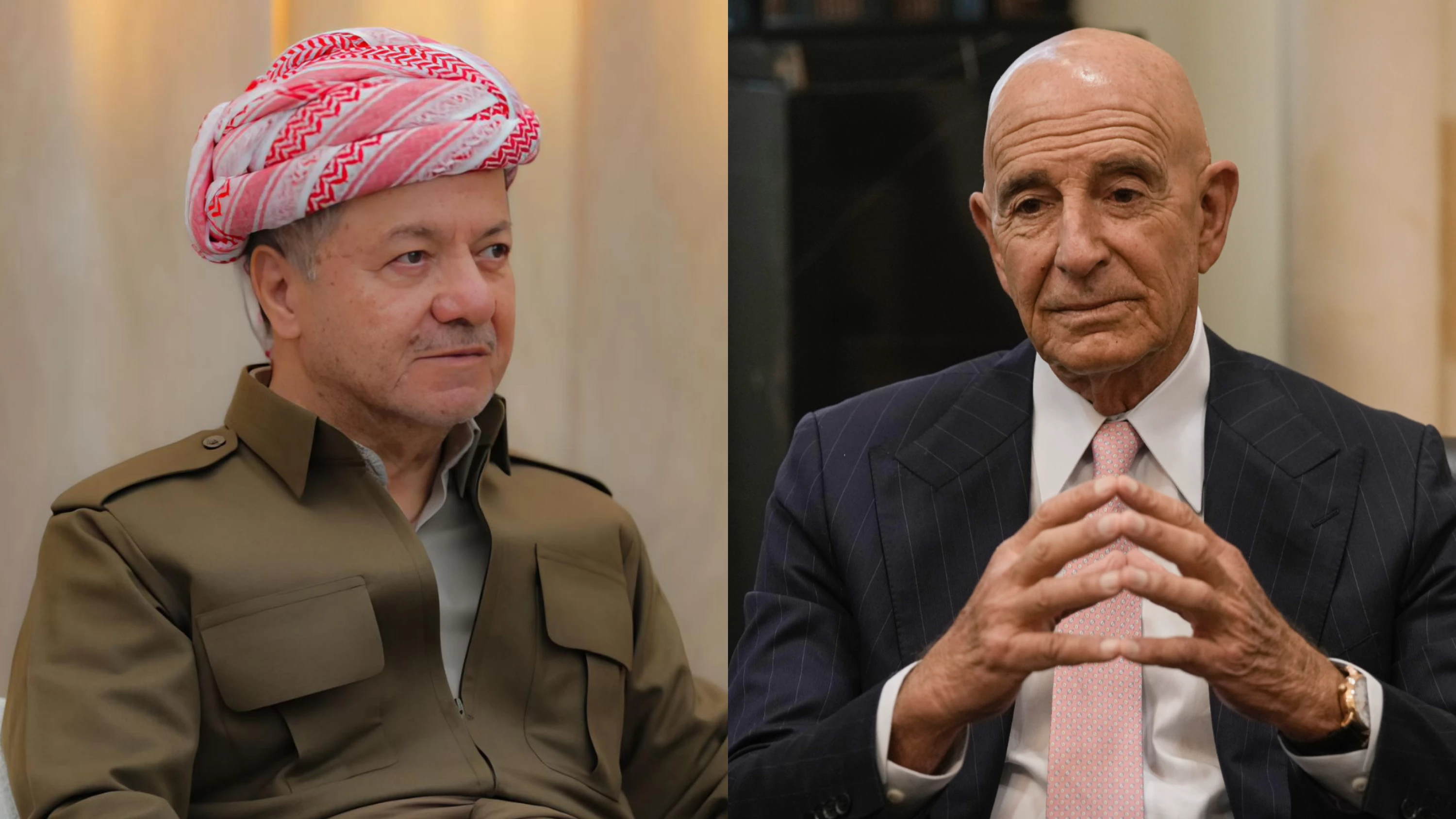
ERBIL, Kurdistan Region of Iraq - President Masoud Barzani on Friday held a phone call with US Special Envoy for Syria Tom Barrack where the pair emphasized the need to deescalate tensions in Aleppo, as the Kurdish neighborhoods witness heavy clashes for the third consecutive day.
A statement from Barzani’s office said that the Kurdish leader and the American diplomat exchanged views on the political situation in the region and Syria, as well as the recent developments in Aleppo.
“The two emphasized that every effort must be made to ensure that tensions and complications come to an end, that the situation is normalized, and that serious steps are taken toward achieving security, stability, and peace,” the statement added.
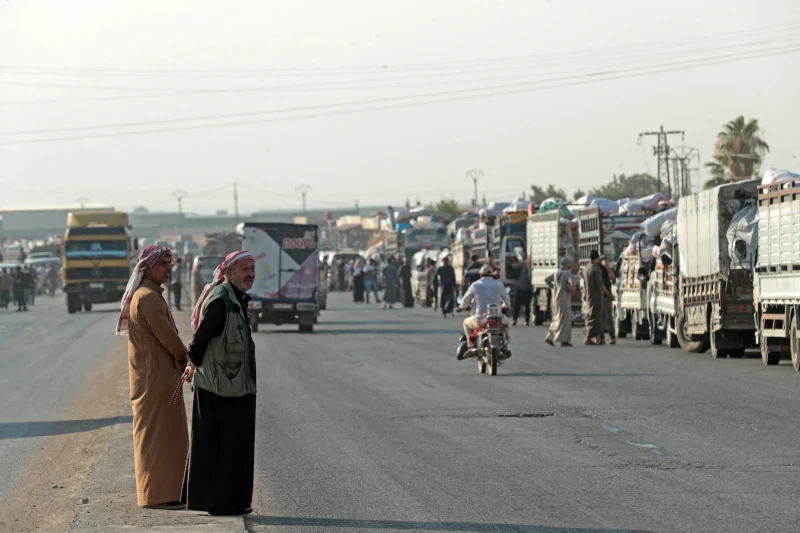
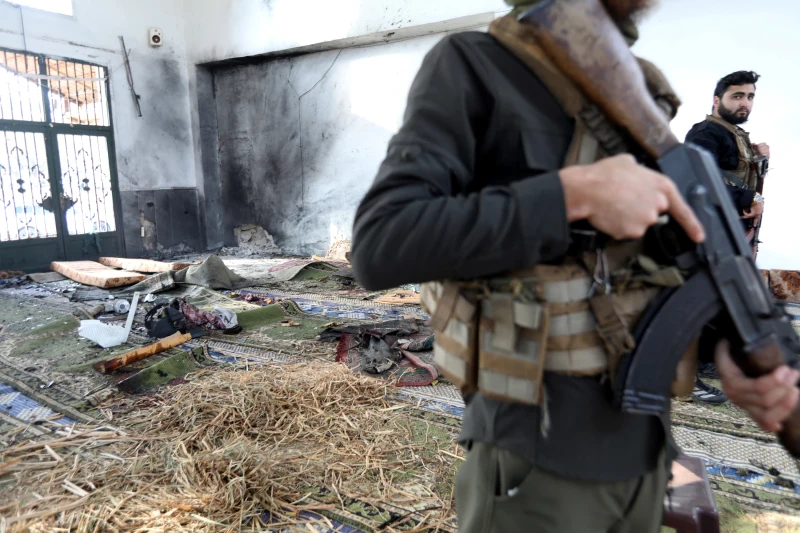
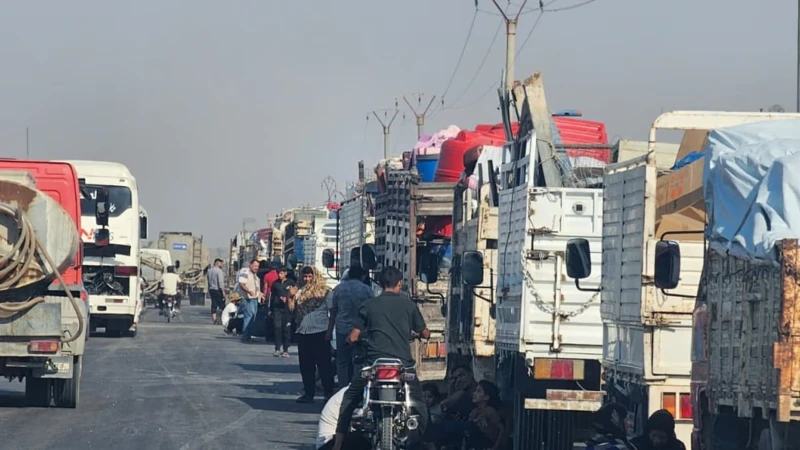
Clashes between Damascus-affiliated forces and Kurdish-led security forces (Asayish) have wracked Aleppo’s Kurdish-majority Sheikh Maqsoud and Ashrafiyeh neighborhoods in recent days, with tens of people having been killed so far and hundreds of others displaced.
Earlier in the day, President Barzani held a phone call with Syrian President Ahmed al-Sharaa to discuss the clashes, with the two stressing the need to ensure the rights of Syria’s Kurds and all other components.
While tensions between Damascus and Syria’s Kurds have reached unprecedented highs in recent days, the Sharaa government has already had several episodes of bloody violence with many of the country’s minority groups, mainly the Druze and the Alawites.
The Druze Spiritual Leadership on Friday condemned the “barbaric invasion” of Kurdish-majority neighborhoods of Aleppo by Damascus-affiliated forces, calling on the international community to “assume their role in suppressing these repeated violations and attacks on peaceful minorities.”
“These are nothing but attempts at demographic change and genocide moving between minorities,” read a statement from the Druze leadership on Friday.
The Supreme Alawite Islamic Council in Syria and the Diaspora on Friday described the sectarian clashes since the new Damascus authorities took power as “an organized and dangerous pattern of violence, terrorism, and ethnic cleansing targeting authentic Syrian communities and threatening catastrophic consequences for Syrian society.”
Since Syria’s new authorities rose to power in December 2024, thousands of Alawites in the country’s coastal regions and Druze in the southern Suwayda have been killed in sectarian clashes blamed on Damascus-affiliated factions.
On Wednesday, the Asayish blamed the clashes in Aleppo on “the same factions involved in committing documented massacres in Suwayda and along the Syrian coast.”
Syrian Foreign Minister Asaad al-Shaibani and his Turkish counterpart Hakan Fidan discussed the latest developments in Aleppo over the phone on Friday, affirming Syria’s “sovereignty and territorial integrity,” and emphasizing the need to boost coordination on “joint efforts to support Syria's stability, combat threats to its security, and serve the security and stability of both countries,” according to a statement from the Syrian foreign ministry.
Barrack is also the US ambassador to Turkey.
Authorities in northeast Syria (Rojava) have accused Turkey, one of the main backers of the Sharaa government, of involvement in the recent Aleppo clashes.
The escalations follow a high-level meeting on Sunday between an SDF delegation headed by the forces’ chief, Mazloum Abdi, and officials in Damascus, which discussed the implementation of the March 10 agreement concerning the integration of Kurdish-led units in the country into the Syrian army.
The implementation of the agreement has been stalled due to the Kurdish side demanding democratic integration while Damascus maintains its centralized stance, with frequent clashes between the two sides further escalating tensions.
 Facebook
 LinkedIn
 Telegram
 X
X