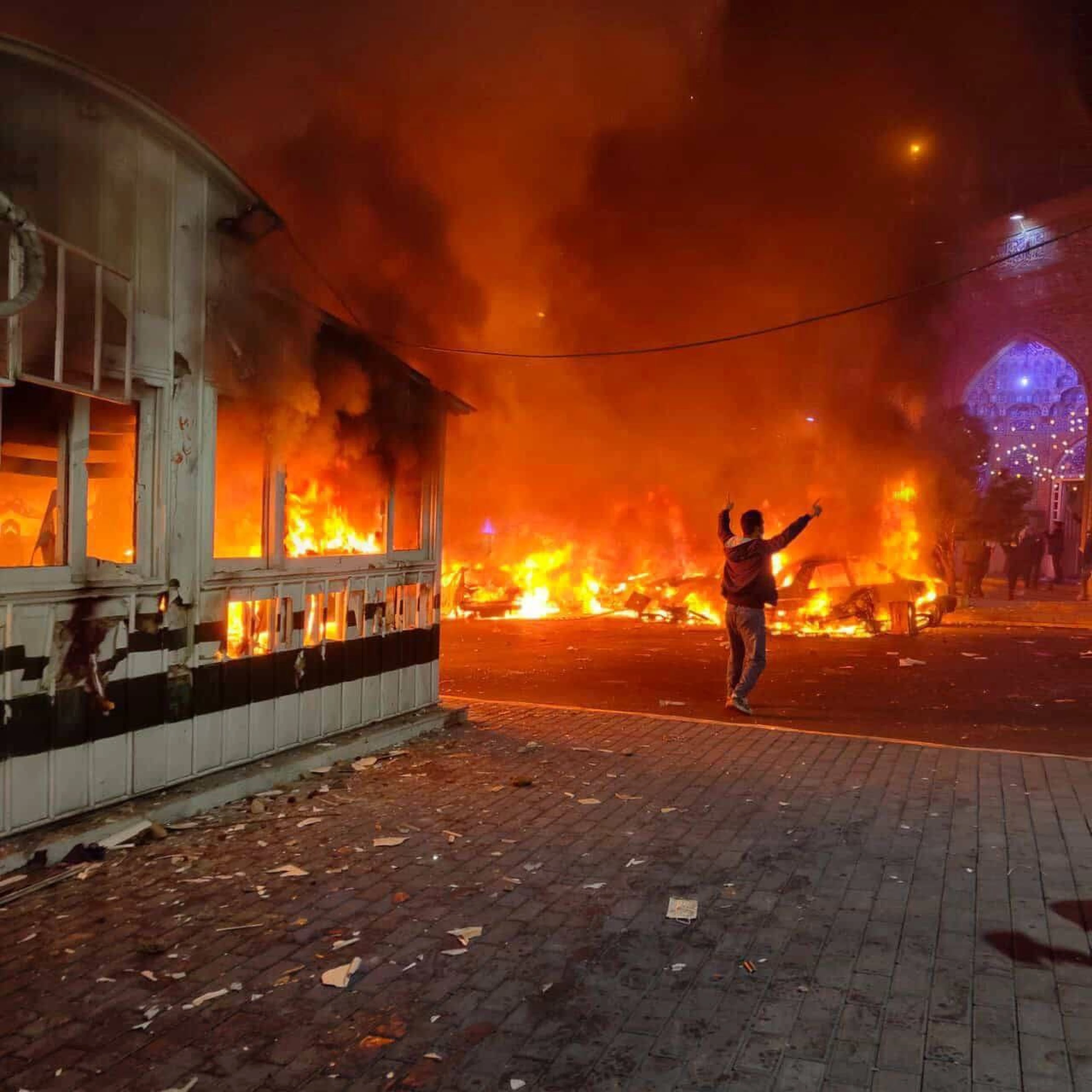
ERBIL, Kurdistan Region of Iraq – Western countries on Saturday strongly condemned Iran’s violent killing of protesters, while Iran’s top security body described the country’s nationwide protests as “war,” labeling the participants “quasi-terrorist groups” and vowing “no leniency” toward those it said were affiliated with the United States and Israel.
The foreign ministers of Australia, Canada, and the European Union on Saturday “strongly” condemned Iranian security forces for the “killing of protesters, the use of violence, arbitrary arrests, and intimidation tactics” by the regime against its own people, according to a joint statement.
The statement added that the Islamic Republic “must immediately end the use of excessive and lethal force” by its security forces, including the Islamic Revolutionary Guard Corps (IRGC) and the paramilitary Basij, against protesters.
In a brief post on X on Saturday, US Secretary of State Marco Rubio wrote, "The United States supports the brave people of Iran."
As the country faced more than 36 hours of a nationwide internet shutdown and nationwide protests continued, the countries in question commended the bravery of the Iranian people as they stood up for their “fundamental right to peaceful protest.”
The protests drew their largest crowds after nearly two weeks of demonstrations, during which the Iranian government shut down the internet, continuing its pattern of restricting online platforms during periods of unrest to control the flow of news.
Large crowds gathered on Friday night in Tehran to protest against the Iranian government despite the imposition of an internet blackout, with authorities scrambling to quell the nationwide demonstrations that continue to gain traction pic.twitter.com/M3Oyv5RQ7n
— The New Region (@thenewregion) January 10, 2026
Ali Larijani, secretary of Iran’s Supreme National Security Council, described the nationwide protests of the past two weeks as evidence that Iran is “in the middle of a war,” saying the state has identified the “main ringleaders of the unrest” and that they will be dealt with “without leniency,” he said in an interview with state broadcaster IRIB on Friday.
“Rioters are an urban quasi-terrorist group,” he said, claiming that Israel has previously announced that it would “use the structures they had created in Iran for a new scenario.”
He further accused the protesters of being armed, saying their rapid movement toward military and law enforcement centers “to obtain weapons” was a sign of an attempt to create “a civil war.”
While US President Donald Trump has repeatedly threatened to attack Iran if authorities kill peaceful protesters, as of Friday, 47 people had been identified as “killed by direct fire from government forces,” according to the Oslo-based Hengaw Human Rights Organization.
Trump on Friday said, “Iran’s in big trouble,” adding, “It looks to me that the people are taking over certain cities that nobody thought were really possible.”
Reaffirming Washington’s previous threats of action against Tehran, he said that if Iranian authorities kill protestors as they have in the past, “we will get involved,” adding that “that doesn’t mean boots on the ground, but we will be hitting them very, very hard where it hurts,” he told reporters in his office on Friday.
Earlier in the day, Iran’s Supreme Leader Ayatollah Ali Khamenei dismissed Trump’s remarks as “irrelevant,” accusing him of siding with “rioters and people who are harmful to the country,” and later describing protesters as “foreign agents” and “inexperienced and careless people” acting in line with Trump’s “wishes.”
Iran has a long history of labeling protesters as “rioters” and alleging ties to the US and Israel, responding with heavy crackdowns, arrests, and, in some cases, charges that carry the death penalty.
Nationwide protests continue across Iran, with even the country’s most conservative cities, Mashhad and Qom, and the Tehran Grand Bazaar participating in strikes and demonstrations. These areas had largely stayed out of the country’s largest protest movements in the past.
 Facebook
 LinkedIn
 Telegram
 X
X