
ERBIL, Kurdistan Region of Iraq – For residents of Aleppo’s Kurdish quarter, returning home has become a risky decision. A recent wave of violent clashes shadowed over the neighborhoods, forcing hundreds of thousands to flee, who now face the dilemma of whether to return to their homes scarred by the tensions or start over elsewhere.
The city’s Kurdish quarter, composed of the Sheikh Maqsoud and Ashrafiyeh neighborhoods, was engulfed in violence last week when factions linked to the Syrian government marched into the area with tanks and heavy artillery, in an attempt to draw out Kurdish-led internal security forces (Asayish).
The clashes raged on for days, leaving much of the neighborhoods’ infrastructure in ruin. Streets were flooded with debris and remnants of bombardment, while indiscriminate shelling repeatedly hit residents seeking shelter in their homes or attempting to flee.
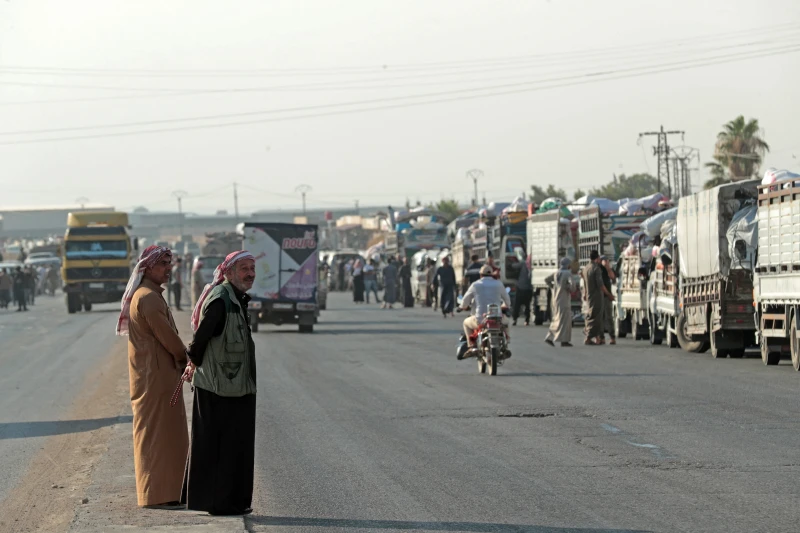
While an exact casualty toll is not yet available, it is estimated that more than 100 residents were killed and hundreds more were injured as a result of the attacks. More than 155,000 people rushed to the two humanitarian corridors opened by the Syrian government, as its brief opening offered a narrow window to escape.
Footage showed thousands leaving the neighborhoods on foot, carrying nothing more than a few bags containing essentials, while many had no choice but to leave their valuables behind; exhausted elderly, children carried by adults, and people clutching their pets, as they made their way towards Deir Hafer and other, relatively safer areas.
For those who chose to remain in the neighborhoods, the situation was no better. Unverified reports estimate that around 300 people were arrested by government-linked factions, while some reports suggest that over 270 people have gone missing.
The displaced were received at various destinations by different local and international organizations, which provided medical care, shelter, food and other immediate necessities. Once a ceasefire understanding was announced on January 11, some had to contemplate the possibility of starting anew somewhere else, but for many, troubled with economic burdens, that was not an option, and they headed back to the uncertainty at home, even if reluctantly.
Residents of Ashrafiyeh that spoke to The New Region have described the situation as relatively stable, but the danger of a potential reescalation still looms. In Sheikh Maqsoud on the other hand, the situation appears more challenging, with heavy security deployed and access to services remaining limited.
Befrin*, a young Kurdish woman from Sheikh Maqsoud, said that upon arriving at the Awarid checkpoint, her family was blocked from entering the neighborhood and were told that reentry was not allowed at the moment. She added that some had reportedly entered through Ashrafiyeh, but noted that “basic services such as water and electricity are of course unavailable.”
Fadi*, from the Syriac neighborhood adjacent to Ashrafiyeh, returned to his home on Tuesday, only to find out that his life savings - some $4,000 - had gone missing. He believes the money may have been stolen by the armed factions.
When asked about the condition in Ashrafiyeh, Fadi said that movement in the neighborhood “is almost non-existent; residents do not feel safe or at ease.”
Leila*, another resident of the Syriac neighborhood, said she plans to return to her home soon. She told The New Region that she has consulted her neighbors, who have told her that the situation was normal. Nevertheless, she remains afraid of returning.
Meanwhile, other residents reported extensive damages to shops and businesses, particularly liquor stores.
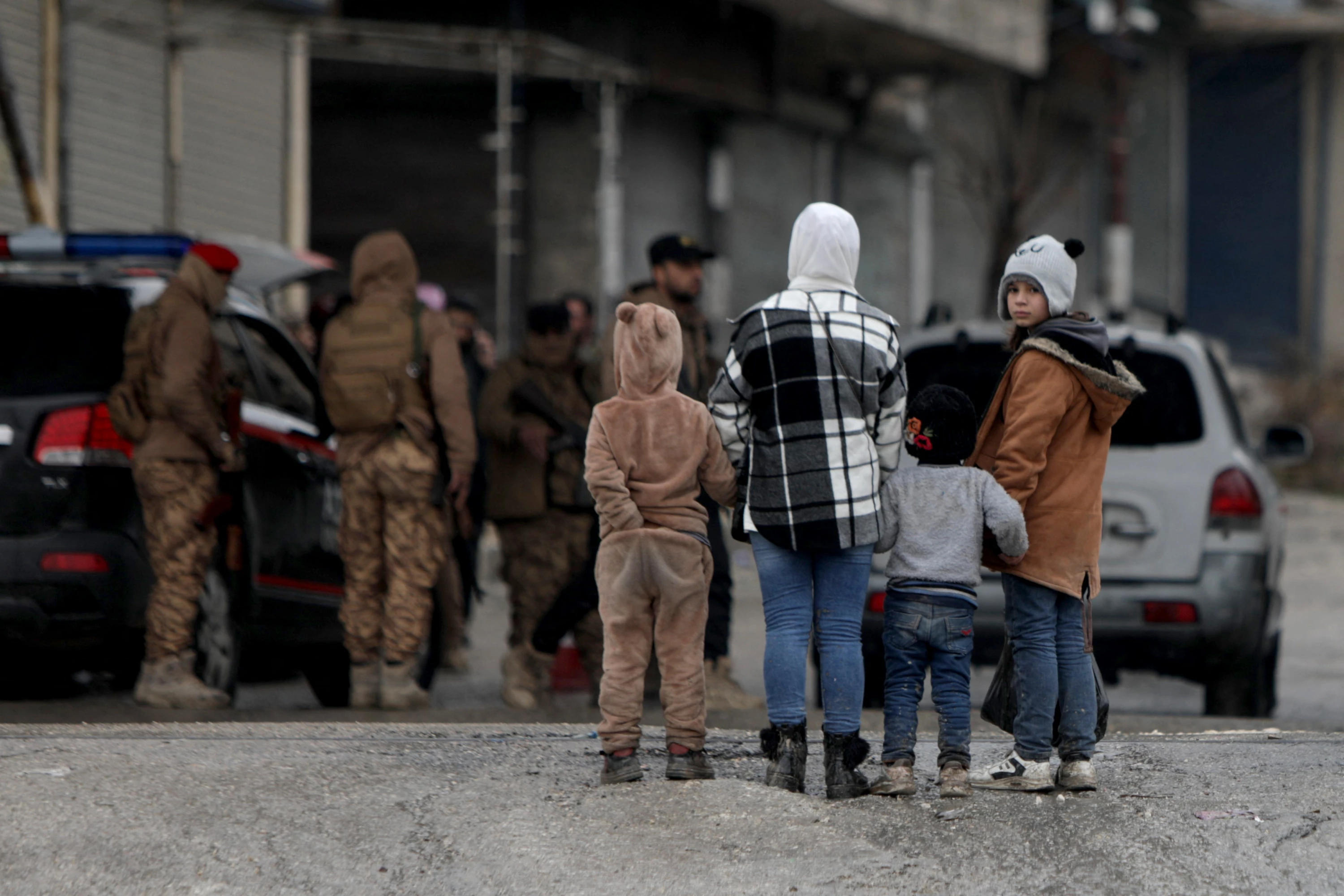
A significant factor deterring the return of residents has been arbitrary arrests carried out by security forces after checking the belongings and mobile phones of returning residents. The campaign has especially targeted young men.
Residents told The New Region that the armed factions are scraping for any links to Kurdish-led groups, including the Asayish and the Syrian Democratic Forces (SDF), to detain the young men, going as far as arresting people for prior affiliations with the Kurdish-led forces.
It is rare to find Kurdish families in the neighborhoods without at least one member linked with the Kurdish forces, which makes returning home particularly difficult.
“Young people are afraid to return, and everyone who had a relationship with the SDF, whether a civilian or military employee, has not returned,” Khalil*, an elderly man, stated, adding that many of the youth who had no connection with the forces also hesitated to return, in fear of arbitrary detainment.
However, some choose to go back despite the risks.
“There is no looting at the moment, and women are not being harmed at all. As for the young men, they are being investigated, but whoever is found to have done nothing wrong is released,” said Khadija, who has returned to her residence in Sheikh Maqsoud.
“People must return to their homes so that what happened in Afrin with the looting does not happen again,” Khadija* added.
Many of the Kurds residing in the quarter are originally from Afrin, displaced after Turkey and its proxies invaded the city in 2018, forcing around 137,000 native residents to leave their homes. Following the takeover, armed fighters engaged in looting, kidnappings, and executions.
For those coming from Afrin, the escalations in Sheikh Maqsoud and Ashrafiyeh, along with renewed displacement, reopened old wounds and reignited trauma of losing their homes and loved ones.
Another factor that hinders the return of the displaced is the fear that the armed factions who took over the quarter will act similarly towards them as those who targeted Alawite and Druze communities in March and July, respectively, killing and detaining civilians despotically.
For many, the path home remains uncertain and hazardous. While some have returned and began to rebuild their lives, others are wary of security checks and threats of lingering violence, and some do not even have a home to go back to as their properties were destroyed in the conflict.
The shadow of displacement continues to loom over the quarter, leaving the residents with an uncertain future.
*Names have been changed to protect identities.
*Adam al-Haddad is an alias chosen by the Aleppo-based reporter to protect his identity, amid fears of a crackdown by state forces on journalists.
 Facebook
 LinkedIn
 Telegram
 X
X