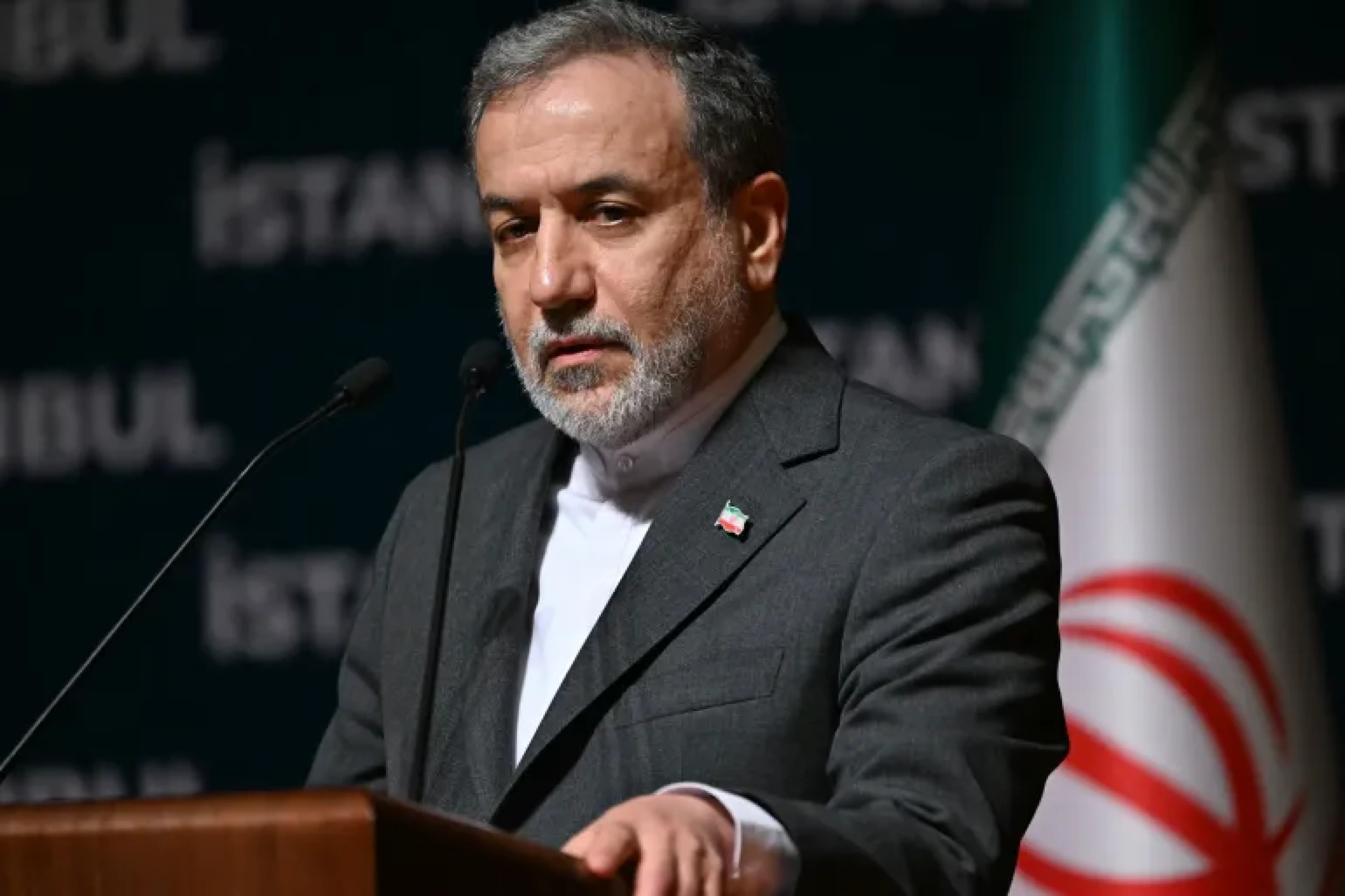
ERBIL, Kurdistan Region of Iraq – Iran’s foreign minister on Wednesday responded to recent US military intervention threats by offering negotiations with Washington, recalling the possibility of a deal in which Tehran would “permanently” agree not to pursue nuclear weapons, while blaming recent protest casualties on Washington and Tel Aviv.
Tensions between Iran and the US have intensified in recent weeks, with Washington warning Iran of potential attacks if it continues cracking down on protesters or expands its nuclear and missile programs, and Tehran responding with threats of retaliation.
Iran has faced weeks of nationwide protests, with monitors saying at least 2,500 people have been killed and thousands more arrested or injured amid an intensified security crackdown and an ongoing internet blackout.
“My message for the US is to let us go for a negotiated solution for Iran’s nuclear program,” Araghchi said in an interview with Fox News on Wednesday, noting that Tehran and Washington could reach a similar, or better deal than the 2015 accord if the “current administration doesn’t like it.”
The comments from top Iranian diplomats came after US President Donald Trump said on Tuesday that he had canceled Iran’s request for talks and told protesters, “Help is on the way.”
Referring to the June war, Araghchi said it proved that “there is no military option to destroy our nuclear program,” while acknowledging that the attacks “severely destroyed nuclear facilities.”
He stressed that “the technology is there, our nuclear program, our enrichment program,” stressing it cannot be destroyed by bombing.
In June, Israel killed top brass Iranian military commanders and nuclear scientists with airstrikes, prompting retaliatory attacks by Tehran, with the two trading salvos of missiles and drones for 12 days. The US also bombed the key Natanz and Fordow nuclear sites in the country near the end of the conflict.
Araghchi further noted that Tehran is ready for indirect talks if the US is offering “a win-win solution,” adding “we are ready to do any confidence spending measure needed to prove Iran’s nuclear program is peaceful and would remain peaceful forever, and Iran would never go for nuclear weapons, and in return we expect them to lift their sanctions.”
The US and Iran engaged in several rounds of indirect talks aimed at reviving the failed 2015 nuclear deal, formally known as the Joint Comprehensive Plan of Action (JCPOA), but the negotiations came to a halt with the outbreak of the June war.
Referring to the talks, Araghchi said he was empowered by Supreme Leader Ayatollah Ali Khamenei, noting that Iran told the US mediator, if the purpose of the talks is to reach a deal ensuring Tehran “permanently not to go for nuclear weapons, that deal is achievable.”
He reaffirmed Iran’s concern over what it sees as the US aim to deprive the country of enrichment, saying “that is not going to happen.”
He further stressed that the missile program remains non-negotiable. “We are not ready to give up something that is a matter of national pride and dignity,” he said, referring to nuclear activity and uranium enrichment.
Regarding the weeks-long nationwide protests, where reports estimate 2,500 to 12,000 people have died, Araghchi told reporters, “For three days we had fighting against terrorists and not with protesters, it was a completely different story.”
He claimed that after the first 10 days, the protesters were “terrorist elements led from outside,” adding that they allegedly shot police officers and “burned and beheaded them.”
He also blamed the recent protest deaths on “an Israeli plot,” saying the protesters, labeled as “terrorists,” aimed to increase casualty numbers “because Trump has said that if there are killings, he would intervene. And they wanted to drag him into this conflict.”
“They started to increase the number of deaths by killing ordinary people, by killing police officers, by starting a kind of, you know, fighting inside the different cities."
Nationwide protests in Iran have entered their third week, beginning on December 27 at Tehran’s Grand Bazaar, where business owners and shopkeepers launched strikes and protests over the falling value of the Iranian rial against the US dollar. The unrest later spread to other provinces, with chants increasingly targeting the state.
Iran’s judiciary chief has ordered authorities to “expedite” cases of detained protesters, whom officials have described as “rioters” and “foreign agents,” with rights monitors warning that some could face execution.
The Islamic republic has a long history of labeling protesters as rioters and alleging ties to the US and Israel, responding with heavy crackdowns, arrests, and charges that carry the death penalty.
Charges against demonstrators often are “corruption on Earth” (efsad-e fel-arz), “enmity against God” (moharebeh), and “armed rebellion against the state” (baghi), with authorities warning of “no leniency.”
 Facebook
 LinkedIn
 Telegram
 X
X