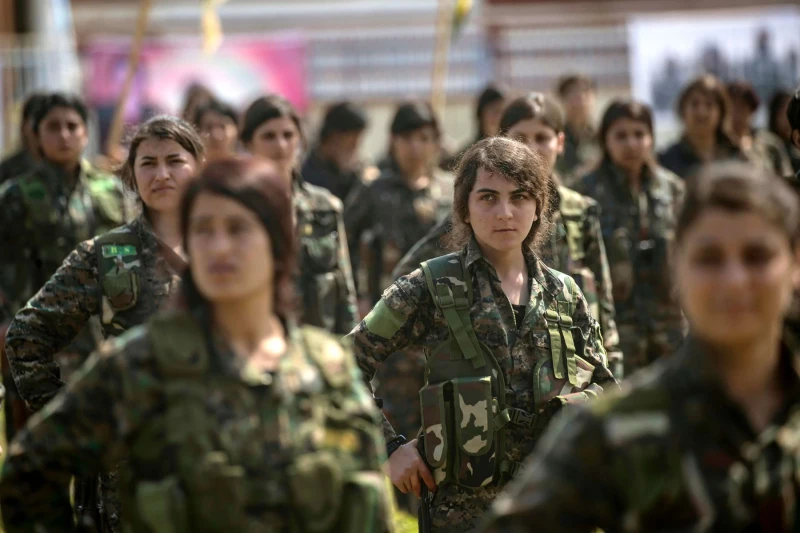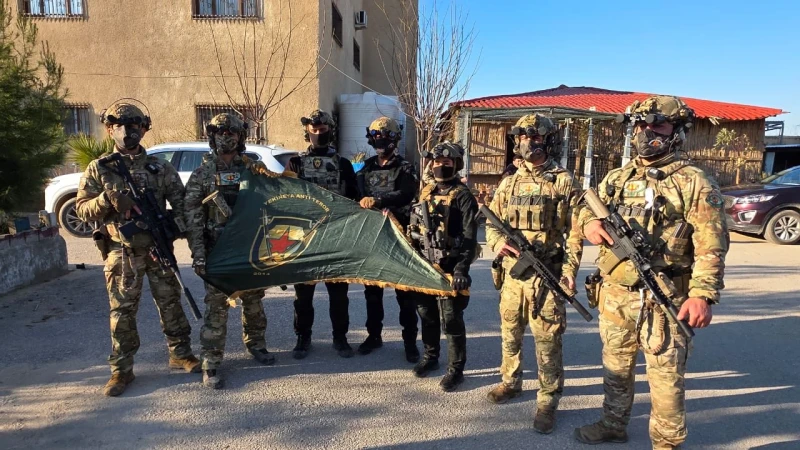
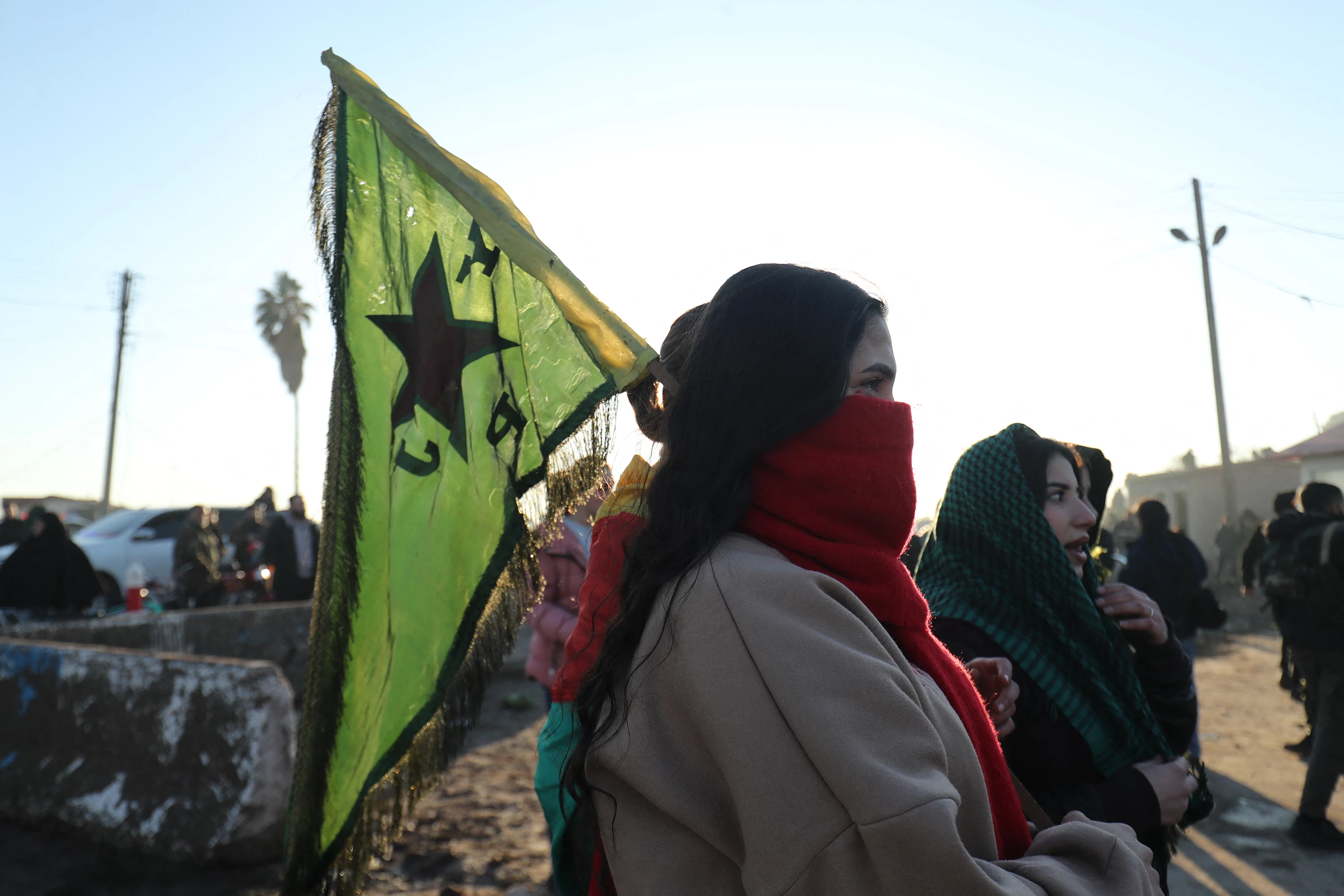
ERBIL, Kurdistan Region of Iraq – Kurdish-held Rojava (northeast Syria), a symbol of democracy, pluralism, and resilience against tyranny, is struggling to stay afloat amid relentless attacks by the Syrian Arab Army and its affiliated factions on Kurdish forces, an expert warned on Thursday, citing local Arab tribes’ loyalty and Ankara’s support to Damascus as key reasons.
Damascus has launched a brutal offensive against Rojava in a bid to secure interim President Ahmed al-Sharaa’s vision of a united, centralized Syria, despite the country’s marginalized minorities repeatedly calling for federalism.
The assault has left hundreds dead and forced Kurdish-led forces, who defeated the Islamic State (ISIS) in Syria, to cede swathes of territory and withdraw to Hasaka province, with the attacking Syrian forces violating ceasefires, committing human rights violations, and possibly war crimes in their offensive.
Fabrice Balanche, associate professor and research director at the University of Lyon 2, told The New Region that Sharaa wants to take over the whole country.
“I don’t think the PYD [Rojava’s ruling Democratic Union Party] and the YPG [People’s Protection Units] will be able to protect even the Kurdish land,” Balanche said, citing the Arab tribes’ loyalty to Sharaa and Turkey’s strong backing of Damascus as factors threatening Rojava’s existence.
“Rojava is over,” he remarked.
Balanche explained that Raqqa, an Arab-majority province, saw many of its tribes defect from the SDF and join forces with Damascus, adding that the same thing happened around Kurdish-majority Qamishli with the Shammar tribe.
The Shammar tribe and its Sanadid militia force operated under the umbrella of the Kurdish-led Syrian Democratic Forces (SDF) but enjoyed a great degree of independence. As Damascus-linked forces advanced on Rojava’s territory, the tribe’s leaders announced that they had joined forces with the central government and left the SDF.
“All the comrades - the soldiers of SDF have retreated from the bases in Qamishli and Hasaka and handed them over to the Sanadid [force] who are tied to the Shammar [tribe],” Baqi Hamza, a member of the Syrian Democratic Council's (SDC) foreign and general relations committees, told The New Region in an interview on Tuesday.
The SDC is the political wing of the SDF.
The expert explained that even if Kurdish forces are able to defend their land against the Syrian government, Turkey will ramp up its involvement by sending “troops, or drones, or planes from behind.”
Kurdish authorities have repeatedly called out Turkey, the main ally of the new Damascus authorities, for its involvement in the attacks.
Turkey views the YPG, which forms the backbone of the SDF, as inextricably linked to its domestic foe, the Kurdistan Workers' Party (PKK), and therefore sees SDF as the PKK's Syrian offshoot.
Balanche, who has spent a lot of time in Rojava, said the Arab population never accepted the Kurds as rulers and that “they are very racist against the Kurds.”
Washington’s greenlight
The SDF, which is the de facto army in Rojava, is also the US-led global coalition against the Islamic State’s (ISIS) main partner on the ground. The coalition and the US have remained largely silent about the attacks on their Kurdish partners, raising many questions.
According to Balanche, the US greenlit the attacks while the rest of the coalition is not strong enough to support their Kurdish partners.
“When we speak about the coalition, we have to speak about the US giving the green light to Syria, it's clear. And the rest of the coalition, France, Germany, they are not powerful,” he said.
“We can see [French President Emmanuel] Macron, who is protesting, ‘it's not good what you are doing to the Kurds,’ but at the same time you want unification of Syria … nobody speaks about federalism, about autonomy for the Kurds,” he stressed.
ISIS - Sharaa’s ‘cousins’
The Kurdish-led forces have lost control of the most important prisons holding ISIS members to Damascus-linked forces.
“The US is taking 7,000 ISIS prisoners to Iraq, because it has no confidence in Sharaa. Because they know very well that Sharaa - they will never court them, they will never keep them in jail. On the contrary, they are going to integrate them in the army, because they are brothers, they are cousins with these people,” Balanche said.
Sharaa, also known by his former nom de guerre Abu Muhammad al-Jolani, joined al-Qaeda in Iraq in 2003 just weeks before the American invasion, and quickly rose through the group’s ranks.
He was arrested by US forces in Iraq in 2006 and imprisoned for over five years. His release in 2011 coincided with the start of the Syrian civil war, and he would go on to form the al-Nusra Front, the Syrian branch of al-Qaeda, after reaching an agreement with ISIS emir Abu Bakr al-Baghdadi.
Among the facilities the SDF had to pull back from is the notorious al-Hol camp, located in the far southeast of Hasaka. The Syrian Arab Army and Damascus-affiliated forces moved in to take control of the squalid facility. Reports and videos posted on social media showed a large number of ISIS-linked people escaping amid the security vacuum.
Washington on Wednesday announced a mission to transfer ISIS prisoners in Syria to Iraq, with the US Central Command (CENTCOM) saying 7,000 detainees could be included in the campaign. The Iraqi government later officially announced that it had approved the transfer, saying 150 “Iraqi and foreign terrorists” had already arrived.
 Facebook
 LinkedIn
 Telegram
 X
X