Looking at the Middle East these days, it is not difficult to see that the region is entering a new phase of power re-centralization and geopolitical consolidation. Kurds across the region can no longer afford to read these shifts as territorially-isolated crises or temporary disruptions. What we see unfolding today is not episodic—it is structural. It is not an overstatement to say that new regional alignments, new visions of governance, and new geopolitical priorities are converging in ways that directly challenge Kurdish political space, autonomy, and security. This moment demands not emotional reaction, even though emotions are rightfully running high, but strategic reassessment and readaptation.
Syria is the primary testing ground for this emerging order. Turkey and key Gulf actors, such as Qatar and Saudi Arabia, have begun advancing a regional vision centered on the restoration of strong centralized rule under strongman leaders. This, by necessity, means that de facto decentralization and non-state actors will no longer be tolerated as they once were— even though this will ultimately be the outcome of struggles settled on the ground.
In this new reality, centralization is being reframed as “stability”, and oppressive uniform authority as “order”. This stability and order are intended to carry a Sunni Arab sectarian-ethnic imprint, shaping who is empowered and who is marginalized. This Gulf–Turkey axis, if we can call it that, also embraces Pakistan as a cross-regional strategic extension and the only Muslim nuclear power. It competes against the Iran-led Shiite axis (or what remains of it today), and more recently the Israeli-UAE axis, and their mainly non-state allies from the Arabian Peninsula to eastern (and northern) Africa.
The United States is perceived as enabling, or at least not objecting to, the Turkish-Gulf axis in places such as Syria and Yemen. In reality, Washington’s motivations are different from this axis, but some of their key objectives and preferred outcomes overlap. The US is not driven by sectarian logic. Its overriding objective is to reduce its entanglement in Middle Eastern crises so it can concentrate resources on confronting China as the global order is being reshaped. From this perspective, strong centralized regimes, however flawed, are seen as mechanisms for minimizing long-term military deployments and diplomatic drain. Therefore, stability, not pluralism, becomes the priority. Even deeply compromised actors can be rebranded as “necessary partners” if they promise order, containment, and control.
Syria, where the government and its military are filled with extremist jihadis, illustrates this logic starkly.
How about Kurds?
In light of all this, what is happening in Syria cannot be dismissed as a localized episode. Across the Kurdistan Region of Iraq and beyond, a widespread perception has taken hold that Washington has effectively abandoned the Kurdish-led Syrian Democratic Forces (SDF). For many Kurds, this feels like more than a Syrian development—it feels like a warning signal. While this interpretation may overreach in strictly strategic terms—the US–Kurdistan Region relationship remains structurally stronger due to Baghdad’s pro-Iranian alignment—the anxiety is not irrational. Regional patterns matter. Precedents matter. Signals matter. And these are all troubling.
Four interconnected fronts now define the Kurdish strategic landscape.
First, Syria itself. A political-diplomatic solution is urgently needed. Kurdish-majority areas in Hasakah and northern Aleppo require security arrangements that preserve Kurdish control, local administration, and political rights. A military takeover of Syria’s Kurdish regions, or Rojava, by Damascus’ would represent a major threat, likely an existential one in the long-run, to the Kurdish population there. It would place Kurdish communities under the authority of a security apparatus infused with extremist elements whose ideology and behavior are increasingly indistinguishable from the Islamic State’s (ISIS) moral universe. The mass escapes of ISIS prisoners and families, the normalization of jihadist violence, and the dehumanization of Kurds in pro-government discourse point toward a slow-burn long-term security catastrophe.
The fall of Rojava would not only end Kurdish political life in Syria—it would destabilize Iraqi Kurdistan as well. Extremist reconstitution along Iraq’s borders would recreate conditions eerily similar to 2013–2014, when ISIS metastasized across Syria and Iraq. This is not alarmism; it is historical pattern recognition. In such a scenario, cross-border Kurdish mobilization, from volunteers to organized forces might become strategic necessity.
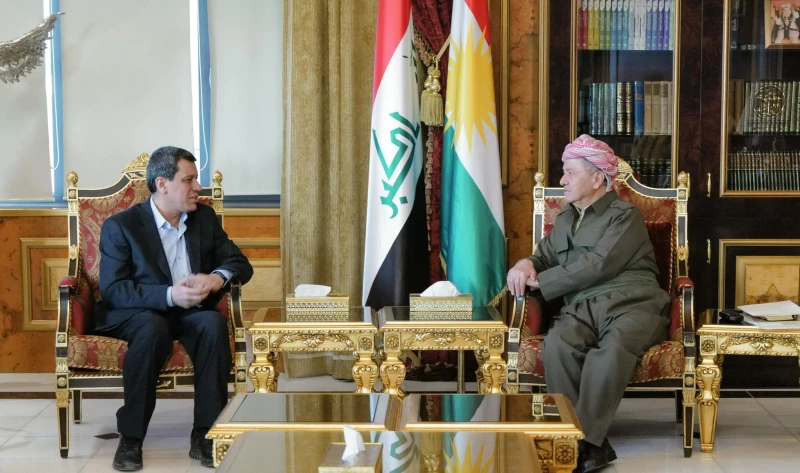
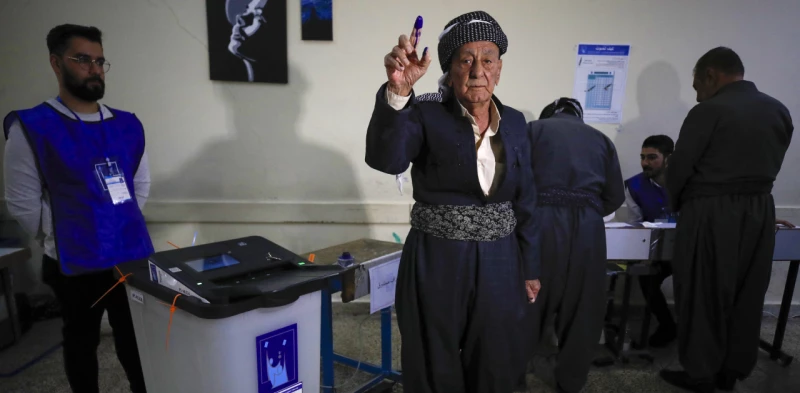
Second, the internal front in the Kurdistan Region of Iraq. Kurdish parties understand the danger, but understanding is not enough. This is a moment that requires political maturity, not factional calculation. Power disputes, legitimacy crises, and institutional paralysis weaken Kurds at the worst possible moment. What is needed now is completing Kurdistan’s government formation, reactivating parliament, restoring institutional legitimacy, and presenting a unified political front. An internally divided Kurdistan cannot survive prolonged regional pressure.
Third, the Iraqi dimension. As I argued in a recent column for The New Region, Kurdish–Shiite relations must be reset. The threat emerging from Syria is not just a Kurdish or a Shiite problem—it is an Iraqi problem. Extremist resurgence, border instability, and transnational militancy threaten Iraq as a whole, particularly the Kurds and Shiites. Statements by Iraq’s intelligence chief to The Washington Post reflect keen awareness of this reality. A strategic Kurdish–Shiite alignment, grounded in shared security interests rather than transactional politics, is now a necessity. This will require confronting historical grievances, swallowing some pride on both sides, and transcending old resentments—or the alternative will be collective vulnerability.
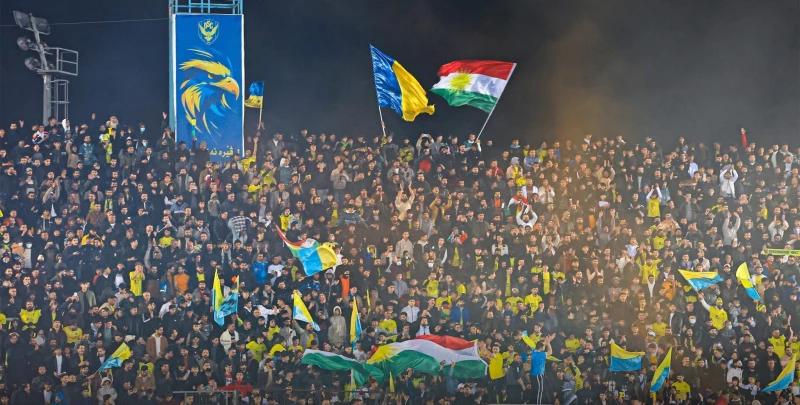
Fourth, the pan-Kurdish dimension. The past weeks have made one truth unmistakably clear: Kurdish strategic depth is its geography and people. Transnational Kurdish mobilization over Rojava’s fate has reignited a sense of collective agency that borders cannot easily contain. This has direct psychological and strategic impact on Kurdish fighters in northern Syria, who now see themselves as part of a broader Kurdish national continuum rather than an isolated front. We might witness further activation of Kurdish energy in Turkey, given that the majority of the region’s forty million or so Kurds resides there.
Finally, none of this negates the importance of Washington. Kurds must maintain strong relations with the United States. Kurds remain one of the few political communities in the region where both elites and society retain deep affinity with American interests, values, and allies. Kurds have proven to be a stabilizing force, not a destabilizing one. They have not turned anti-Western. That matters and should matter more. Movement in the U.S. Congress to introduce a Save the Kurds Act by Senator Lindsey Graham shows the value of Kurds as a strategic partner is recognized by many in Washington as well.
In the quickly shifting Middle East, if Kurds are to survive politically, they must become organized actors, maintain current alliances, and build new ones. This moment requires clarity, discipline, unity, and long-term vision. Anything less will leave Kurdish politics reactive in a region that is rapidly becoming unforgiving to those without strategic depth, alliances, and internal cohesion.
The views expressed in this article are those of the writer and do not necessarily represent the position of The New Region's editorial team.
 Facebook
 LinkedIn
 Telegram
 X
X