
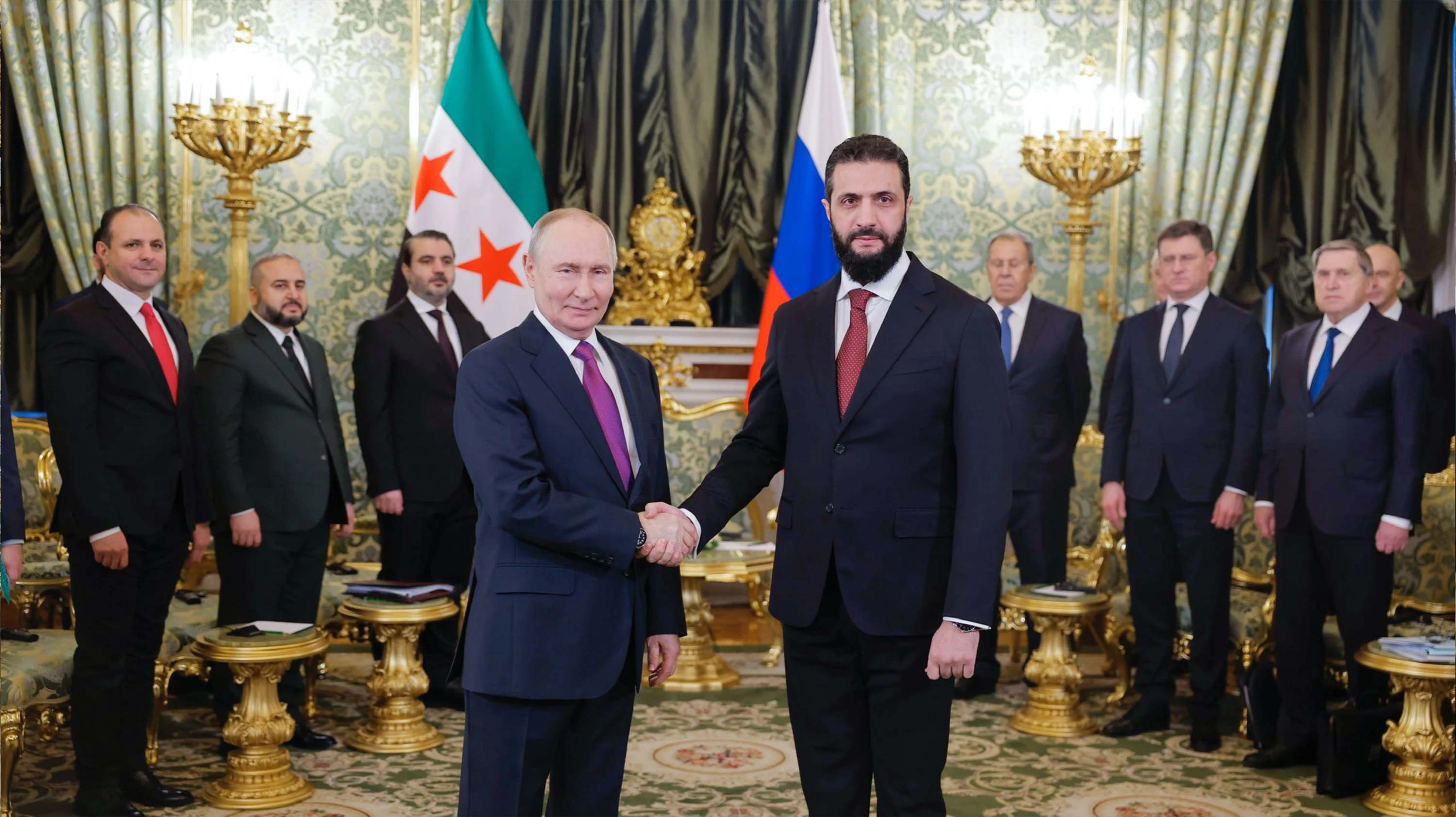
ERBIL, Kurdistan Region of Iraq - Syrian Interim President Ahmed al-Sharaa on Wednesday met with Russian President Vladimir Putin, with the latter expressing support for Syria's restored "territorial integrity" amid Damascus' offensive against the Kurdish-led authorities in Rojava.
According to Syria’s state news agency SANA, Putin welcomed Sharaa to the Kremlin, with senior officials from both nations present, reaffirming Russia’s commitment to strengthening bilateral ties across multiple sectors, with a particular focus on economic cooperation.
The Russian state news agency TASS quoted the former as saying that “the integration of Transeuphrates is certainly an important step in this direction, and Russia hopes that that will contribute to the restoration of the territorial integrity of Syria as a whole. We congratulate you on this.”
"We have closely monitored your efforts to restore the territorial integrity of Syria. And I want to congratulate you on the fact that this process is gaining momentum. We have always advocated the restoration of Syria's territorial integrity, as you know. And we support all your efforts in this direction," Putin continued.
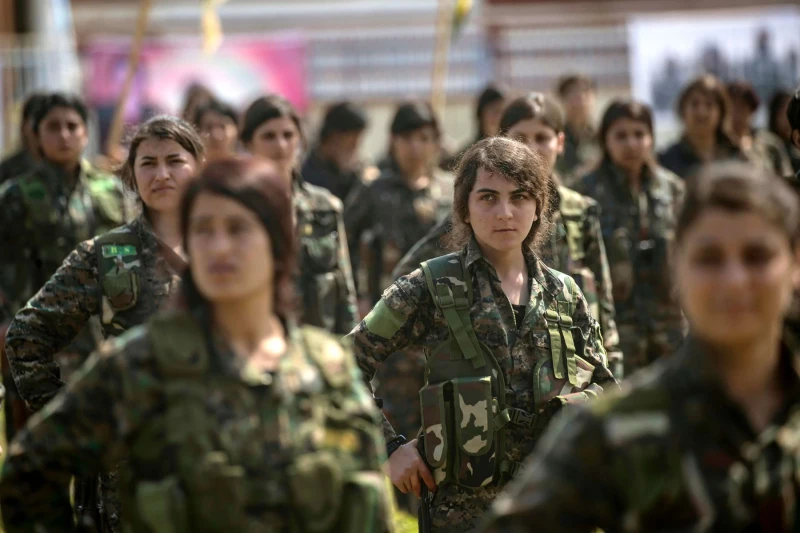
Damascus has launched a brutal offensive against Rojava in a bid to secure Sharaa’s vision of a united, centralized Syria, despite the country’s marginalized minorities repeatedly calling for federalism.
The assault has left hundreds dead and forced Kurdish-led forces, who defeated the Islamic State (ISIS) in Syria, to cede swathes of territory and withdraw to Hasaka province, with the attacking Syrian forces violating ceasefires, committing human rights violations, and possibly war crimes in their offensive.
After serving as former Syrian President Bashar al-Assad’s primary ally throughout the 14-year Syrian civil war, Russia is now pivoting toward the new government as it seeks to safeguard military bases that anchor its operations in the Middle East. However, Moscow’s decision to grant asylum to the ousted president and his wife remains a significant barrier to a full diplomatic reset.
“Much has been accomplished in terms of restoring our interstate relations,” Putin said during the meeting.
Syrian Interim President Ahmed al-Sharaa met Russian President Vladimir Putin in Moscow on Wednesday, with the latter expressing his support for Damascus' efforts to "preserve Syria's unity and territorial integrity" amid an offensive against the Kurdish-led administration pic.twitter.com/lLy5wUSxB3
— The New Region (@thenewregion) January 28, 2026
Putin noted that Moscow and Damascus “are deeply rooted and witnessing continuous development,” adding that “the return of the areas east of the Euphrates to the authority of the Syrian state constitutes an important step in strengthening the unity of Syrian territory,” SANA reported.
TASS also reported that “the Russian construction industry is ready to help in the reconstruction of Syria,” quoting Putin as saying that Russian companies, including in the construction sector, are prepared for “joint work” to rebuild the country.
In his second meeting with Putin since taking power, al-Sharaa characterized the bond between Syria and Russia as profound, emphasizing the critical role Moscow has played in upholding Syrian sovereignty. He credited Russia with playing a “historic role” not only in Syria’s unity and stability, but across the broader region as well.
The interim president — who for more than a decade was designated a “terrorist” by the US as the leader of the al‑Qaeda‑linked al‑Nusra Front under the name Abu Mohammed al‑Jolani — added that “Syria had overcome major challenges during the past year, the most recent being the unification of its territory, expressing hope for a transition towards stability and peace,” according to SANA.
Moscow maintains two main military outposts in the country: the Hmeimim airbase and a naval facility in Tartus on the Mediterranean coast. On Wednesday, however, the Kremlin pulled its forces out of the Qamishli airport in Rojava amid the uncertainty caused by the Syrian offensive against Kurdish-led forces in the area.
 Facebook
 LinkedIn
 Telegram
 X
X