ERBIL, Kurdistan Region of Iraq - Israel announced Friday that Gaza's Rafah border crossing will reopen on Sunday, though only for the “limited movement of people,” coming after the vital humanitarian corridor remained closed during a lengthy Israeli-imposed hiatus.
COGAT, the Israeli defense ministry unit responsible for civilian affairs in the Palestinian territories, said in a statement that “the Rafah Crossing will open this coming Sunday (February 1st) in both directions, for limited movement of people only.”
The agency added that entry and exit would proceed “in coordination with Egypt, following prior security clearance of individuals by Israel, and under the supervision of the European Union mission.”
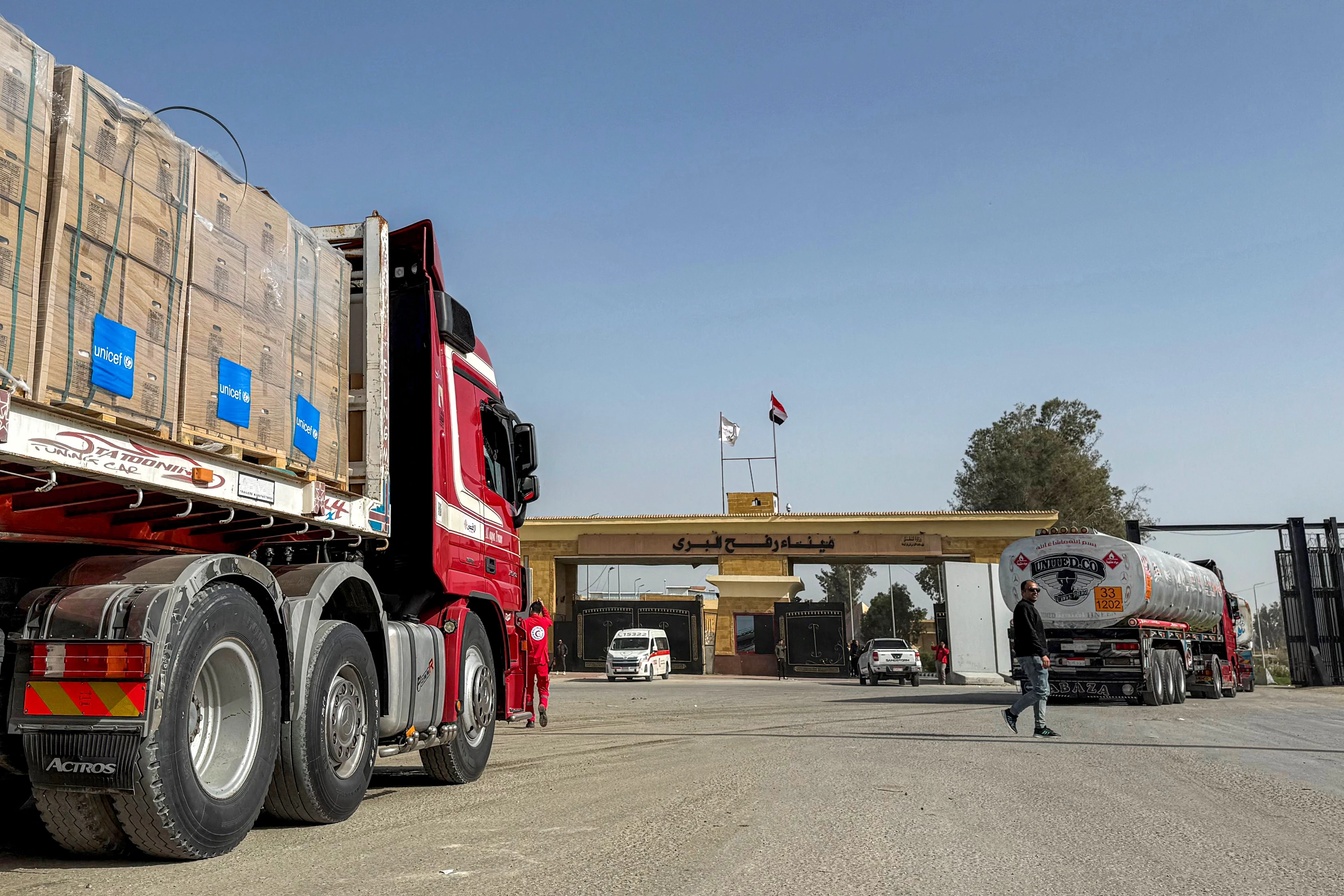
Rafah, the enclave’s only passage to the outside world that does not connect to Israel, is a vital route for the movement of people and goods. It has remained closed since Israeli forces seized control of the crossing in May 2024, aside from a brief reopening in early 2025. Several attempts to resume operations since then have stalled.
The announcement came hours after Hamas called for the immediate and full reopening of the Rafah crossing between Gaza and Egypt in both directions, urging an “immediate transition to the second phase” of the US-brokered ceasefire. In a statement, the group specifically cited provisions for reopening the border and allowing a committee of Palestinian technocrats to enter the territory to begin administrative duties.
A ceasefire between Hamas and Israel has been in place since October 10, stipulating an end to hostilities, the removal of restrictions on humanitarian aid deliveries, the release of all hostages held in Gaza, the freeing of approximately 2,000 Palestinian prisoners, and the withdrawal of Israeli forces to the so-called “yellow line.”
Satellite images and video analyzed by the BBC indicate that the Israeli army has moved concrete barriers, expanding the areas under its control. In some cases, the relocation of those blocks was followed by the demolition of buildings and entire neighborhoods in nearby zones. The same imagery, along with UN OCHA reports, also shows Israeli military vehicles operating beyond the “yellow line” marked on official maps.
According to the Gaza Health Ministry, during the first 100 days of the Gaza truce, Israel violated the ceasefire at least 1,193 times, resulting in the deaths of at least 451 Palestinians and wounding 1,251 others.
Mirjana Spoljaric, president of the International Committee of the Red Cross (ICRC), urged nations to “harness the momentum” of the initial phase of the Israel-Hamas agreement to address the “dire humanitarian conditions in Gaza.”
Over the past 15 weeks, the ICRC has coordinated with both parties and mediators to facilitate the return of hostages, detainees, and remains to their families as part of the deal's first phase.
Spoljaric emphasized that the international community must “seize every opportunity to scale up efforts that alleviate suffering in Gaza,” calling such action “essential for saving lives, restoring human dignity, and laying the foundations on which lasting peace can be built.”
The Israeli military also announced Friday that it conducted overnight strikes targeting eight alleged Hamas militants in Rafah, southern Gaza, resulting in three deaths, even as a precarious ceasefire continues across the enclave.
The Israeli military said in a statement Friday that it had identified “eight terrorists” emerging from a tunnel and that the air force subsequently “struck and eliminated three of the terrorists.”
Without disclosing the identities of those targeted, the military confirmed that additional strikes were carried out and that “soldiers continue to conduct searches in the area in order to locate and eliminate all the terrorists.” It added that Israeli forces “remain deployed in accordance with the ceasefire agreement and will continue to operate to remove any immediate threat.”
Israel had previously stated that it would only permit pedestrian traffic through the crossing as part of a “limited reopening” once it had retrieved the remains of the last hostage.
The remains were handed over by the Palestinian group on Wednesday, a sign of cooperation praised by US President Donald Trump. “They did help us with those bodies, getting them back, and that family is so grateful,” he said.
Trump claimed Thursday that Hamas is likely to surrender its weapons as part of an ongoing US-sponsored peace process with Israel, with the Palestinian militant group having yet to acknowledge the disarmament provision that comprises one of the most sensitive components of the ceasefire agreement.
“A lot of people said they’ll never disarm. It looks like they’re going to disarm,” Trump told a cabinet meeting Thursday.
Disarmament remains a central pillar of the second phase of the US-backed ceasefire agreement sealed in October. While Hamas maintains that returning the final hostage’s remains demonstrates its commitment to the truce, the group has yet to surrender its arsenal.
Although Hamas has long characterized disarmament as a “red line,” it has recently signaled a potential willingness to turn over its weapons to a Palestinian governing authority.
A Palestinian technocratic committee has also been set up with a goal of taking over governance in the battered Gaza Strip.
On Wednesday, Hamas said it was ready to transfer the governance of Gaza to a Palestinian technocratic committee while insisting the key Rafah border crossing be fully reopened within days.
“Protocols are prepared, files are complete, and committees are in place to oversee the handover, ensuring a complete transfer of governance in the Gaza Strip across all sectors to the technocratic committee,” Hamas spokesman Hazem Qassem told AFP on Wednesday.
The 15‑member National Committee for the Administration of Gaza (NCAG) — a body of Palestinian technocrats formed under the ceasefire that took effect on October 10 — is tasked with overseeing day‑to‑day governance in post‑war Gaza. The committee will operate under the supervision of the “Board of Peace,” a body chaired by Trump himself.
Led by former Palestinian Authority deputy minister Ali Shaath, the NCAG is expected to enter Gaza once the Rafah border crossing with Egypt reopens. Qassem said the group insists that Rafah “must be opened in both directions, with full freedom of exit and entry to the Gaza Strip, without any Israeli obstacles.”
Qassem said Wednesday that Hamas is clearly “committed to the agreement to stop the war on the Gaza Strip,” which was sparked by the group’s October 7, 2023, attack on southern Israel. He added that Hamas has fulfilled all its obligations under the first phase of the deal and is “ready to enter all tracks of the second phase.”
 Facebook
 LinkedIn
 Telegram
 X
X