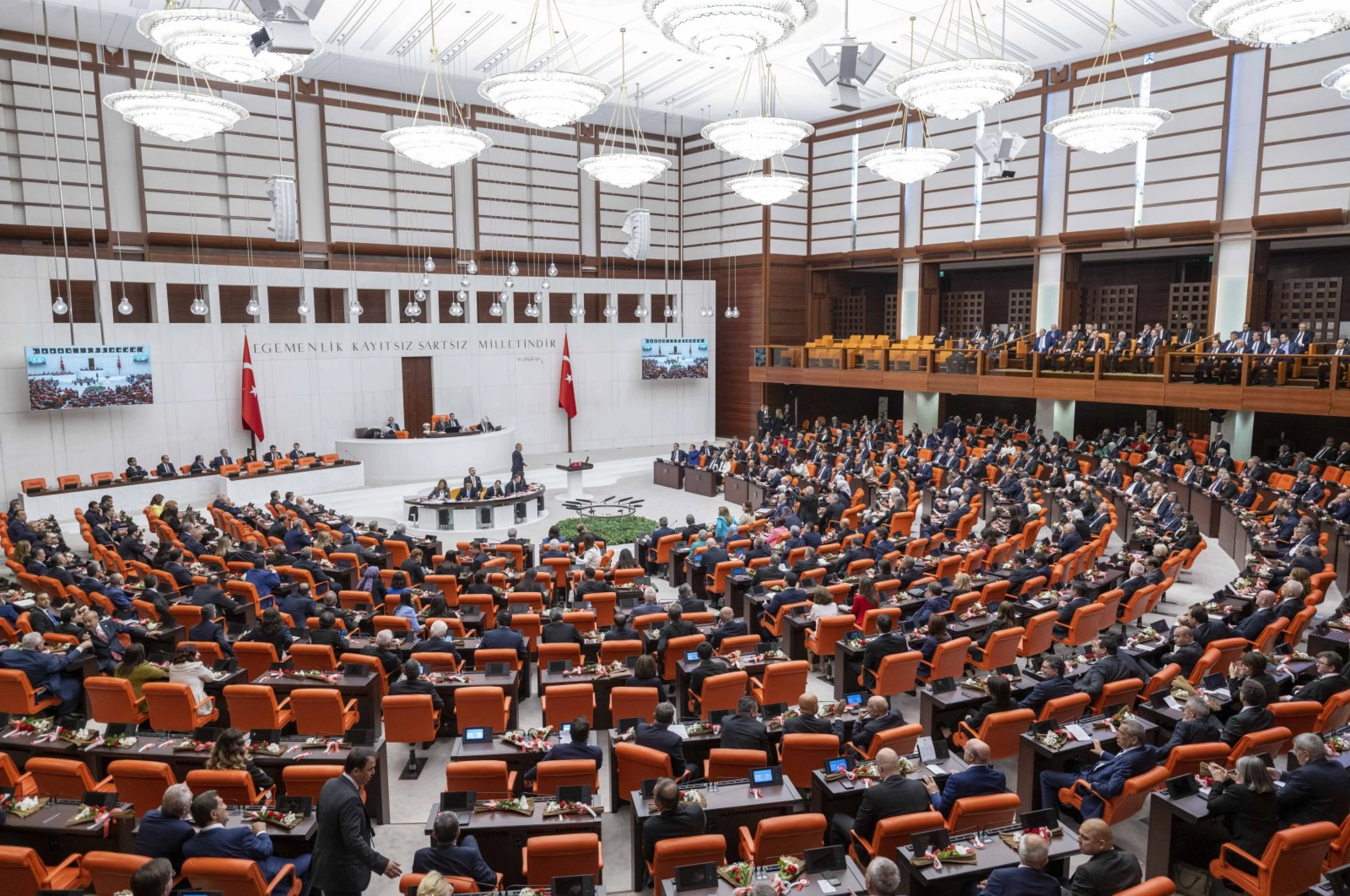
ERBIL, Kurdistan Region of Iraq – The Turkish parliamentary commission tasked with drafting a legal framework for the peace process with the Kurdistan Workers' Party (PKK) said on Wednesday that its report on the next phase of the process is set to be finalized in the coming days, while stressing that the agreement between Damascus and the Kurdish-led Rojava administration has helped prevent the region from falling into “a circle of fire.”
"The report will be finalized and voted on at the commission meeting planned for the coming days and then submitted to the Turkish parliament’s presidency," the parliament speaker and head of the parliamentary commission tasked with drafting a legal framework for the peace process, Numan Kurtulmus, said on Wednesday as reported by state-owned Anadolu Agency.
Kurtulmus in late December said the commission will submit a proposal to the assembly outlining the next steps of the process.
The commission was established last year to create a legal framework for a renewed peace process, following an initial call by jailed PKK leader Abdullah Ocalan for his group, which waged a decades-long armed campaign against the Turkish state, to disarm.
Turkish officials have repeated expressed their belief that the Kurdish-led Syrian Democratic Forces (SDF) are inextricably linked to their domestic PKK foe, having offered vocal support to the Syrian government during a recent offensive that sought to bring SDF-held areas under Damascus' control.
Kurtulmus said Tuesday that Syria’s territorial integrity is “indispensable,” adding that “every step taken to preserve Syria’s integrity strengthens our goal” of advancing the peace process in Turkey, read the statement.
Referring to the March 10 integration agreement and a new January deal between Rojava and Damascus, Kurtulmus said that “adhering to these agreements means removing a large part of the region from the circle of fire.”
The Kurdish-led forces and the Syrian government reached an agreement to cease military operations on Friday following weeks of unrest.
The recent clashes between Kurdish-led forces and Damascus-affiliated factions broke out after a year of tensions regarding a prospective integration agreement (March 10 agreement), with Rojava authorities remaining hesitant in light of sectarian massacres perpetrated by state forces against the country's Druze and Alawite minorities.
Since the clashes in January, Turkish leaders have repeatedly voiced support for the territorial integrity of the Syrian state, calling on Kurdish forces to integrate into Syrian state structures and stop acting as “a state within a state,” while expressing support for the interim government.
Turkey’s pro-Kurdish Equality and Democracy Party (DEM Party), a key mediator of talks between Ankara and the PKK, also earlier urged the Syrian government and Kurdish-led forces in Rojava to implement the March 10 agreement for integration, stressing that democracy in Syria could pave the way for democracy in Turkey.
The Syrian offensive in Rojava has left hundreds dead and forced Kurdish-led forces, who did the brunt of defeating the Islamic State (ISIS) in the country, to cede swathes of territory and withdraw to Hasakah province, with the attacking Syrian forces violating ceasefires, committing human rights violations, and possibly war crimes in their campaign.
Protests against the ongoing attacks on Rojava have taken place in recent weeks in several Kurdish-majority towns along Turkey’s border, drawing widespread criticism from Turkish authorities.
 Facebook
 LinkedIn
 Telegram
 X
X