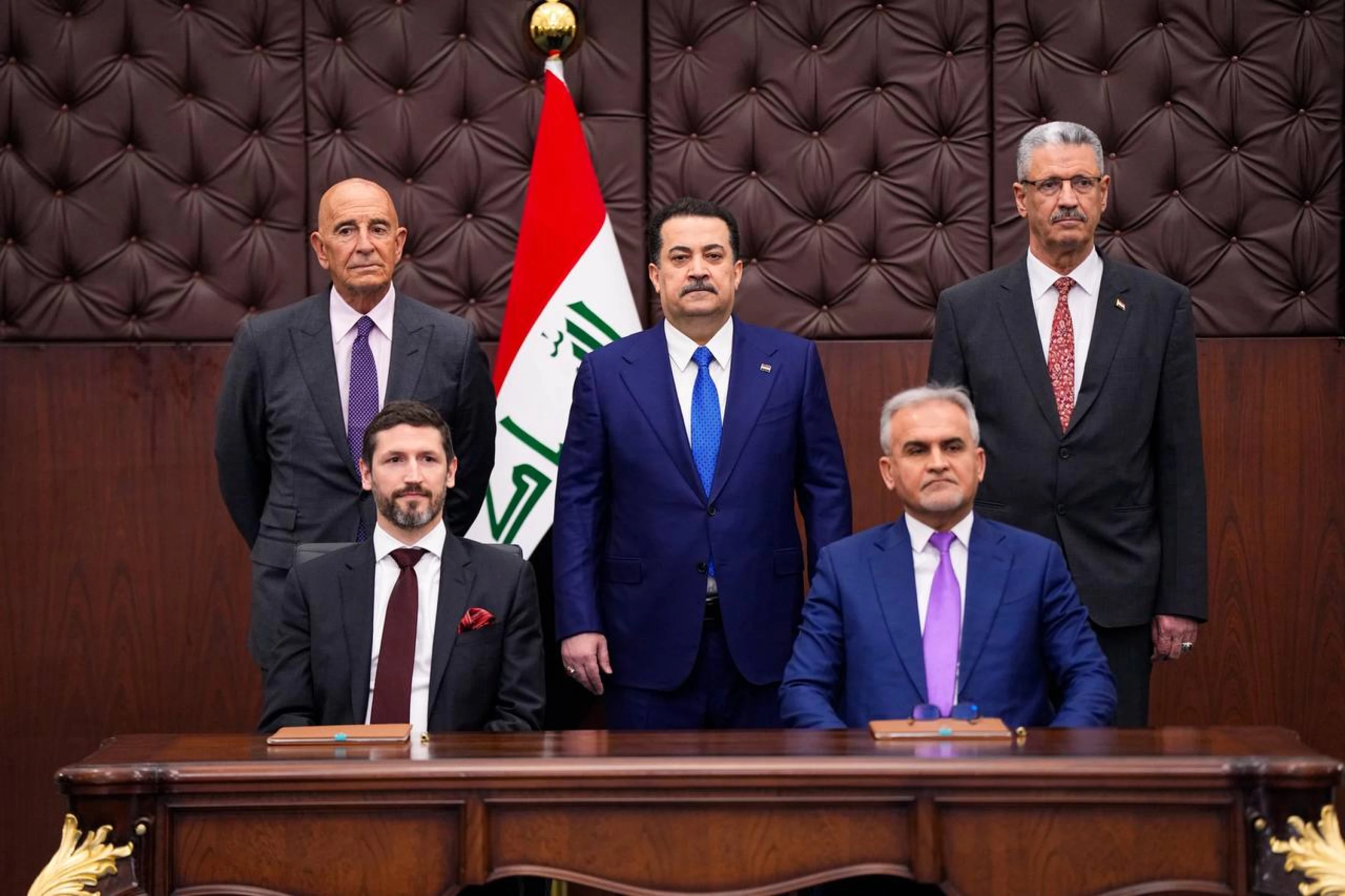
ERBIL, Kurdistan Region of Iraq – Iraqi Prime Minister Mohammed Shia’ al-Sudani on Monday oversaw the signing of an oil agreement with the US-based Chevron, paving way for the transfer of one of Iraq’s largest oil fields from Russia’s Lukoil to the American energy giant.
The agreement, signed between Basra Oil Company and Chevron, “concerns the transfer of management of the West Qurna 2 oil field,” according to a statement issued by the premier’s office.
West Qurna 2, one of the world’s largest oil fields, is 75 percent owned by Lukoil, a Russian firm that was the target of US sanctions in August. Washington accused the company of helping finance Russia’s war in Ukraine.
Lukoil in November declared force majeure at Iraq’s West Qurna 2 under the sanctions, with sources telling Reuters at the time that the firm had informed Iraq’s oil ministry that it is unable to continue normal operations at the field.
The statement by Sudani’s office announced several agreements, including one between Lukoil and the Basra oil Company to settle “all outstanding financial dues between the two parties.”
Lukoil also signed another deal with the Basra Oil Company, and Chevron, involving the temporary transfer of the contract to Basra Oil Company, which will then transfer the contract to Chevron “after completing negotiations and agreeing on the terms of the new contract,” according to the statement.
The signing ceremony was attended by US Special Envoy to Syria Tom Barrack and Charge d'Affaires of the US Embassy in Iraq Joshua Harris.
In a statement after the event, Barrack described the move as “a significant milestone” for Iraqis and the American energy company in an X post, noting that “Chevron’s commitment to stewarding a field that contributes nearly 12% of Iraq’s oil production demonstrates confidence in Iraq’s stability and potential.”
Sudani also oversaw the signing of a second energy agreement on the same day, between Dhi Qar Oil Company and the Qatar-based North Oil Company, regarding the developments of the “Nasiriyah oil field and four exploration blocks in Dhi Qar province, as well as the development of the Balad oil field in Salahaddin province.”
 Facebook
 LinkedIn
 Telegram
 X
X