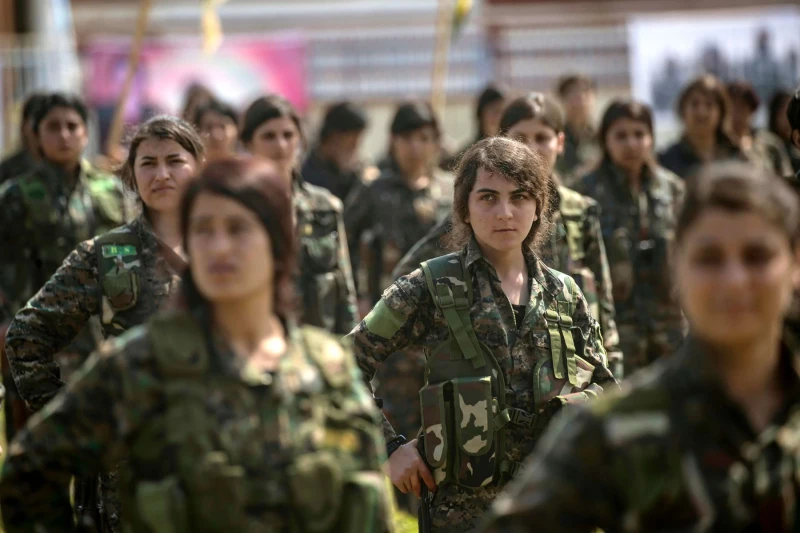
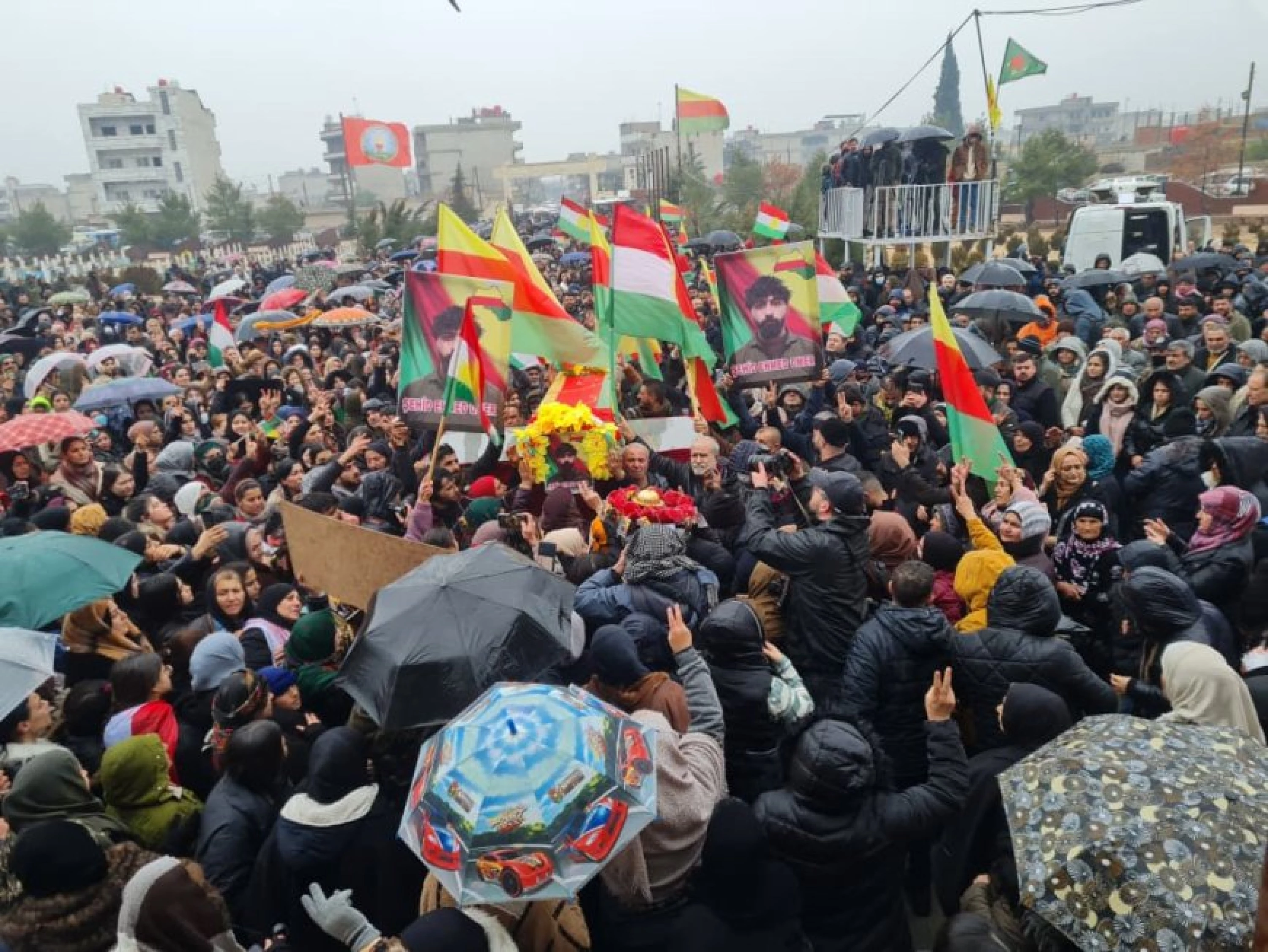
ERBIL, Kurdistan Region of Iraq – On January 20, during heavy fighting between Kurdish forces and Damascus, the Syrian Democratic Forces (SDF) called on Kurds from outside Syria to join the fight in a general mobilization against the government forces.
Many Kurds, outraged by Damascus’ attacks on Kurds, quickly mobilized and joined the SDF. At the border of Semalka, there were many volunteers, including Kurds originally from Syria, eager to go to Rojava and defend their compatriots.
According to unverified estimates, around 2,000 individuals from the Kurdistan Region (Bashur) were among those who volunteered, traversing the Semalka border crossing to join the fight. One of the volunteers, 23-year-old Ahmed Hemin from Kirkuk, was killed on January 27 in a drone strike.
On January 29, an agreement was reached between the SDF and Damascus, the details of which have yet to be officially released.
The 14-point agreement signed on January 18, which did not stop the fighting, included a clause in which the SDF commits to the removal of non-Syrian Kurdistan Workers’ Party (PKK) leaders and members from Syria.
A total of 100 non-Syrian Kurdish PKK members were reportedly returned to the PKK stronghold of Qandil in the Kurdistan Region, according to a February 10 report by Al-Monitor.
However, there has not been much coverage about the fate of the Kurdish volunteers who went to Rojava and have no links to the PKK.
“Last month saw the unprecedented arrival of thousands of Kurdish volunteers entering northeast Syria,” Alexander McKeever, a researcher who focuses on northern Syria, told The New Region, adding that “most of, if not all, the volunteers from Iraqi Kurdistan, whether on the military or civilian side, will likely return home if they have not already.”
“This mobilization was in response to the threat of a government offensive on Hasaka and Qamishli, which has been stopped so far by way of the integration agreement.”
Salih Muslim, a senior member of Rojava’s ruling Democratic Union Party (PYD), spoke to The New Region about the status of the volunteers, stating: “From what I know, many of them returned, especially after the ceasefire; but I am also not sure how many have returned and how many are still there.”
On 17 February, footage circulating online showed a warm reception of two young men returning from Rojava to their hometown of Darbandikhan in Sulaimani province.
A Kurdish source on the ground, close to the SDF, who spoke on condition of anonymity, said that a number of the volunteers are still in Rojava, “as part of the general mobilization because the threat of attack has not completely ended yet.”
“To be clear, this is the first time such a large-scale participation has occurred from Southern Kurdistan [Bashur]. The unity among Kurds has been further strengthened by these additions. While many have returned, in the event of a possible attack, they will equally turn to Rojava.”
Meghan Bodette, Director of Research at the Kurdish Peace Institute, said this is not the first time that Kurds from Bashur have gone to Syria for military purposes, recalling the days of the war against the Islamic State (ISIS).
“It's likely that some went during the war against ISIS, but at that time, Kurds in the KRI [Kurdistan Region of Iraq] also had to contend with ISIS threats in their own region. This is the most significant number to go in such a short period of time,” she said.
“Many, if not all, appear to have already returned following the agreement. If Kurds in Syria gain their rights and live in peace, they will not be needed there. But if the government wages war on Kurds once again, there will likely be a significant reaction in the Kurdistan Region of Iraq.”
David Romano, the Thomas G. Strong Chair in Middle East Politics at Missouri State University in the United States, said that Kurds volunteering to fight for other parts of Kurdistan is a very old phenomenon.
“There were instances of this starting with the first Kurdish revolts following Kurdistan's division after World War I. The part of Kurdistan that fell within Syria, however, never experienced significant armed Kurdish action until the 21st Century. So, for Syria, if not other parts of Kurdistan, this is something new.”
In August 2014, many Kurds from Bashur joined the fight alongside Peshmerga forces when the jihadist group began threatening Erbil and other Kurdish cities.
During the ISIS siege on Kobane between September 2014 and January 2015, there were many Kurds from other parts of Kurdistan who picked up arms to liberate the Kurdish city, including from Bakur (southeast Turkey) and Rojhelat (western Iran). Musa Herdem, the famous sniper of Kobane, who was killed on April 7, 2015, was a Kurd born in Rojhelat’s Selmas.
Helo Garmiany, organizer of Bashur (Kurdistan Region) Kurds for Rojava, told The New Region that most of the volunteers have returned. “Some of them have remained there. A few of my friends are still there.”
“The reason they left was that, whether it is Bashur (South), Rojava (West), Bakur (North), or Rojhelat (East), there is no difference between them for us as Kurds. We are Kurds, and we must be united.”
 Facebook
 LinkedIn
 Telegram
 X
X