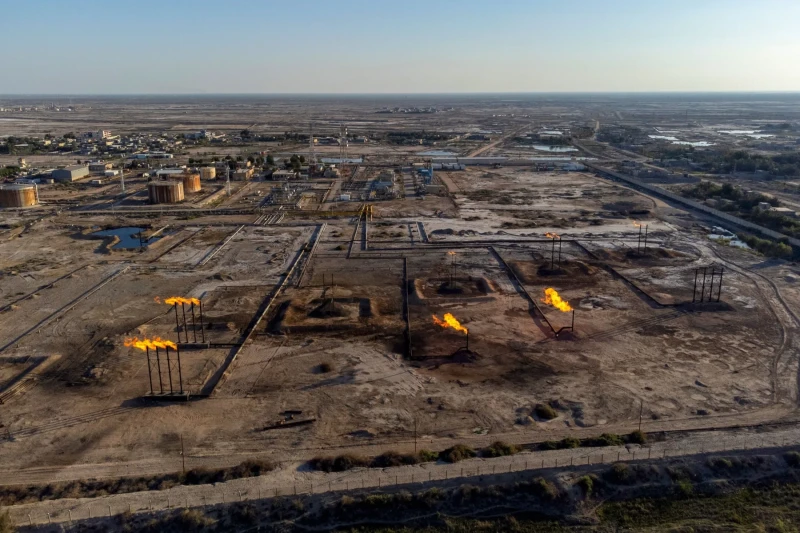
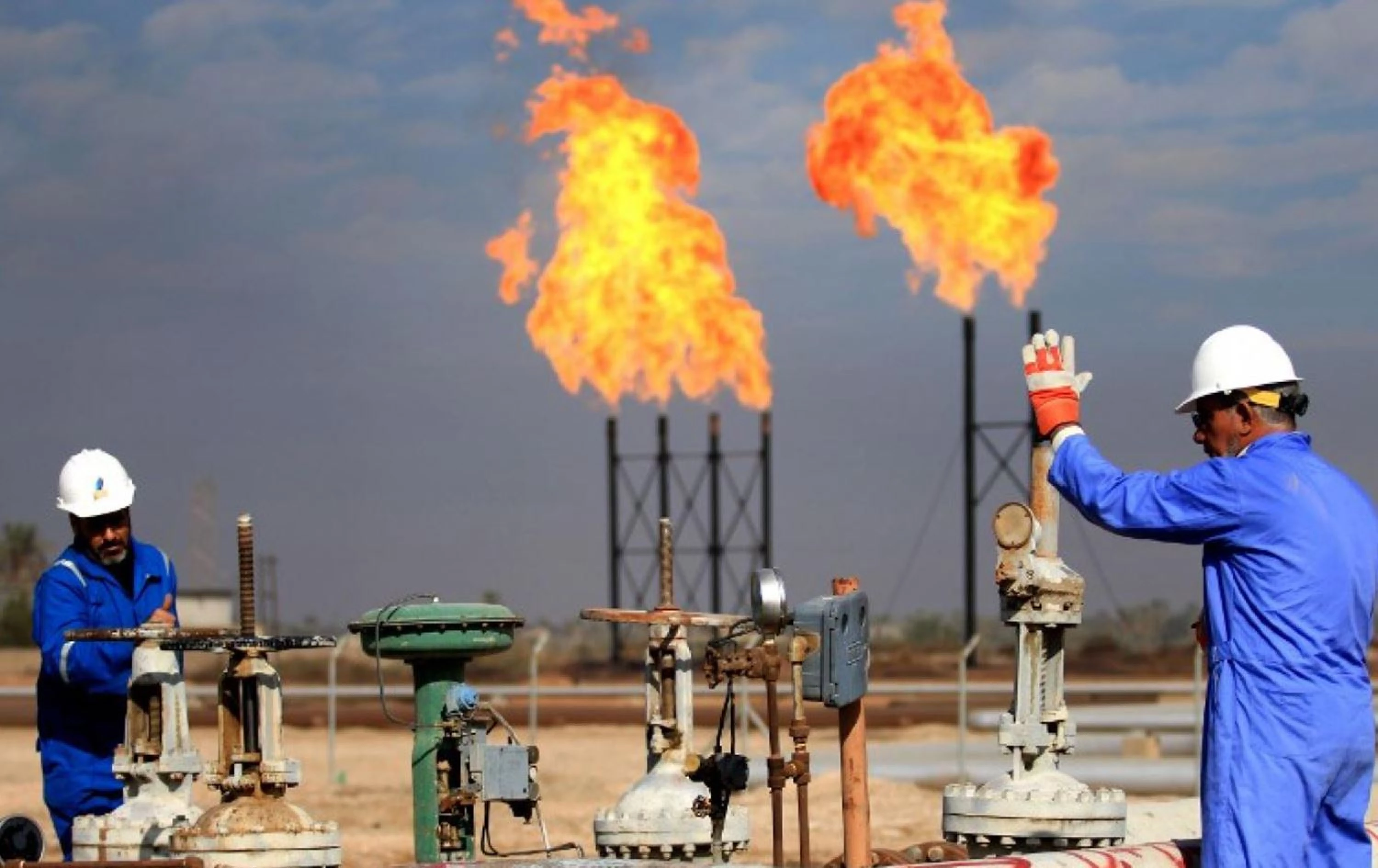
ERBIL, Kurdistan Region of Iraq – Iraq’s southern oil-rich province of Basra has significantly upped its utilization of flared gas, reaching an almost 90 percent rate of capturing the gas, the oil ministry said on Thursday.
Iraq is notorious for the deadly practice of gas flaring, ranking as one of the world’s worst polluters through the phenomenon despite strides taken by Prime Minister Mohammed Shia’ al-Sudani’s government to end the practice.
Izzat Sabir, the oil ministry’s undersecretary for gas affairs, said that the “utilization rate of flared gas in the Rumaila, West Qurna 1, and Zubair oil fields in Basra province has reached 86 percent.”
“This confirms the achievement of new record rates in gas capture and production within the activities of the Basra Gas Company,” Sabir stated.
Last year, Sudani announced that Iraq plans to eliminate gas flaring by 2028, labeling it a “decisive move to harness our resources efficiently and sustainably.”
Gas flaring is a process in which oil wells burn the excess gas they cannot store or use. It is considered a convenient method to eliminate the byproduct known as associated petroleum gas.
But the process has drawn vast criticism for its environmental impact and waste of valuable resources.
According to Sabir, gas capture rates in the fields have reached 1,180 million standard cubic feet per day (MMscf/d), while dry natural gas production has reached 1,000 (MMscf/d), “the highest production rate achieved by the company to date.”
“These indicators contribute to boosting state revenues, supporting power generation plants, and meeting citizens’ needs,” he added.
 Facebook
 LinkedIn
 Telegram
 X
X