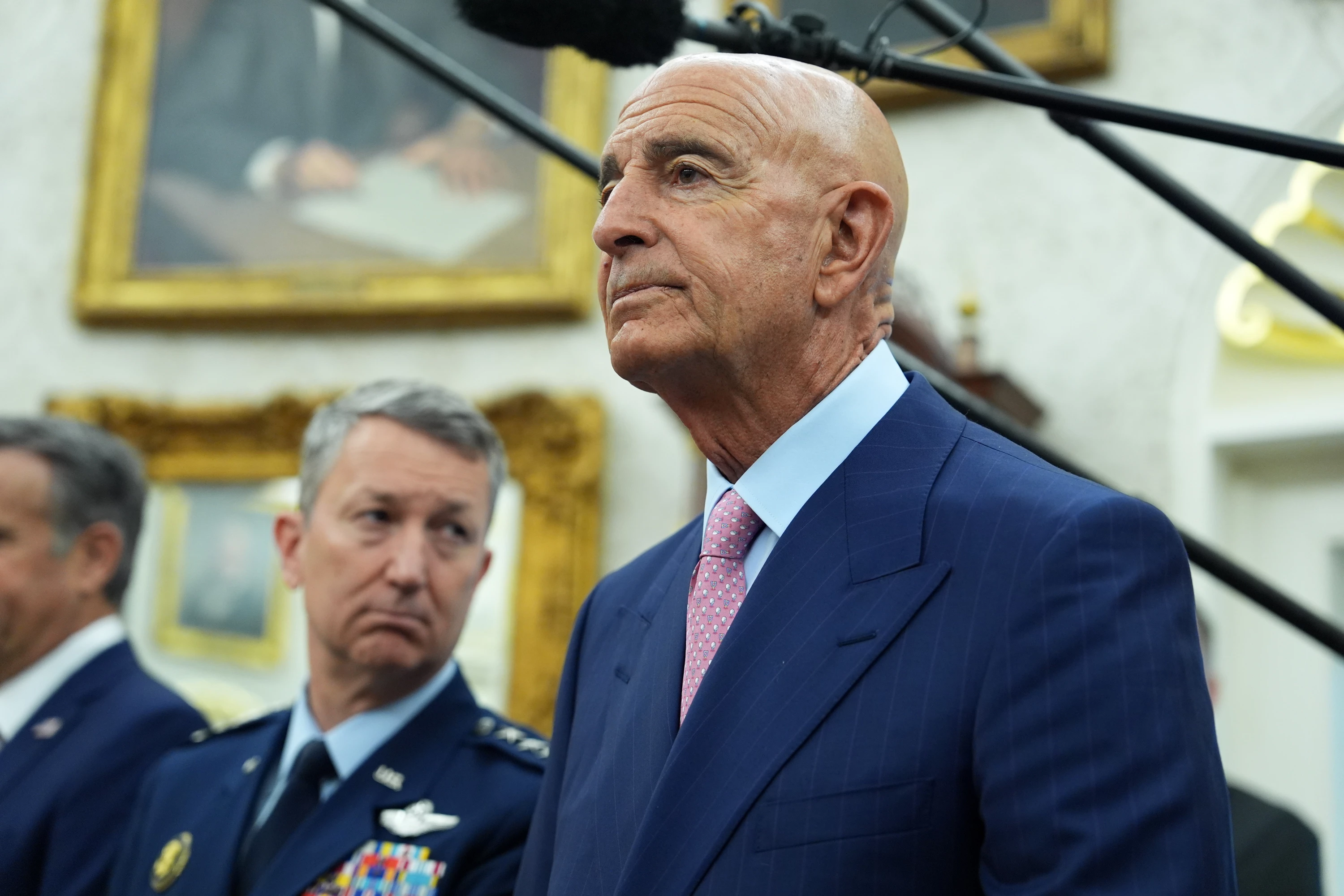
ERBIL, Kurdistan Region of Iraq - US envoy Tom Barrack on Thursday said that Washington is working with Kurdish authorities to alleviate the trade embargo imposed on the Kurdistan Region by Baghdad, stressing that “the problem in Iraq is not the Kurdistan Region.”
Erbil and Baghdad have been at loggerheads over the implementation of the ASYCUDA international customs system. The Iraqi government has implemented the system and is forcing the Kurdistan Regional Government (KRG) to do the same, although Kurdish authorities have requested more time.
Baghdad, however, has taken unilateral measures against Kurdish traders by limiting their access to US dollars and has imposed a trade embargo on the Kurdistan Region since the start of the year; a measure which Kurdish authorities have slammed as “unjustifiable”.
“The problem in Iraq is not the Kurdistan Region. The problem in Iraq is that the Kurdistan Region had resources and people, and the revenue was siphoned by the federal government,” said Barrack during a symposium on Thursday.
“What is in response is a stipend – a stipend that is reliant on the federal government to pay that stipend. It has nothing to do with revenue sharing, so as a consequence what happens now in the Kurdistan Region is you have some of the best integrated environment prospering relying on a budgetary process with which they have no control over and even embargo and sanctions,” Barrack added.
Despite the continued embargo, in mid-March, Kurdistan Region Prime Minister Masrour Barzani announced that the KRG has agreed to allow the export of Iraq oil through the Kurdistan Region to Turkey’s Ceyhan port, to alleviate the country’s economic hardships exacerbated by the closure of the Strait of Hormuz.
In a phone call following the announcement, Barrack conveyed US President Donald Trump's greetings to the Kurdish premier and “thanked him for his willingness to assist the federal government in exporting oil through Turkey.”
“One of things we’re working in concert with the Barzanis and the Talabanis is how do we help in alleviating this embargo-sanction situation which has them not in ownership of their own security,” Barrack added.
In addition to the trade embargo, the Iraqi federal government has for years withheld the Kurdistan Region’s share of the federal budget under different pretexts, despite Erbil’s continued willingness to cooperate and address Baghdad’s grievances.
Since the outbreak of the Iran war in late February, the Kurdistan Region has been struck with hundreds of drones and missiles, resulting in tens of casualties and significant material damage, despite Kurdish authorities repeatedly stressing that the Region is not party to this conflict.
Most of the attacks have been claimed by factions within the Islamic Resistance in Iraq, an umbrella group of pro-Iran Iraqi militias, many of which have been institutionalized and formally incorporated into the Iraqi state security apparatus as part of the Popular Mobilization Forces (PMF).
The continued attack has led several foreign oil and gas producers in the Kurdistan Region to halt production to protect their staff.
 Facebook
 LinkedIn
 Telegram
 X
X