
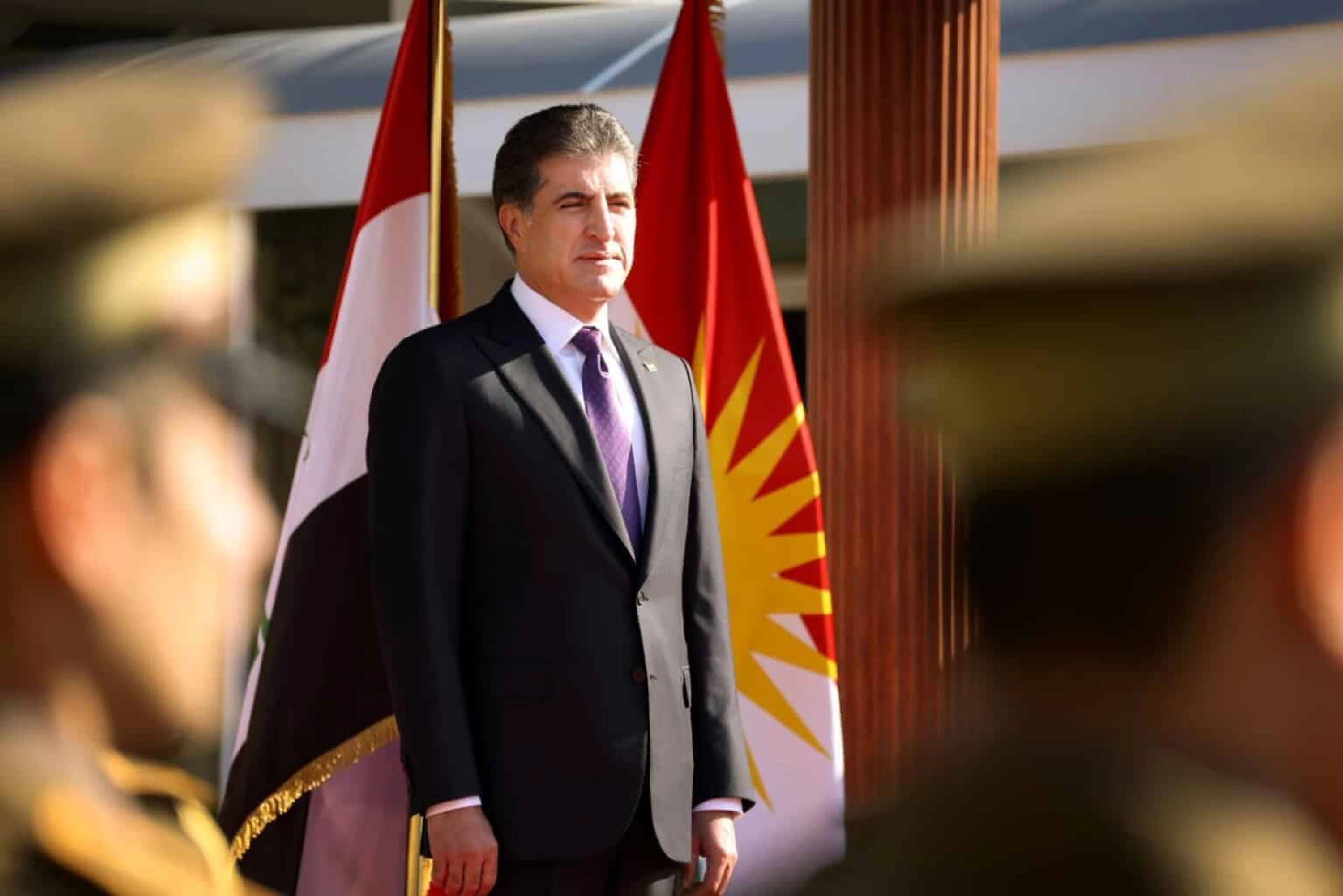
ERBIL, Kurdistan Region of Iraq - Abu Ala al-Walai, secretary-general of Iraq's pro-Iran Kataib Sayyid al-Shuhada, on Sunday said targeting Kurdistan Region President Nechirvan Barzani’s Duhok residence was “a despicable and unacceptable act.”
Barzani’s residence in Duhok was struck by drones on Saturday without resulting in any casualties. No party has claimed the attack as of the writing of this article.
In a statement, the Iran-aligned militiaman described Barzani as “a balanced official figure who, through his courtesy and good character, has succeeded in building positive relationships with various parties.”
The attack is “a despicable and unacceptable act that contradicts the literature, lofty values, and noble principles of the resistance,” Walai said, drawing similarities to last week’s attack on the residence of Falih al-Fayyadh, head of Iraq’s Popular Mobilization Commission (PMC), and implying US-Israeli involvement in the attack on the Kurdish leader’s domicile.
Iran has denied involvement in the attack, with the Islamic Revolutionary Guard Corps (IRGC) condemning it as “an act of terrorism,” and blaming the US and Israel for the strike. The US on the other hand blamed Iran and its proxies.
Iranian Foreign Minister Abbas Araghchi also condemned the “terrorist” attack on Barzani’s residence in a message to the Kurdish leader, implying that the act was a “false flag operation” by the US and Israel.
Kataib Sayyid al-Shuhada is a pro-Iran armed group that has been institutionalized and officially incorporated into the Iraqi state security apparatus as part of the Popular Mobilization Forces (PMF).
The group was designated by the US State Department in September, alongside several others, accusing Iran of providing support that “enables these militias to plan, facilitate, or directly carry out attacks across Iraq.”
Since the US-Israel war with Iran started in late February, Iraq has been the only country to see attacks carried out on its soil from both sides of the conflict, with Iran and its proxies attacking US interests and the US and Israel striking pro Iran groups.
American-Israeli strikes have targeted PMF positions across the country since the start of the war, killing over 80 PMF fighters and wounding hundreds others.
Walai claimed that the targeting of Barzani’s residence “may come within the context of external pressures or messages,” citing the Kurdish leader’s opposition to a potential entry of Iranian-Kurdish opposition groups into the conflict.
“The American presence in Iraq and the region is facing increasing decline and embarrassment due to the humiliating defeats it is experiencing, which may push it towards escalatory policies, declared or undeclared,” he said.
The Kurdistan Region has repeatedly been targeted throughout the US-Israeli war with Iran. The attacks by Iran and its proxies have not been limited to US interests in the Region.
On Tuesday, at least six Peshmerga were killed and 30 others injured in an Iranian ballistic missile attack on the forces’ bases in Erbil province’s Soran administration. Iran claimed the attack was carried out by “mistake” and promised a probe.
The Kurdistan Region's leaders have repeatedly stressed that the Region is not party to the ongoing conflict and does not plan to be.
“The Kurdistan Region has never been part of the conflicts, crises, and wars present in the region, yet unfortunately there are those who, without anyone holding them back, make it their primary focus to oppose the Kurdistan Region by whatever means possible,” President Masoud Barzani said in the early hours of Sunday.
He revealed that the Kurdistan Region has been targeted over 450 times since the war started “yet we have remained silent so as not to cause alarm and anger among the public.”
 Facebook
 LinkedIn
 Telegram
 X
X