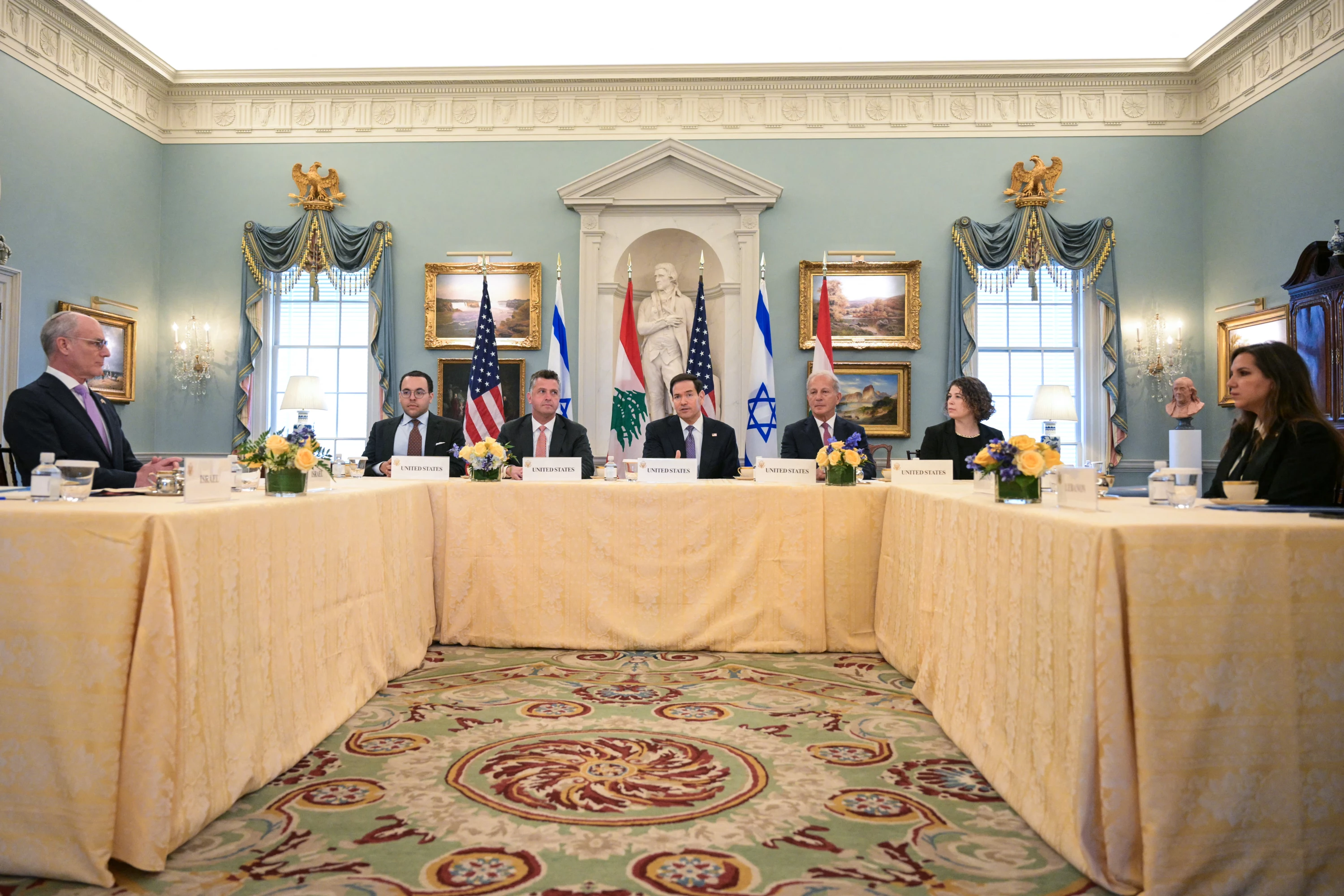
ERBIL, Kurdistan Region of Iraq – Israel and Lebanon have agreed to hold a new round of direct talks at a “mutually agreed” time and venue, read a joint statement from the two sides and the US following a meeting between ambassadors of both sides in Washington mediated by US Secretary of State Marco Rubio.
Washington congratulated Lebanon and Israel on what it described as a “historic milestone,” following the meeting, in a trilateral statement, while expressing support for further talks and for the Lebanese government’s plans to “restore the monopoly of force and to end Iran’s overbearing influence.”
The US expressed its “support for Israel's right to defend itself from Hezbollah's continued attacks,” the statement added.
Lebanon further reaffirmed the urgent need for the “full implementation of the cessation of hostilities” announced in 2024, calling for a ceasefire and concrete measures to address the severe humanitarian crisis caused by the ongoing conflict.
“All sides agreed to launch direct negotiations at a mutually agreed time and venue,” the statement read.
The meeting concluded after two hours of talks, attended by US Secretary of State Marco Rubio, Israeli Ambassador to the United States Yechiel Leiter, and Lebanese Ambassador to the United States Nada Hamadeh Moawad.
Rubio described the talks as a process that will take “more than just one day,” noting it “will take time” to reach a conclusion and bring a permanent end to more than 20 years of Hizballah’s influence.
He added that Lebanese people are “victims of Hizballah” and “victims of Iranian aggression,” and called for an end to the violence.
“There were excellent talks in an excellent atmosphere,” Leiter said, stressing that “the government of Israel and the government of Lebanon are on the same side,” although the peoples of both sides are, Israeli state-affiliated news outlets reported.
On Saturday, Hezbollah lawmaker Hassan Fadlallah reiterated his group’s rejection of any direct negotiations between Lebanon and Israel, warning the move would deepen internal divisions.
The war in Lebanon began in early March, days after the United States and Israel launched large-scale attacks on Iran on February 28.
Since then, fighting between Israel and Lebanon’s Hezbollah has intensified, with more than 1,700 people killed in Lebanon in just over a month, according to official figures.
Iran has also pushed for Lebanon to be included in the broader ceasefire reached with the US, with officials stressing that any truce must extend to the country and threatening to pull out of peace talks should Israel not halt its bombardment.
 Facebook
 LinkedIn
 Telegram
 X
X