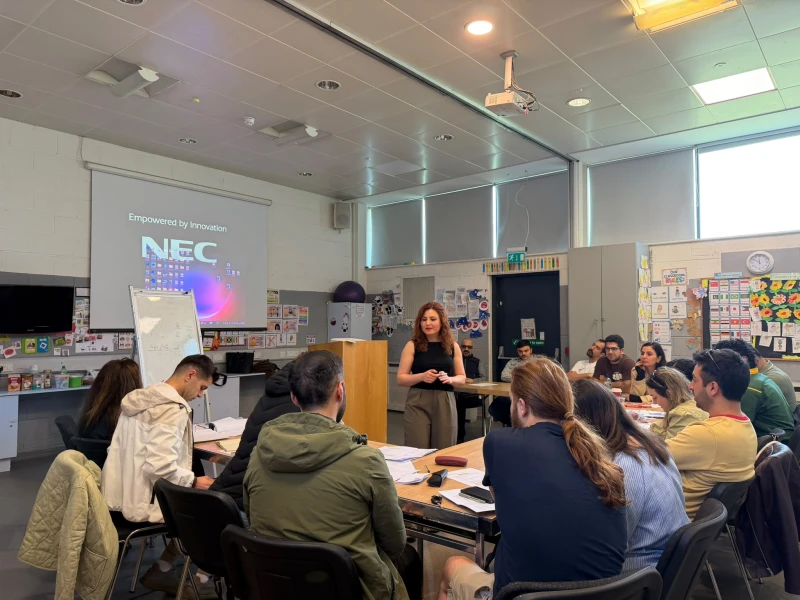
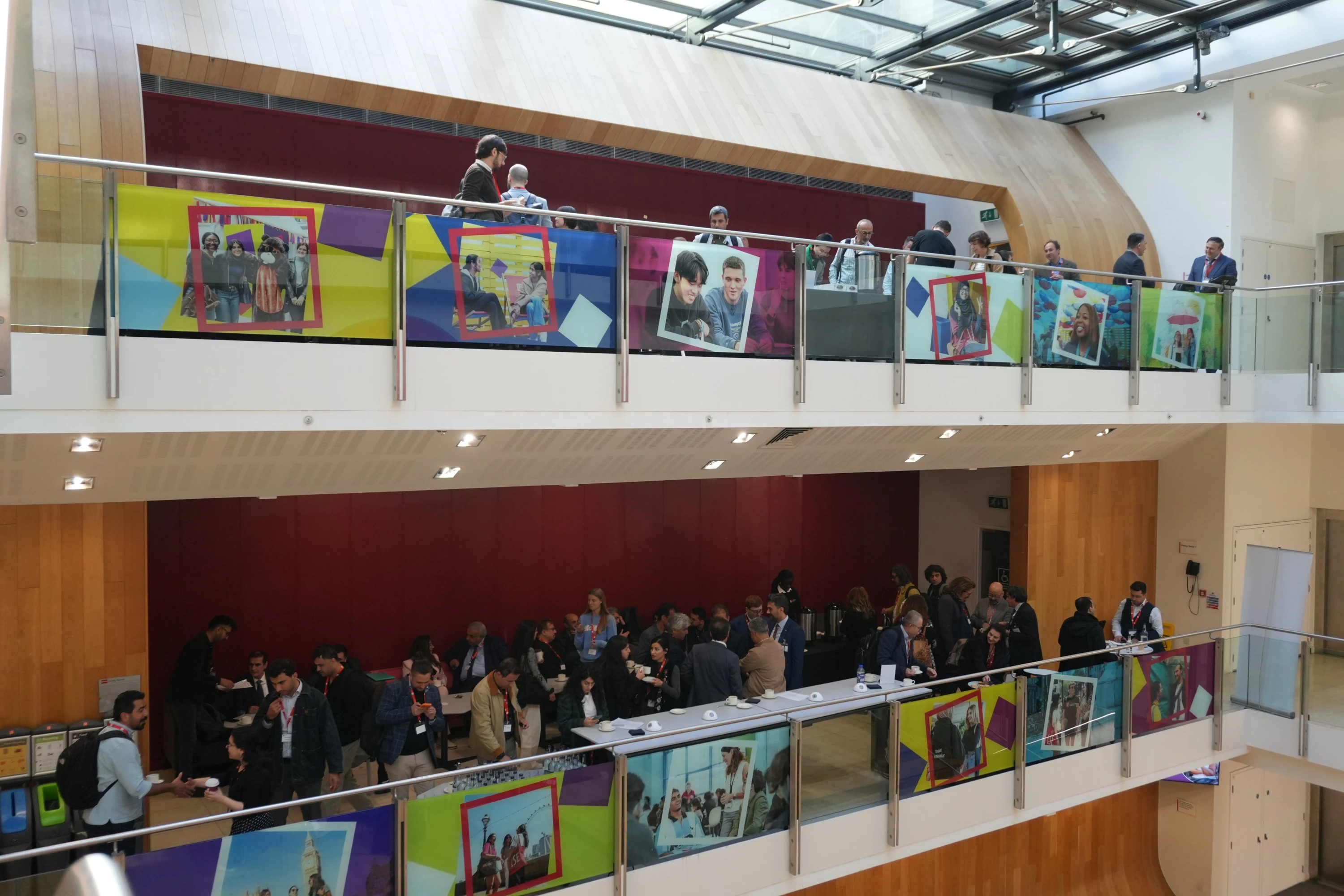
LONDON, United Kingdom - While headlines continue to focus on the plight of Kurds in Rojhelat against the backdrop of the ongoing war in Iran, the integration of the Syrian Democratic Forces into Syria’s central army, and the role of Kurdish parties in Iraq’s government formation process, between April 29 and May 1 researchers, scholars, and students gathered in London for the London School of Economics’ (LSE) Kurdish Studies Conference to create space for discussions around an often overlooked dimension of international discourse on the Kurds: culture.
Now in its fourth iteration, the conference reflects a sustained effort to foster the dissemination and discussion of new research on Kurdish society and politics. Spearheaded by the LSE Middle East Centre’s Kurdish Studies Series and the School of Politics and International Relations at the University of Sheffield, it also serves as a vital platform for academic exchange and network-building. Participants included leading scholars from Rojava, Rojhelat, Bakur, and Bashur, alongside non-Kurdish researchers and students contributing to the rapidly expanding field of Kurdish Studies.
Panels spanned a wide range of topics: from the Kurdistan Region of Iraq’s investment in cultural infrastructure and its diplomatic potential, to Dengbêj oral tradition; from efforts to establish classical Kurdish literature as a sociological field, to the launch of the first encyclopedia of the Kurds.
This focus on culture does not suggest an absence of politics, quite the opposite. As Arin Khorshed, digital and technology culture researcher at Loughborough University, explored in her work on cultural infrastructure and international engagement in the Kurdistan Region of Iraq: “Cultural infrastructure functions as a pre-diplomatic resource: it enables storytelling, cultural hosting, and artistic exchange that can gradually support the KRG’s [Kurdistan Regional Government] ambitions and external recognition.”
The process of cultural production itself was central to the conference and was approached from multiple angles, including through a focus on the people behind cultural production rather than solely on institutions. Sophie Essmat, award-winning author, film director, researcher, translator, and activist, born and raised in Rojhelat and currently based in Oslo, reflected specifically on the gendered dimensions of Kurdish cultural production. “Kurdish women are frequently heard as witnesses to war, repression, displacement, or resistance, rather than as producers of historical and cultural knowledge,” said Essmat.
Essmat, who directed and produced the animated short film Dancing Amid Fire, Rising Above Ruins (2023), based on her homonymous latest novel, stressed that focusing on literature and cultural acts “can change the frame,” showing “how Kurdish memory survives when institutions fail—through bodies, voices, mourning practices, language, storytelling, and everyday acts of care.” In that sense, argues Essmat, “Kurdish women’s literature and art does not simply add personal experience to political history; it reveals forms of Kurdish history and identity that crisis-driven media and official archives often cannot hold.”
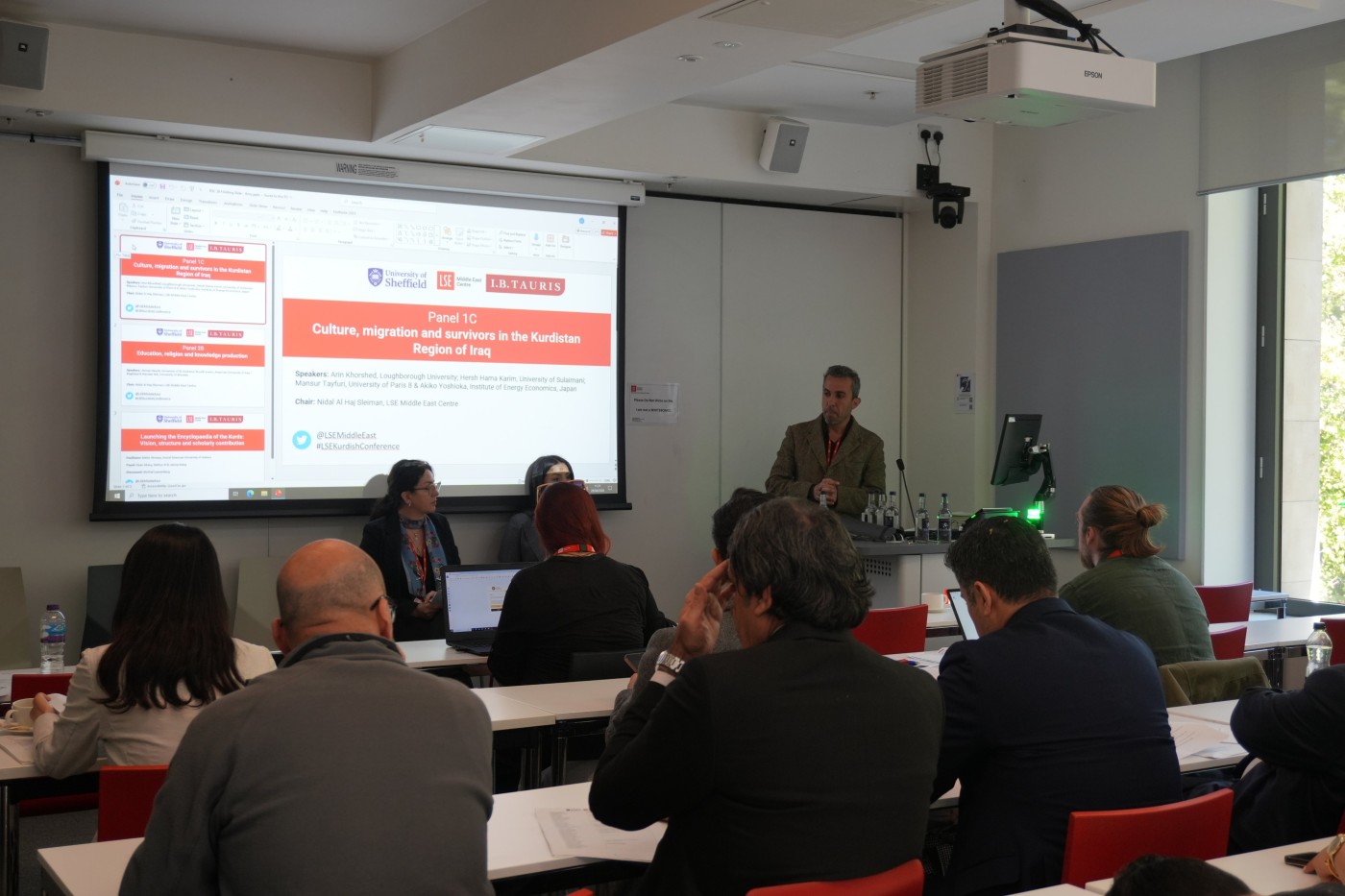
Photo: LSE
Yet focusing only on the output of cultural production or its agents, without attention to the process of production itself, risks overlooking deeper shifts unfolding within Kurdish society.
In his research, Yaser Hassan Ali, who holds a PhD in Kurdish Studies from the University of Exeter and currently lectures at the College of Languages at the University of Duhok, focuses on the rise of Bahdinani Kurdish in translation.
Ali sustains that the reason behind the difficulty in attempting to fully understand Kurdish society today without paying serious attention to culture, literature, and language lies in the fact that “deeper transformations happen more quietly through education, publishing, translation, and literary production.” According to Ali, the growing incidence of retranslation into Bahdinani Kurdish reflects more than a linguistic preference: “It points to changing questions of cultural authority, representation, and identity within Kurdish society.” When asked about the significance of such a shift, Ali linked it to the fact that it “signals a broader cultural repositioning, shaped by new generations who increasingly wish to engage with literature and knowledge through their own linguistic framework.”
Whether in the shy attempts of budding foreign Kurdish Studies scholars to attinge to the Kurdish vocabulary to convey nuances of their research, or the sheer amount of times the Kurdish classic Mem û Zîn was invoked within the walls of LSE over the course of the three-day conference, one thing became strikingly clear: in an information landscape that too often views Kurds solely through a transactional geopolitical lens, Kurdish culture remains key to unlocking a more comprehensive understanding of Kurdishness, and most importantly, one closer to the truth.
Sarwar Efendi, Director of Special Projects at Kahskul, the Center for Arts and Culture at the American University of Iraq, Sulaimani, perfectly captured this notion in the title of the presentation of his research: “Translation is the opposite of war.”
“War reduces people into categories: combatants, refugees, victims, enemies, whereas translation reintroduces complexity, intimacy, and humanity,” says Efendi, noting that “in the Kurdish context, this distinction is especially important because Kurdish identity has often been internationally mediated through conflict: genocide, displacement, ISIS, or statelessness. While these histories are real and important, they are not the entirety of Kurdish life.”
According to the young cultural entrepreneur, who eloquently elaborated on the power of Kurdish poetry in front of an audience that included none other than renowned Kurdish novelist and poet Bachtyar Ali himself, “Poetry and fiction in translation create alternative forms of representation because they allow Kurdish people to appear not only as political subjects, but as literary producers, lovers, critics, mystics, mourners, and dreamers.”
At the same time, Efendi did not shy away from addressing the fact that translation is never neutral. “The selection of which texts are translated and circulated shapes how Kurdish identity is perceived globally. That is why local curation and collaborative translation matter so deeply.”
Ultimately, despite numerous panels focusing on “hard security” matters and Kurdish politics and geopolitics, a significant number of the discussions that dotted one of the leading international events in the Kurdish Studies sphere, repeatedly returned to the same underlying notion articulated by Efendi: “Culture shows not only how Kurds resist, but also how they live, imagine, and create meaning.”
 Facebook
 LinkedIn
 Telegram
 X
X