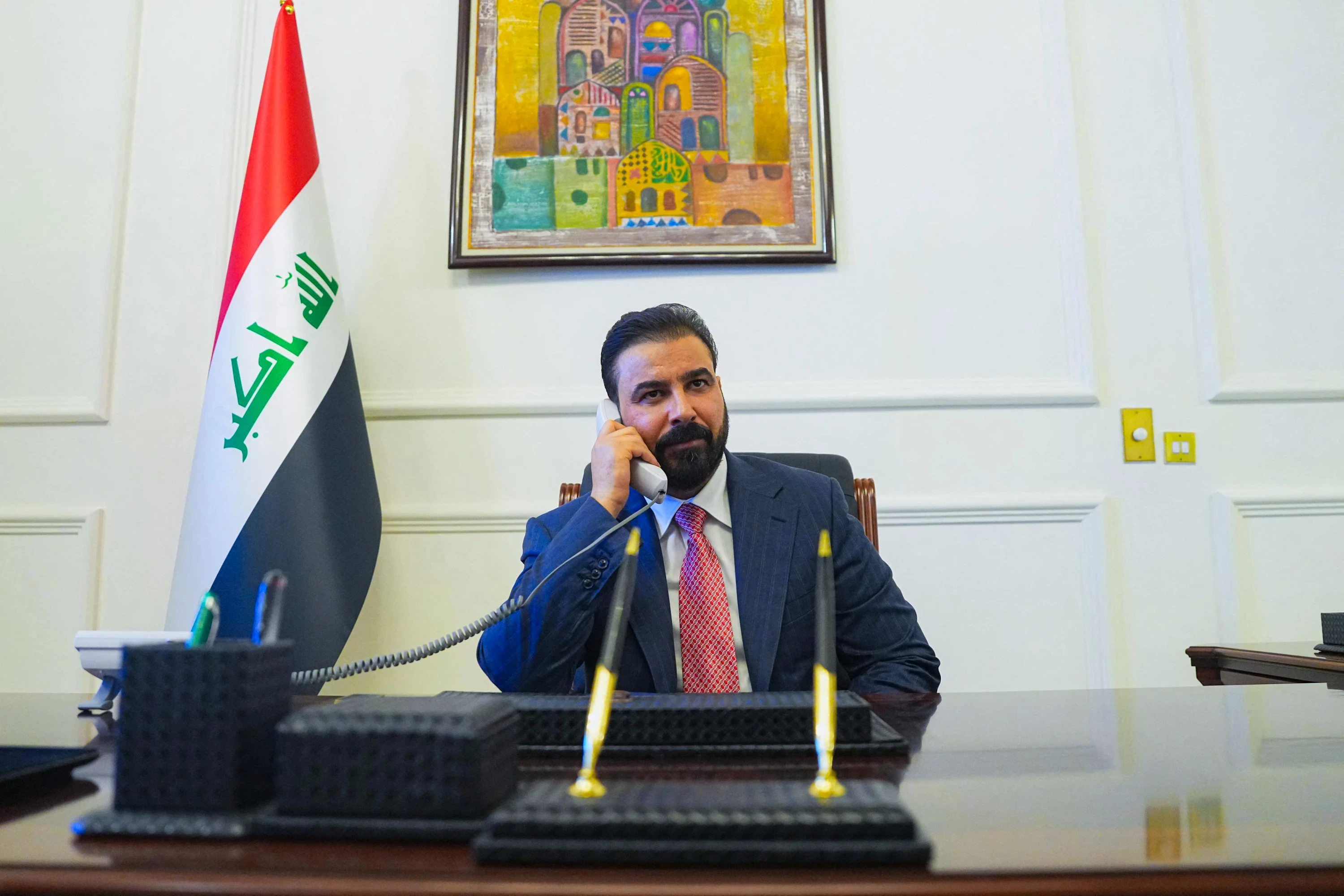
ERBIL, Kurdistan Region of Iraq - Iraqi Prime Minister-designate Ali al-Zaidi on Thursday released his program for the upcoming cabinet, with the text stressing the importane of restricting arms to the state and developing the combat capabilities of the Popular Mobilization Forces (PMF).
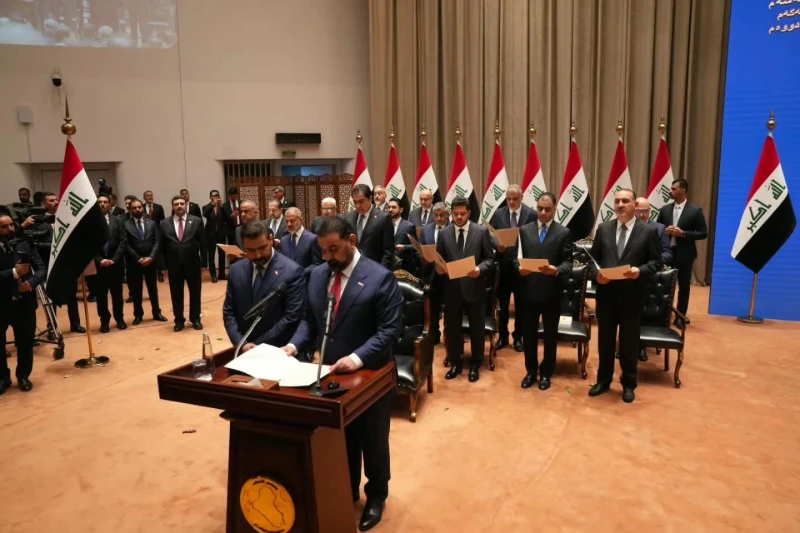
Earlier in the day, Zaidi met with Parliament Speaker Haibat al-Halbousi to deliver him the government program.
A copy of the program seen by The New Region shows that the “first pillar” of the state sovereignty section includes “restricting arms to the hands of the state” as the government continues efforts to tighten gun ownership.
Illegal weapons in Iraq stand out as one of the most pressing challenges to security and stability. Unofficial data puts the number of arms within Iraqi society at around 15 million medium and light weapons, with armed groups and tribes possessing the bulk of them.
Late last month, Iraq’s interior ministry said it had registered around 5.8 million firearms in a national database.
The program also includes “developing the capacities of Popular Mobilization Forces (PMF) personnel in a way that enhances their combat capabilities, while defining their responsibilities, duties, and role within the military and security system in accordance with the law.”
During the war with Iran that started in late February, the US and Israel repeatedly targeted PMF sites, with pro-Iran PMF factions having conducted missile and drone strikes against US interests in both Iraq and the Kurdistan Region.
The strikes have killed dozens of PMF members, including Abu Ali al-Askari, security chief and spokesperson of one of Iraq’s most powerful pro-Iran armed groups, Kataib Hezbollah.
The program also pledges to “activate the Strategic Framework Agreement with the United States in a manner that guarantees mutual interests,” coming after US President Donald Trump directly endorsed Zaidi's candidacy.
The dual emphasis on restricting arms to state factions while also vowing to develop the capabilities of the PMF, necessarily entailing its pro-Iran subsidiaries that have repeatedly targeted US interests in Iraq, signals a tricky political paradigm for the Trump-endorsed likely premier-to-be.
The Iraqi government has on numerous occasions condemned strikes targeting members of the armed umbrella group.
In March, outgoing Iraqi Prime Minister Mohammed Shia’ al-Sudani said accusing the PMF of carrying out actions outside of the law constitutes “ignorance” or “deliberate misinformation,” asserting that the government cannot tolerate their targeting.
Many of the groups in the PMF are part of the Islamic Resistance in Iraq, a network of Iran-aligned Iraqi Shiite militias linked to Iran’s Revolutionary Guard Corps (IRGC).
The groups are also officially under the auspices of the Iraqi state via the PMF, which was formed by Shiite paramilitary groups in 2014 following a call from Grand Ayatollah Ali al-Sistani to mobilize against the Islamic State (ISIS). In 2016, the PMF was granted official status by the Iraqi government.
 Facebook
 LinkedIn
 Telegram
 X
X