ERBIL, Kurdistan Region of Iraq - As Israel's military onslaught against Hezbollah continues despite an active ceasefire nominally being in effect, over 3 million Lebanese people are dependent on humanitarian aid to survive, a top European Union official said Friday.
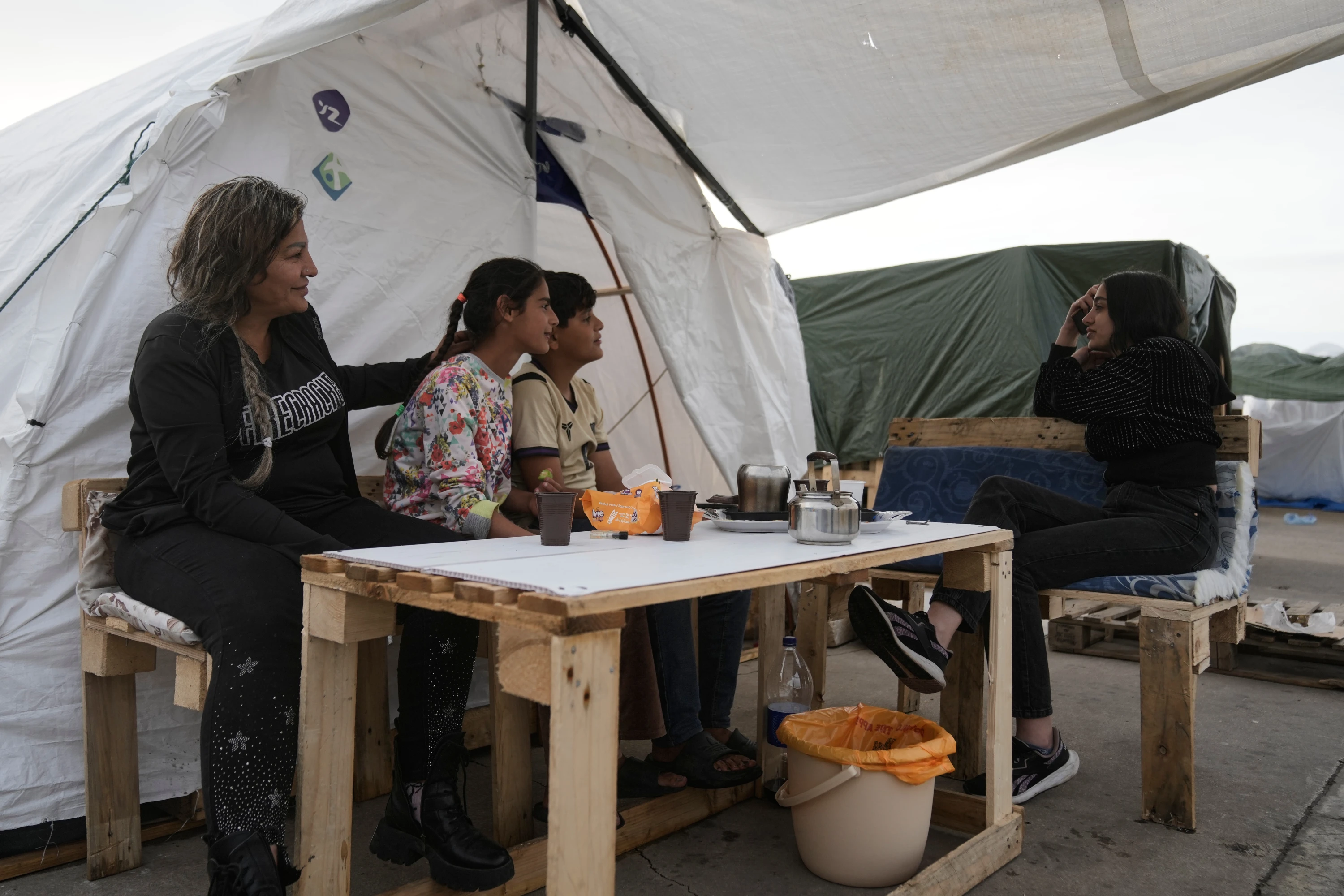
"At present, more than three million people, meaning more than half of the population here in Lebanon, depend on humanitarian aid to survive," EU crisis management chief Hadja Lahbib told reporters after meeting Lebanese President Joseph Aoun in Beirut.
Hostilities between Israel and Hezbollah escalated on March 2 under the backdrop of the US-Israeli war on Iran, triggering a wave of Israeli strikes that have killed more than 2,700 people and displaced over one million, according to Lebanese authorities.
Since the war began, the EU has funneled 100 million euros in aid to Lebanon and sent six planeloads of humanitarian supplies, with a seventh delivery on its way this Saturday, Lahbib affirmed.
She asserted that the ceasefire has opened "a narrow window of hope," calling on Hezbollah "to cease its attacks and be disarmed" and insisting that "Israel must put an end to its bombardments."
"For a ceasefire to lead to peace, courage is needed – political courage to address the root causes of this conflict."
Despite Hezbollah’s resistance to direct mediation, Israel and Lebanon are scheduled to meet in Washington next week for a third round of talks aimed at ending the war.
Recently, Hezbollah official Hassan Fadlallah insisted that Israeli efforts to "establish a security belt on our land... will be brought down by the sacrifices of the resistance and the steadfastness of our people," as he once again dismissed the possibility of his group engaging in direct negotiations with Israel.
Tel Aviv has violated the ceasefire established on April 16 dozens of times, with Aoun insisting on April 29 that “Israel must realize once and for all that the only path to security is through negotiations, but it must first implement a complete ceasefire before moving to the negotiating phase.”
“If Israel believes it can achieve security through violations and the destruction of border villages, it is mistaken,” Aoun said, adding that “it has tried this before, and it yielded no results.”
United Nations agencies report that while the UN issued a $308 million emergency appeal for Lebanese humanitarian relief in March, the effort has secured only $126 million in the two months since.
But Lebanon’s humanitarian situation is becoming increasingly dire: according to a report released Wednesday by the Integrated Food Security Phase Classification (IPC) – a United Nations-backed group that monitors hunger and malnutrition – 1.2 million people in Lebanon face acute hunger due to war.
“Around 1.24 million people are facing high levels of acute food insecurity (IPC Phase 3 or above) between April and August 2026, which is worse than was previously projected for this period in the IPC analysis released in October 2025,” the report read.
The IPC highlighted that the crisis is most severe in southern governorates like Nabatieh and Bent Jbeil, where up to 65 percent of both Lebanese residents and Syrian refugees are struggling to eat, with 10 percent of the population trapped in the "Emergency" phase (IPC Phase 4). This deterioration is being driven by the physical destruction of livelihoods, surging food and fuel prices, and a looming reduction in humanitarian aid, all compounded by regional instability that continues to cripple the country's economic access to food.
Israel now controls nearly 600 kilometers of territory in southern Lebanon, where dozens of towns and villages fall within the so-called “yellow line” set by the Israeli military.
Following months of fighting with Hezbollah and a fragile ceasefire announced by US President Donald Trump on April 16, Israel drew the yellow line extending roughly 4 to 10 kilometers inside Lebanese territory, from the Mediterranean coast to the Syrian border. At least 55 villages have been designated off-limits, with residents barred from returning as homes and infrastructure are demolished to create a cleared, uninhabited buffer zone.
Israeli Prime Minister Benjamin Netanyahu has said Israeli forces will remain in what he described as a “reinforced security zone” indefinitely.
 Facebook
 LinkedIn
 Telegram
 X
X