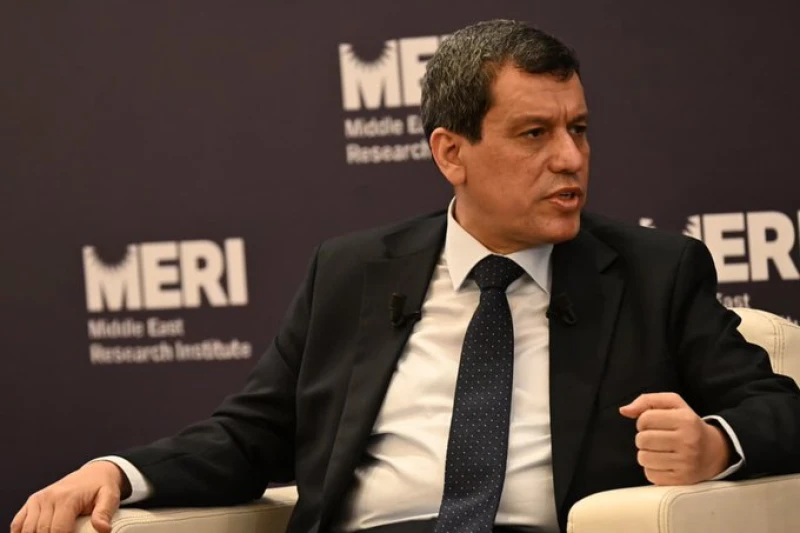
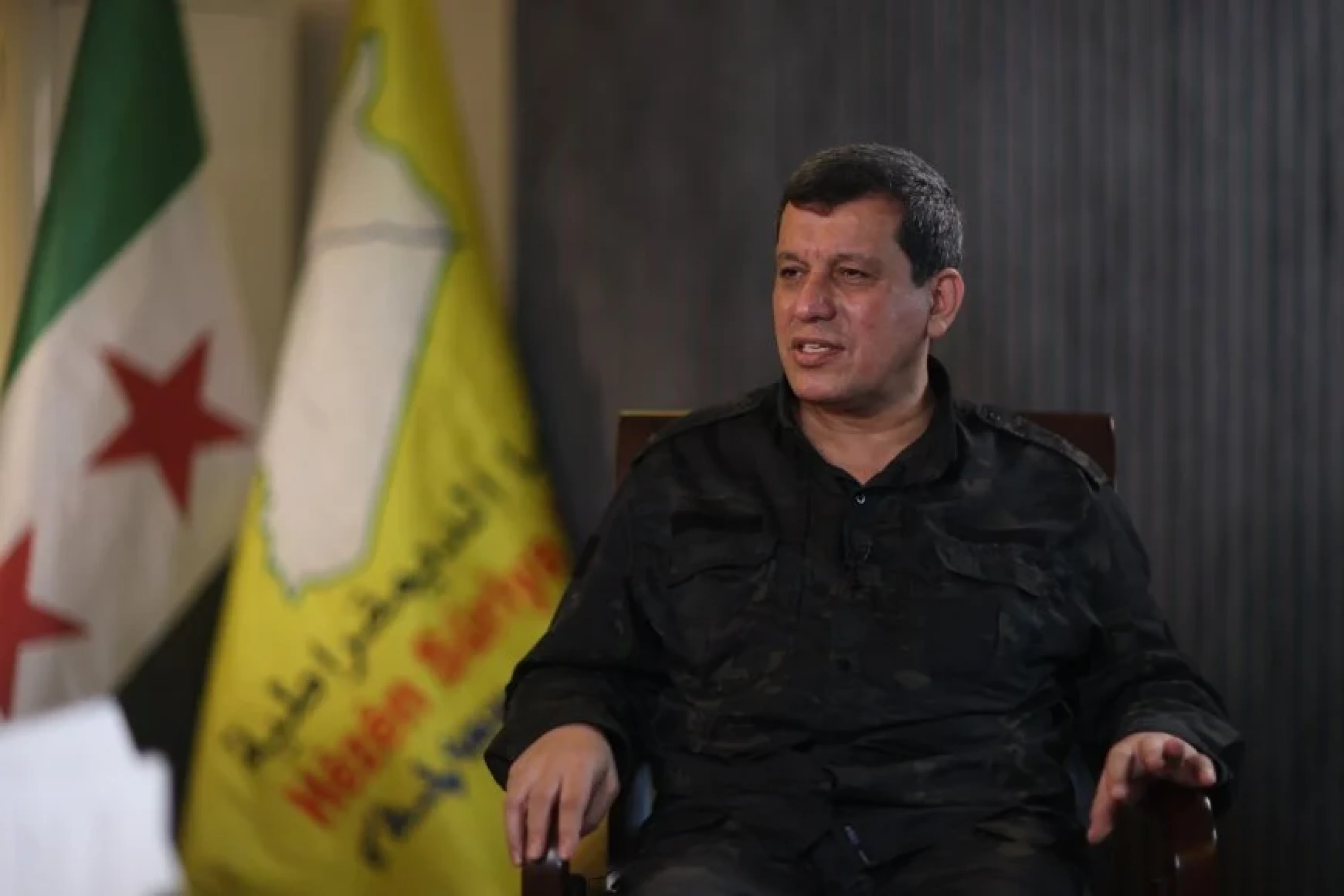
ERBIL, Kurdistan Region of Iraq – Commander of the Kurdish-led Syrian Democratic Forces (SDF) Mazloum Abdi said that they have reached an understanding with Damascus regarding the incorporation of Kurdish and Arabic on the signboards of judicial institutions in Kurdish-majority cities, as well as the integration of judges from northeast Syria (Rojava).
Abdi’s remarks, which came during an interview with affiliated media televised on Monday, followed weeks of tension over the integration of the judiciary files between Damascus and the Rojava autonomous administration.
People in Hasaka on Thursday gathered to protest the removal of Kurdish writing from the signboard of the city’s Justice Palace, after authorities replaced a signboard with Kurdish and Arabic writing for one with Arabic and English writing only.
The banner was removed at least two more times by protesters after it was replaced by Syrian authorities. Similar protests were conducted in other cities as well, including Qamishli.
Abdi said that Damascus had justified the removal of Kurdish from the building under the pretext that the courthouse is “a sovereign institution within the province and the sign should be in Arabic only.”
“We have agreed that boards in Arabic and Kurdish languages should be provided in Kurdish regions,” Abdi told the Rojava-based Hawar News Agency (ANHA). The agreement includes adding signboards in both languages in predominantly Kurdish-majority cities such as Kobane, Qamishli, Derik, Amuda, and the border town of Darbasiyah.
According to the SDF commander, understandings are also in place between Damascus and Rojava authorities regarding the integration of judges from northeast Syria, coming after a brief dispute over the handover of the Qamishli court, with Kurdish media accusing Damascus of attempting to appoint Baathist judges to the Kurdish-majority city’s court.
Syrian official Ahmad al-Hilali, who is part of the Presidential Team tasked with implementing the January 29 agreement, told Syrian state media recently that judges inside the main Qamishli court prevented judges from entering and resuming their duties.
Ghassan Bazo, a Syria-based researcher for the Rojava Information Centre (RIC), told The New Region earlier in the month that Damascus does not recognize qualifications of many officials, judges, administrators, and professionals who were trained through local Kurdish academies, practical experience, and political education rather than through state-recognized university degrees.
Abdi said that an agreement was reached to allow some individuals from the previous Baathist era to continue working in order to “ensure the continuity of citizens' cases and the smooth functioning of the system,” according to ANHA.
Abdi added that the names of judges in the autonomous administration in northeast Syria have been submitted to Damascus in preparation for enrolling them in government judicial courses and appointing them.
 Facebook
 LinkedIn
 Telegram
 X
X