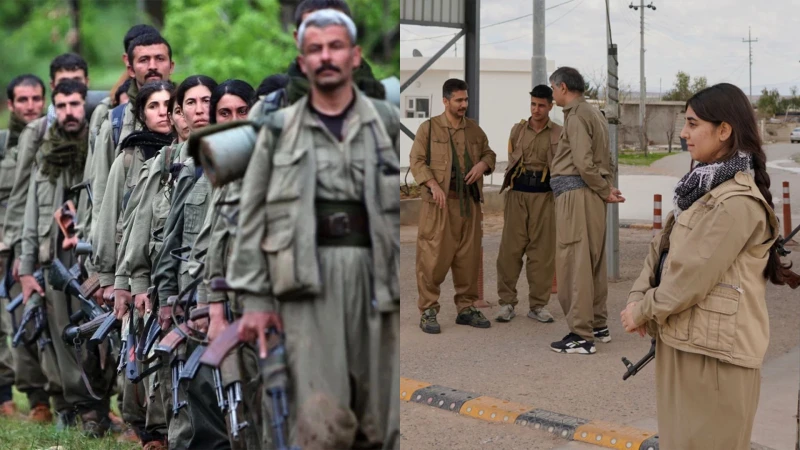
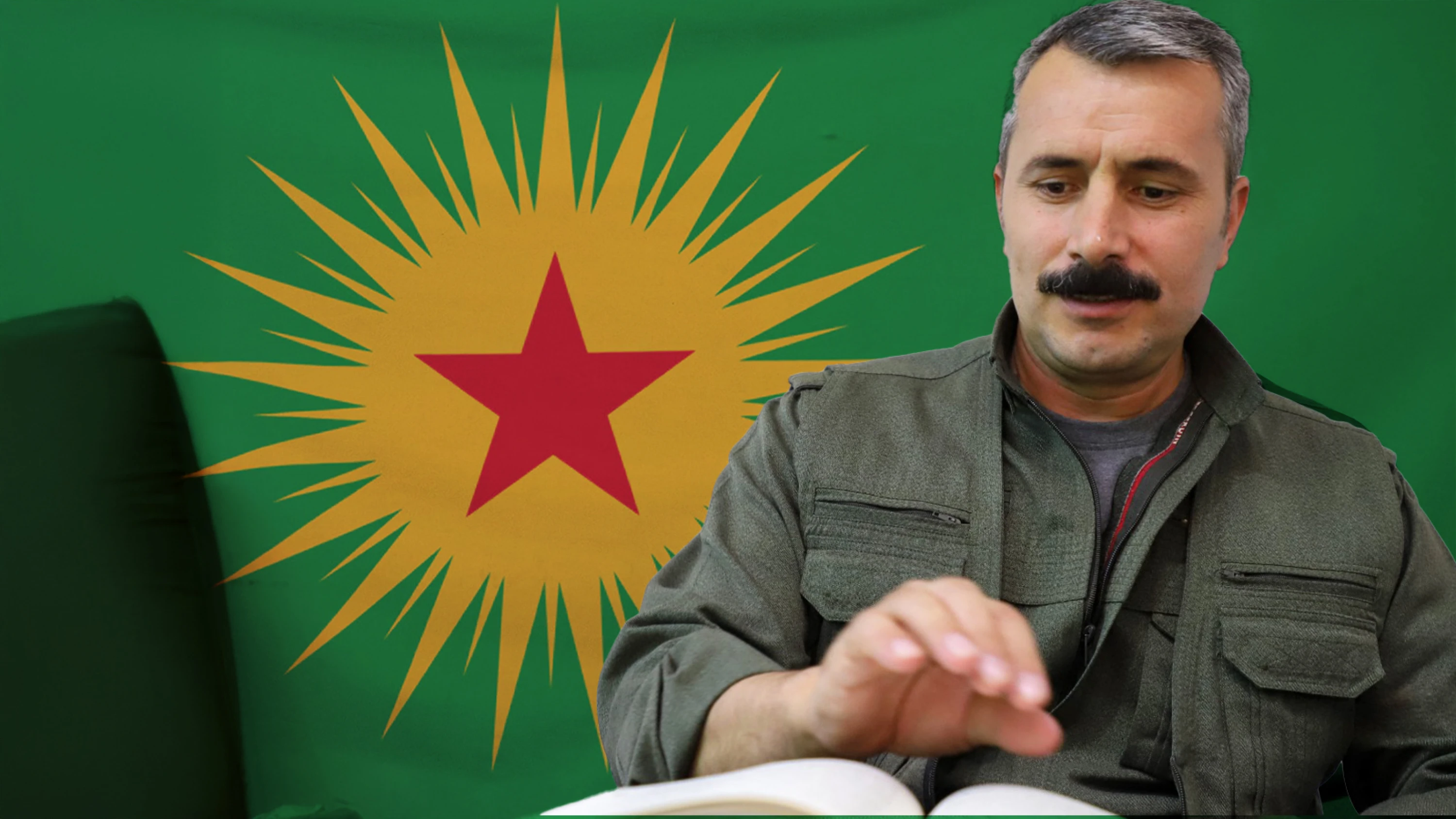
ERBIL, Kurdistan Region of Iraq – Members of the Kurdistan Workers’ Party (PKK) are not seeking amnesty because they “committed no crimes,” the Kurdistan Communities Union (KCK) told The New Region on Wednesday, rejecting Ankara’s efforts to legally differentiate between members as “subversive” to the peace process.
“Our members have not committed crimes, so they will not seek amnesty,” KCK spokesperson Zagros Hiwa told The New Region, adding that the Kurdish movement in Turkey has “waged the freedom struggle of a people who have systematically been denied their most natural inherent rights as human beings.”
Hiwa noted that following 50 years of the PKK’s struggle, the Kurds witnessed a transition from being labeled as “Mountain Turks” to “the brothers of the Turks,” though he argued this remains largely rhetorical.
“The Turkish state no longer denies the existence of the Kurds in rhetoric and everyday politics. But it has not given the Kurds any status in its legal and constitutional system,” he said.
The KCK is an umbrella organization of several groups, including the PKK. Its spokesperson further rejected potential laws that aim to differentiate between PKK members, arguing that such measures contradict efforts toward democratic integration.
“Differentiation between the members and compartmentalizing them in different groups has no relation whatsoever with the solution process,” he said, denouncing the move as “subversive action to jeopardize the process.”
Turkish authorities have routinely signaled that former PKK members could face differing legal treatment under any future peace framework, suggesting that members not directly involved in the conflict could reintegrate into society while others may still face prosecution.
Kurdish officials have criticized such rhetoric as divisive, insisting that the PKK functioned as “a whole structure” whose members should be treated equally under any legal arrangement.
On February 18, the Turkish parliament approved a report drafted by the committee tasked with overseeing the implementation of the process. The report asserted that the law must aim for former members to reintegrate into society, but noted that legal proceedings “should not create a perception of impunity and amnesty in society.”
No further steps without guarantees
“Our movement will not proceed without guarantees, I mean, legal and political steps,” Hiwa said, addressing delays by Ankara in advancing the process.
The delays indicate that the Turkish side has “suspended the process, in practice,” he argued, asserting that the continuation of the process will “totally depend on the attitude of the AKP-MHP government. The ball is in their court,” referring to President Recep Tayyip Erdogan’s ruling Justice and Development Party (AKP) and the far-right Nationalist Movement Party (MHP) of Devlet Bahceli.
“Until now, we have been taking five unilateral steps. But the Turkish side has not taken any concrete steps,” Hiwa asserted, citing steps taken by the Kurdish movement since the process began in May 2025, including disarmament, the destruction of weapons, and the withdrawal of fighters from Turkish territory.
However, the KCK official reiterated the movement’s commitment to political and democratic struggle, noting that the Kurdish movement is “sincere and serious in changing itself, mentally and politically.”
He added that the change within the organization should not be conditioned on Ankara’s willingness to transform, “rather, you can change the opposite side, and encourage them to change, by changing yourself.”
A change in paradigm
The Kurdish Freedom Movement, which encompasses a number of Kurdish organizations inspired by the ideology of jailed PKK leader Abdullah Ocalan, has undergone “a change in paradigm,” which extends across ideological, political, structural, and practical aspects, according to Hiwa.
The change represents a departure from the ‘Soviet socialist’ influences that previously shaped the group, as well as the will to establish a nation-state, which he asserted are the founding principles of parties. “Therefore, there is no longer a need for a party, or party ideology.”
The move also entails the abandonment of armed struggle, and instead adopts a legal struggle, where the party no longer eyes the “subversion and destruction” of state institutions, instead advocating their democratic integration, “to ensure that these institutions develop a democratic awareness within the state.”
However, in cases of genocide, annihilation, and denial, the society would protect itself with the most “legitimate right of self-defense,” he stressed.
A name change?
Many outlets reported that the PKK had changed its name to the “Apoist Movement” after the PKK leadership showed up under that title in the most recent press conference.
However, Hiwa affirmed that using that title “does not imply a change in the name.”
He explained that the movement follows the philosophical, theoretical, political, and sociological guidelines of Ocalan, whether under the PKK or any other banner. However, the Apoist Movement is a more “general term” referring to the leader’s paradigm of “democracy, environmentalism and women-emancipation.”
In May 2025, the PKK held a landmark congress in the Kurdistan Region, where it decided to dissolve and disarm upon Ocalan’s call, ending a four-decade armed campaign against the Turkish state that has resulted in tens of thousands of casualties.
Months later, dozens of PKK fighters burned their weapons in a symbolic disarmament ceremony in the Kurdistan Region’s Sulaimani province.
The group has since announced the withdrawal of its fighters from Turkey and has repeatedly said it is taking steps to advance the Ankara-PKK peace process.
However, the PKK and its leader Ocalan have repeatedly expressed concern over the lack of concrete measures taken by Ankara, decrying the lack of guarantees and the use of inflammatory language in Turkish media.
Founded in 1978, the PKK began as a movement for Kurdish independence but later redirected its efforts toward gaining political and cultural rights for Kurds in Turkey. Ankara and many Western governments classify the group as a terrorist organization.
 Facebook
 LinkedIn
 Telegram
 X
X