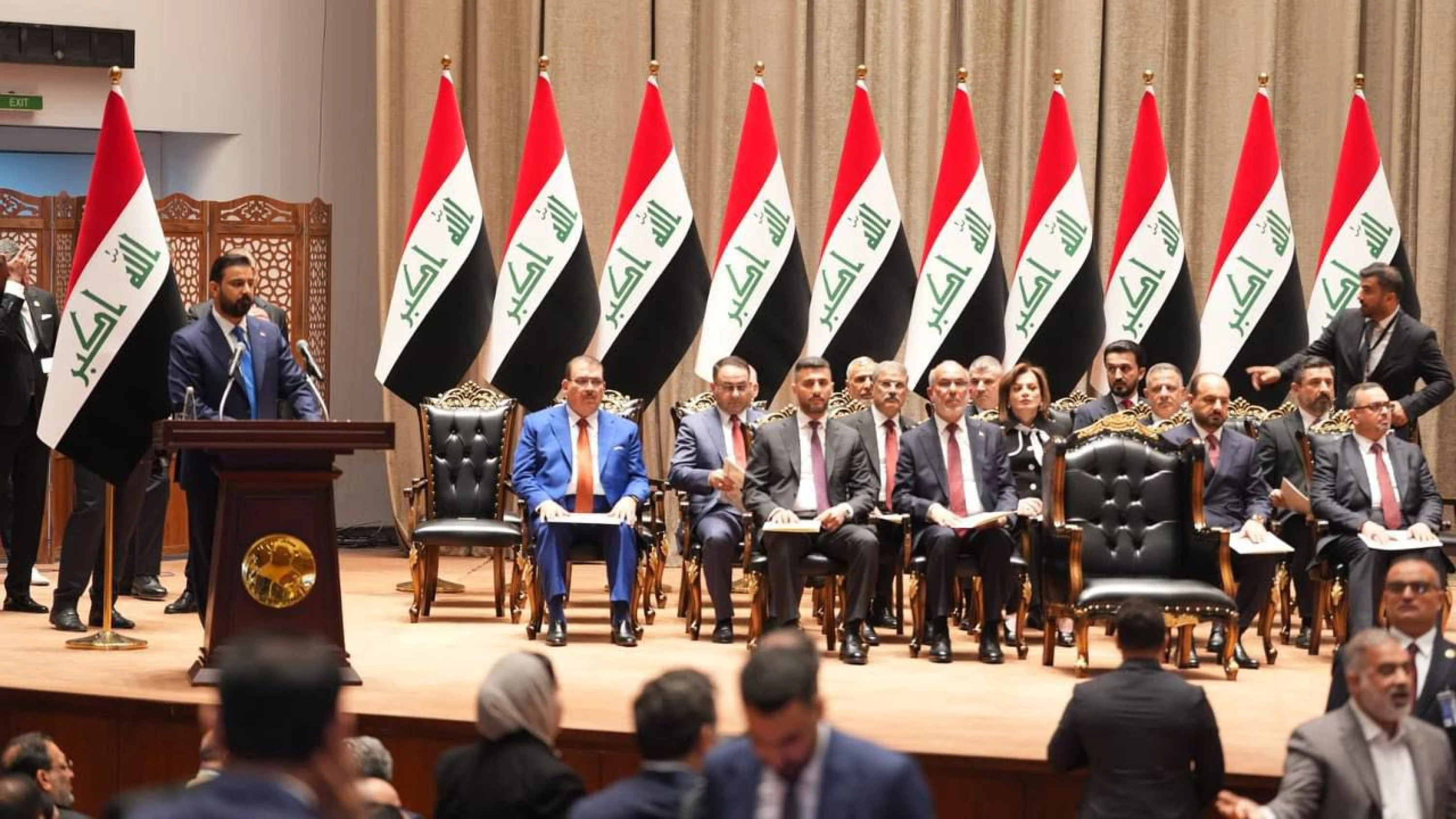
ERBIL, Kurdistan Region of Iraq - Ali al-Zaidi officially assumed the role of Iraqi prime minister on Thursday following a parliamentary session that saw his program for government and numerous ministerial appointments endorsed, though lawmakers clashed over several nominations, leaving key portfolios unfilled.
The session saw 14 ministers be confirmed in their role, while the ministers of defense, interior, culture, and others failed to be appointed. Iraqi state media reported that 270 lawmakers were present for the voting.
Writing in Arabic, Kurdish, and English, Zaidi thanked lawmakers for voting in favor of his program for government, calling it "a step that reflects the priority of the national interest and the spirit of partnership and responsibility."
"This confidence represents a great trust and a solemn commitment before our beloved people that we will move forward with determination to strengthen stability, reinforce the authority of the state, and fulfill the aspirations of Iraqis for development, justice, and a dignified life," he wrote on X.
For Kurdish politicians, three ministerial posts were successfully confirmed. Fuad Hussein of the Kurdistan Democratic Party (KDP) maintained his role as Iraqi foreign minister with an absolute majority vote, while incumbent Justice Minister Khalid Shwani of the Patriotic Union of Kurdistan (PUK) similarly retained his position.
Srwa Abdulwahid of the New Generation Movement (NGM) was appointed as the next environment minister, with the PUK having conceded the ministry to the NGM after the two Kurdish parties recently formed a political alliance.
However, the Ministry of Construction, Housing, and Municipalities, currently held by the KDP's Bangin Rekani and expected to be held onto by the party, did not see a candidate assigned despite Rewaz Hamlan having been nominated by the KDP.
KDP parliamentary bloc head Shakhawan Abdullah told reporters after the session that Parliament Speaker Haibat al-Halbousi "has lost impartiality," asserting that voting on certain ministerial nominations was delayed on on purpose.
He added that his party submitted several proposals ahead of the vote on the new cabinet aimed at protecting the constitutional rights of the Kurdistan Region, including measures pertaining to Article 140 of the Iraqi constitution, which is related to the disputed territories, and advancing laws that strengthen federalism in the country.
Disputes broke out amongst MPs when it came to voting on the interior and planning ministers, with some legislators demanding a recount after a majority-backed nominee failed to emerge.
Despite Iraqi Prime Minister Ali al-Zaidi having secured a vote of confidence for his government during a Thursday parliamentary session, disputes broke out among lawmakers over some ministerial appointees, with no minister having been approved for the interior, defense, and… pic.twitter.com/vhyDr8l9M6
— The New Region (@thenewregion) May 14, 2026
The defense minister post, traditionally held by a Sunni, also failed to be agreed upon during the session.
Voting for the outstanding ministries is expected to continue in another parliamentary sitting after Eid al-Adha, which is expected to fall in late May in Iraq this year.
Iraqi President Nizar Amedi hailed the Thursday voting as "a pivotal national milestone and a constitutional step of utmost importance toward consolidating political stability."
 Facebook
 LinkedIn
 Telegram
 X
X