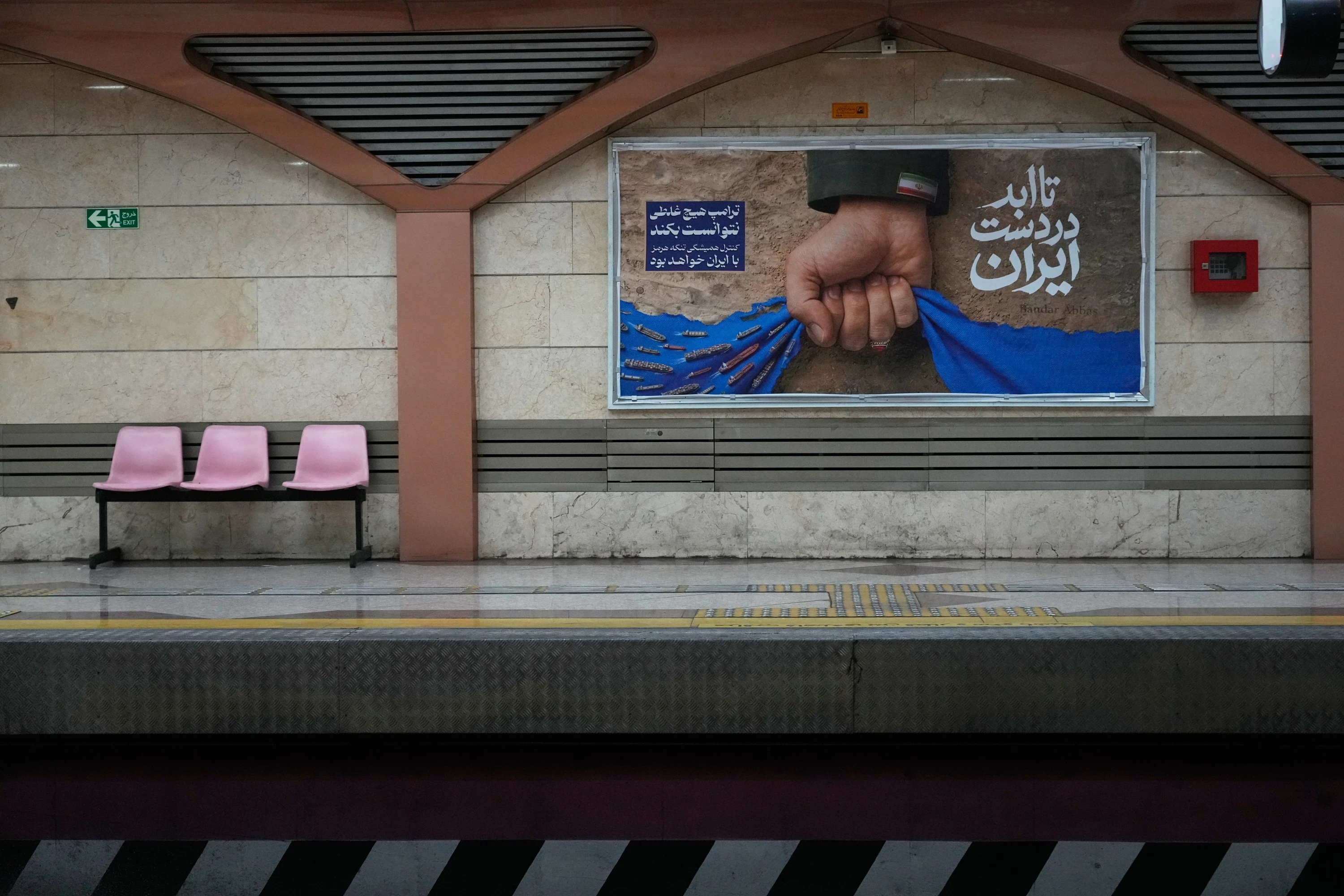
ERBIL, Kurdistan Region of Iraq – The Iranian parliament’s top national security official Ebrahim Azizi said on Saturday that Tehran will charge passage fees for commercial vessels under a new mechanism prepared for managing the strategic Strait of Hormuz, a measure that the US has previously deemed unacceptable.
The developments come after US President Donald Trump announced earlier in May that he rejected Iran's latest peace proposal, with Iranian authorities having on multiple occasions mulled the idea of a toll on vessels passing through the waterway as a component of any agreement, something Washington has rejected.
Tehran’s response to the most recent US proposal, shared by Pakistani mediators, requested an immediate end to the war, assurance of no further attacks on Iran, the lifting of US sanctions, and Iranian control of the Strait of Hormuz, according to the semi-official Tasnim News Agency.
"TOTALLY UNACCEPTABLE!" Trump said in response.
“Iran, within the framework of its national sovereignty and the guarantee of international trade security, has prepared a professional mechanism to manage traffic in the Strait of Hormuz along a designated route, which will be unveiled soon,” Ebrahim Azizi, head of parliament’s national security commission, wrote on X.
“The necessary fees will be collected for the specialized services provided under this mechanism,” he added, noting that only cooperating parties with Tehran will “benefit” from the mechanism.
The strategic waterway “will remain closed” to the US under what he referred to as “the operators of the so‑called ‘freedom project.'”
Iran established the Persian Gulf Strait Authority in May to manage a tolling mechanism, requiring vessels to pay transit fees in Iranian currency at roughly $1 per barrel of oil in their cargo.
"No one who pays an illegal toll will have safe passage on the high seas," Trump said in response to the idea, placing commercial vessels in a difficult situation between the rival stipulations of Washington and Tehran.
Earlier in May, US and Iranian forces exchanged missile and drone fire overnight in the Strait of Hormuz, with Tehran describing the incident as a “violation of the ceasefire” while the US said it was acting in self-defense and “eliminated inbound threats.”
Tehran and Washington both traded blame for the clash.
On April 13, the US military announced that it would begin blocking sea traffic to Iranian ports after a tenuous round of peace talks in Islamabad failed to produce a lasting agreement.
The waterway is one of the world’s most important shipping routes and its most vital oil transit chokepoint, having often been the site of naval confrontations between the Iranian Islamic Revolutionary Guard C and the US Navy.
Negotiations between Washington and Tehran have stalled since the shaky ceasefire began, as both sides continue sending proposals back and forth with no clear timeline for when face-to-face talks might resume.
 Facebook
 LinkedIn
 Telegram
 X
X