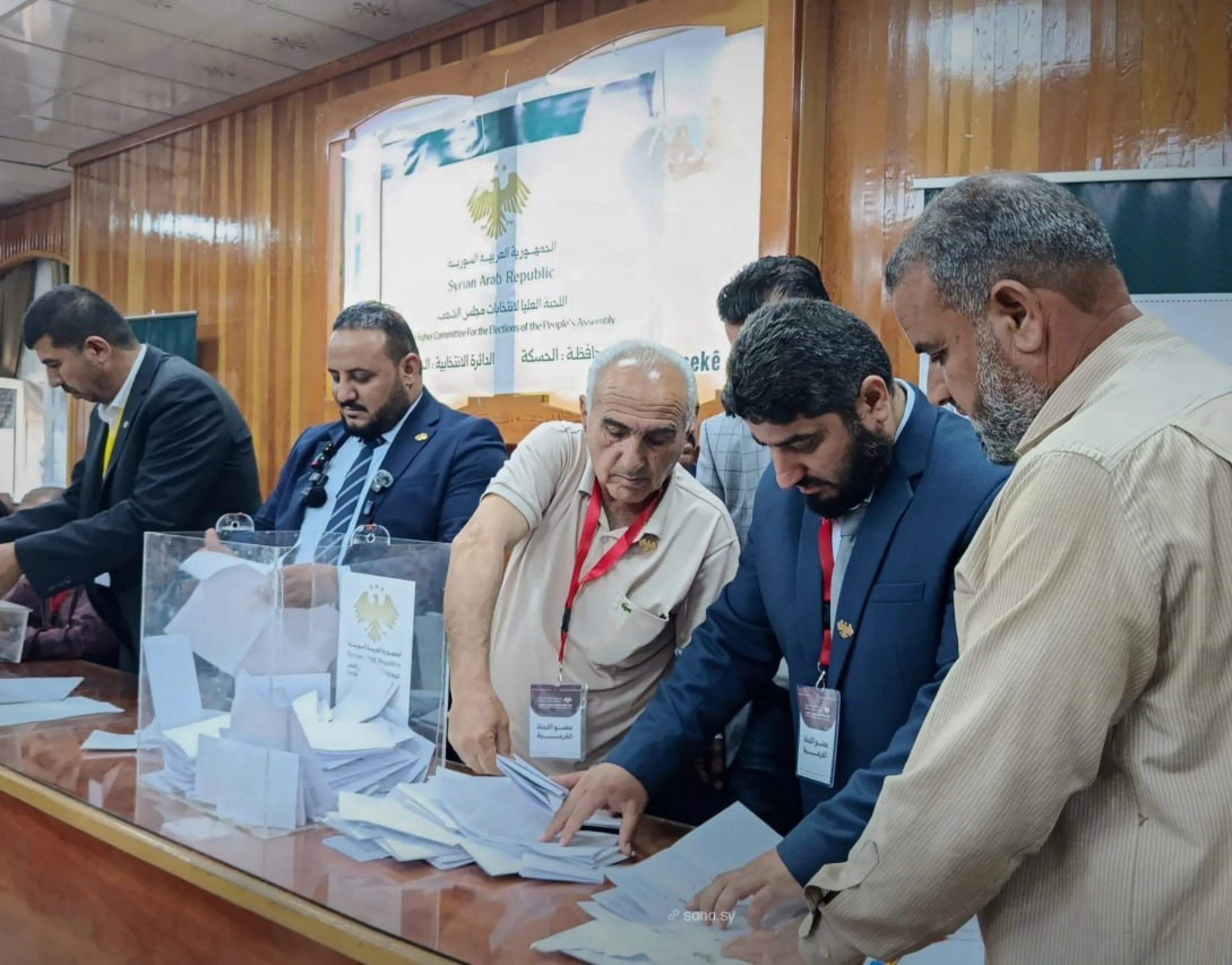
ERBIL, Kurdistan Region of Iraq - Syrian state media on Sunday announced the selection of several representatives for Kurdish-majority areas as part of the formation of the new Syrian People’s Assembly, amid growing criticism from Kurdish political groups that the process amounted to political appointments rather than competitive elections.
According to Syrian state media, the Higher Committee for People’s Assembly Elections announced the appointment of Afrhad Anwar Shahin and Shawakh Ibrahim al-Assaf to represent the Kobane district in Aleppo province.
The committee also announced the selection of Ibrahim Mustafa al-Ali, Omar Issa Hayes, and Fasla Youssef for Hasaka, while Kim Hussein Ibrahim, Radwan Othman Sido, Abdul Halim Khidr al-Ali, and Mahmoud Madi al-Ali were named for Qamishli in Hasaka province.
The announcements came as Kurdish political figures and parties intensified criticism of the process, arguing the representatives had effectively been chosen in advance and that voting procedures were largely symbolic.
Foza al-Yusuf, an official from the Democratic Union Party (PYD), said in an X post on Sunday that “people are being appointed to represent the Kurdish people in the Syrian parliament,” adding that “placing the ballot box is nothing but camouflage for these appointments.”
She said the process reflected the continuation of policies excluding “the will of the Kurdish people.”
On Tuesday, 24 Kurdish political parties issued a joint statement condemning what they described as an attempt to marginalize Kurdish political representation through the mechanism used to form the assembly.
The parties said limiting Kurdish representation to four seats out of the parliament’s 210 seats amounted to what they called a “political execution of Kurdish rights,” and failure to reflect the demographic and political weight of Kurds in Syria.
The statement argued that the process was “nothing more than a sham appointment process that reproduced mechanisms of ethnic and political exclusion.”
The parties also warned that accepting the current level of representation could later be used as a basis for determining Kurdish participation in future Syrian state institutions, including ministerial, judicial, and diplomatic positions.
Among the signatories were the PYD, the Green Democratic Party, the Kurdistan Democratic Party - Syria, and the Democratic Society Movement (TEV-DEM).
Correction of Foza al-Yusuf's party affiliation at 20:43
 Facebook
 LinkedIn
 Telegram
 X
X