
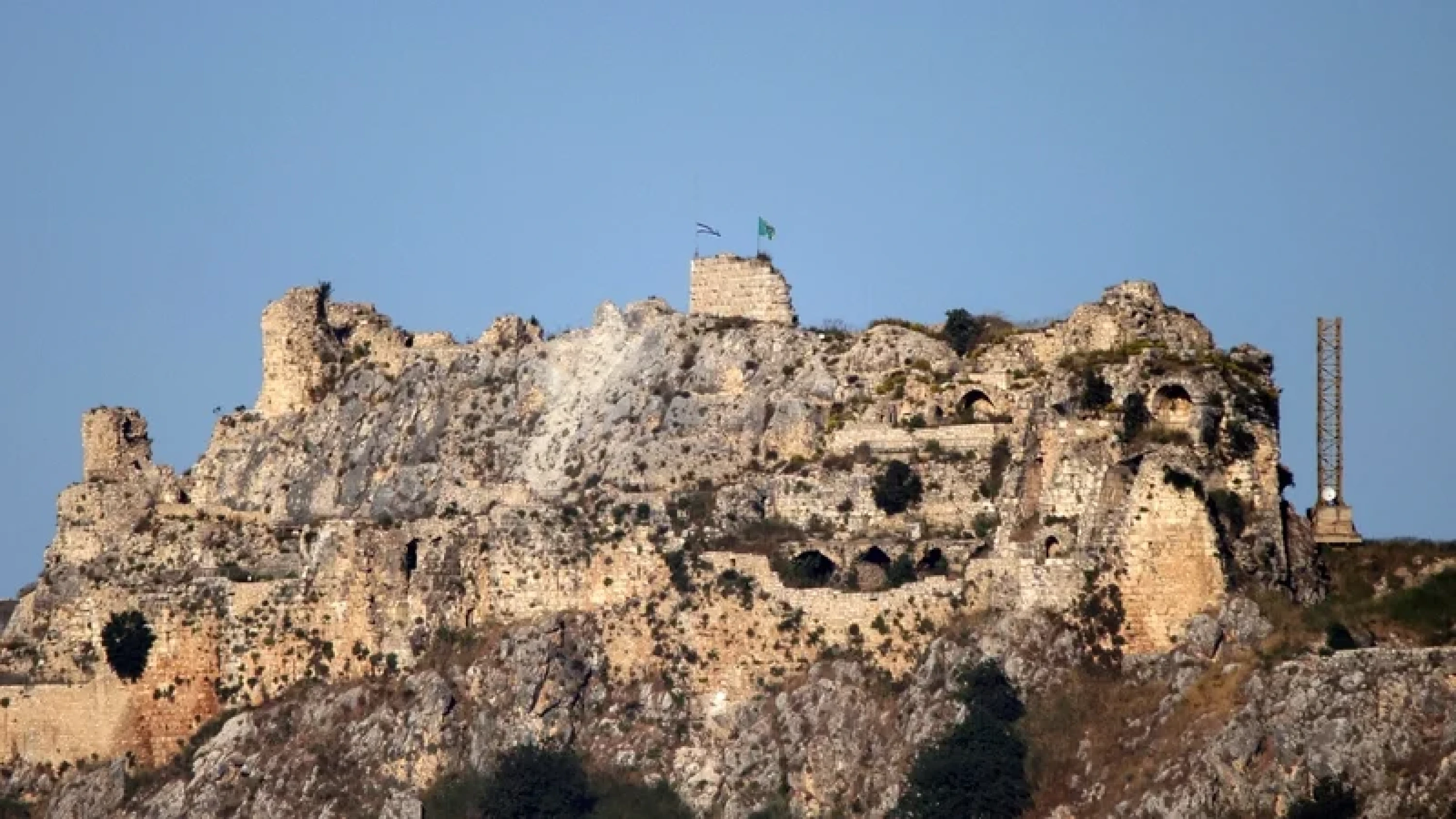
ERBIL, Kurdistan Region of Iraq - Israeli troops have advanced to the edges of Nabatieh in southern Lebanon and seized the historic Beaufort Castle, marking their furthest incursion into Lebanese territory in 26 years, despite the ceasefire between Israel and Hezbollah nominally being in effect.
The capture followed days of heavy airstrikes and combat in surrounding villages, occurring just after Israeli and Lebanese officials held security talks in Washington on Friday.
“The [Israeli army] is operating near Nabatieh, which constitutes a significant Hezbollah power center in southern Lebanon, and is prepared and ready to expand the offensive as required,” the Israeli military said in a post on X overnight Sunday.
Back in 2024, during the previous conflict between Israel and Hezbollah, UNESCO granted enhanced protection status to 34 Lebanese cultural landmarks, including Beaufort Castle.
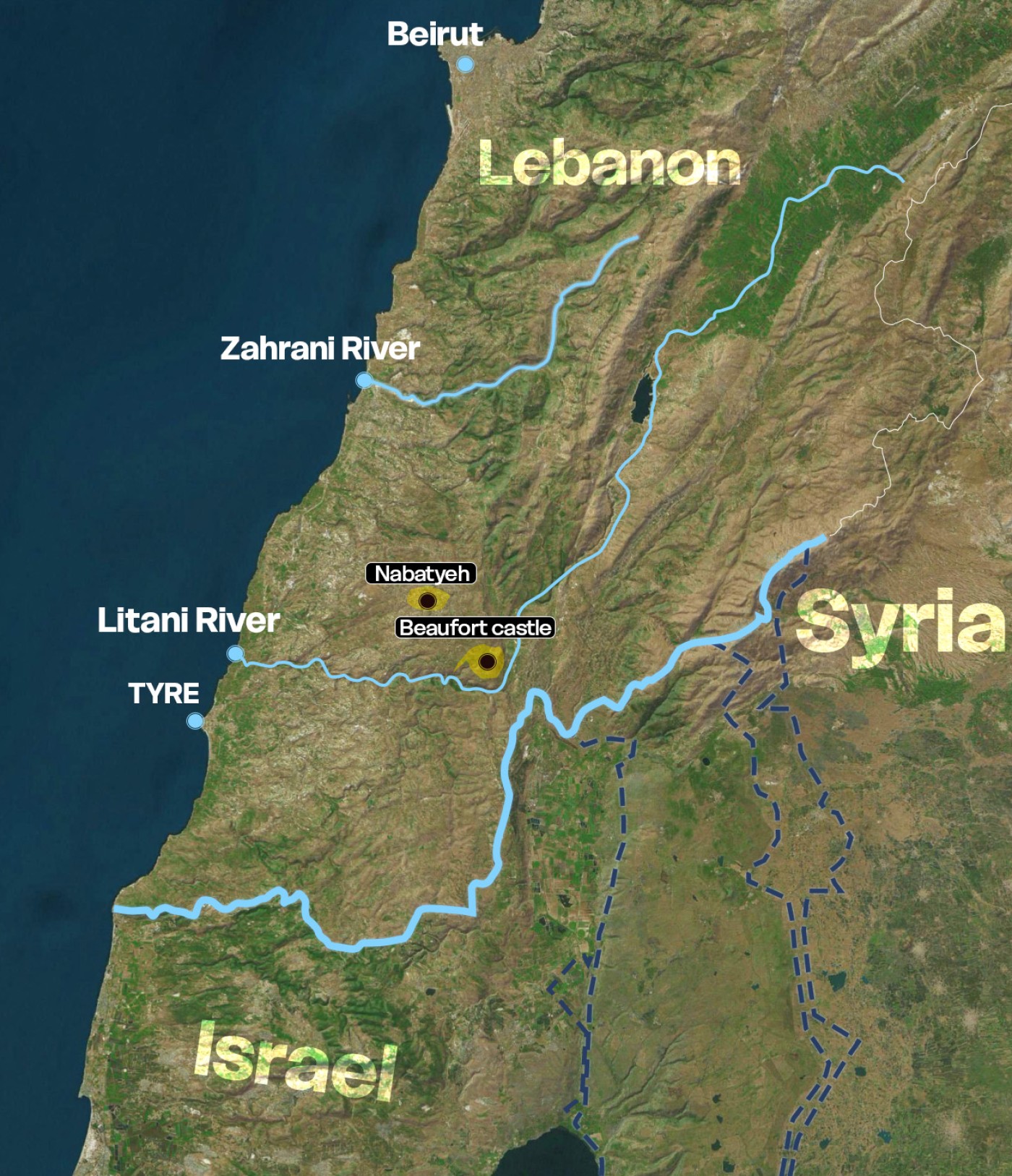
Israeli Defense Minister Israel Katz addressed the seizure on X, stating: “The [Israeli army] expanded the maneuver in Lebanon, crossed the Litani River, and captured the Beaufort ridge - one of the most important strategic points for defending the settlements of the Galilee and safeguarding the security of our forces.”
It is common practice among Israeli nationalists to refer to areas of southern Lebanon by the biblical name “Galilee” – historically known in Arabic as Jabal Amil – in order to reinforce their territorial claims and delegitimize Arab-Lebanese indigeneity.
Katz also asserted that soldiers raised an Israeli flag on the castle, warning that “the campaign is not yet over. We are all determined to crush Hezbollah's power and complete the mission.”
Israeli Prime Minister Benjamin Netanyahu labeled the capture of the Beaufort castle, known in Arabic as Qalaat al-Shaqif, as a “dramatic” shift.
"Now my directive is to deepen and expand our hold in places that were under Hezbollah's control. The capture of Beaufort is a dramatic stage and a dramatic shift in the policy we are leading," he said.
“I will continue to demand and promote a permanent territorial conception and exceptional military aggressiveness. I reiterate and emphasize: For every explosive drone, ten buildings must fall in Beirut,” Israeli Finance Minister Bezalel Smotrich said on X on Sunday.
 Graphic: The New Region
Hezbollah said it carried out overnight strikes on Israeli troops and a Merkava tank near the border town of Bayada as clashes intensified in areas north of the Litani River, including around Nabatieh and the castle.
The group also reported attacks deeper inside Israel, targeting areas near Haifa, Nahariya, and other northern regions. Its deployment of hard-to-detect fiber-optic drones has proven particularly lethal, posing a growing challenge for Israeli defenses. Over the past 24 hours, the Israeli military has issued nearly 200 alerts warning civilians in the north of incoming drones and missiles.
French President Emmanuel Macron condemned the situation on Sunday, asserting that "nothing justifies the major escalation under way in south Lebanon."
Following a request from France, the UN Security Council is scheduled to convene an emergency meeting on Monday to address the crisis.
Hostilities between Israel and Hezbollah escalated on March 2 under the backdrop of the US-Israeli war on Iran, triggering a wave of Israeli strikes that have killed more than 3,400 people and displaced over one million, according to Lebanese authorities.
Following months of fighting with Hezbollah and a fragile ceasefire announced by US President Donald Trump on April 16, Israel set the so-called “yellow line” extending roughly 4 to 10 kilometers inside Lebanese territory, from the Mediterranean coast to the Syrian border, designating at least 55 villages off-limits, barring Lebanese residents from returning as homes and infrastructure have been demolished to create a cleared, uninhabited buffer zone.
Israel and Lebanon have agreed to extend the ceasefire between them for another 45 days following talks in Washington, the US State Department announced on May 15. Despite this, Israel has violated the ceasefire dozens of times, with Lebanese President Joseph Aoun insisting earlier that “Israel must realize once and for all that the only path to security is through negotiations, but it must first implement a complete ceasefire before moving to the negotiating phase.”
“If Israel believes it can achieve security through violations and the destruction of border villages, it is mistaken,” Aoun said, adding that “it has tried this before, and it yielded no results.”
Although Israel originally stated that its goal was to clear Hezbollah fighters from the region south of the Litani River, its military onslaught has now pushed significantly further. Israeli forces are active well beyond that initial boundary, with evacuation orders extending north to the Zahrani River, situated approximately 10 km north of the Litani. This expansion has effectively placed 2,000 square kilometers of Lebanon under Israeli control, an area that now accounts for nearly one-fifth of the entire country.
The stretch of territory between the Litani River and the city of Sidon has emerged as Hezbollah’s primary stronghold, overseen by its Badr unit. Prior to the war, the group’s core presence was concentrated south of the Litani, particularly within the Nasr and Aziz sectors. However, heavy losses and extensive damage to those units during the conflict have shifted its center of gravity northward, into the Badr-controlled area.
Lebanese Prime Minister Nawaf Salam said Saturday that Israel is carrying out a "dangerous and unprecedented escalation," accusing it of "pursuing a policy of comprehensive destruction and mass displacement across Lebanon."
Israel’s push northward comes as US-brokered discussions between Israeli and Lebanese officials continue, with the aim of securing a lasting resolution to the hostilities and advancing proposals to disarm Hezbollah. The group, however, has denounced the talks, as the Israeli offensive against the country has never really ceased.
A new round of US-brokered negotiations is expected to take place next week.
However, Lebanon’s future is also inexorably tied to the outcome of the shaky diplomatic talks between Washington and Tehran: Iranian officials have maintained that a cessation of hostilities in the US–Israel war involving Iran is contingent on the Lebanese front, warning that a complete Israeli withdrawal from southern Lebanon remains a non-negotiable prerequisite for any diplomatic progress.
What changes now?
The Israeli military ordered residents south of the Zahrani River to evacuate over the weekend, a move that underscores how far operations have extended beyond the Litani River – long presented by Israel as the limit of its campaign against Hezbollah, known as the “yellow line.”
Beaufort Castle – known in Arabic as Qalaat al-Shaqif – has historically served as a theater for some of the bloodiest clashes between Israel and the PLO and, later, Hezbollah. Israeli troops previously occupied it after taking it from the Palestine Liberation Organization (PLO) in 1982, holding the site until their withdrawal from Lebanon in 2000. Located on a high ridge in southern Lebanon with a clear view of the Litani River, the site has served as a strategic military asset for decades due to its proximity to the northern Israeli border.
Its seizure is as much a symbolic victory as a strategic one, a sentiment echoed by Smotrich: “The return to Beaufort is an expression of correcting old national sins and distorted perceptions.”
Nabatieh constitutes a central pillar of Lebanon’s Shia community – politically, economically, and socially – and functions as a critical junction between the south, the Bekaa Valley, and the capital. By controlling it, Tel Aviv gained a major tactical advantage that allows it to project power beyond the Litani and choke the infrastructure that sustains Hezbollah’s activities. It also signals that Israel’s objectives have shifted from simply pushing Hezbollah north of the Litani to a broader effort aimed at dismantling the group’s territorial and communal infrastructure in the south.
Israel’s current modus operandi – specifically its northward push, the seizure of Nabatieh and the strategic castle, and the expanding evacuation zones – has raised serious questions among analysts about the military’s long-term objectives.
Despite the absence of any official statement from Israeli authorities, some analysts warn this could signal the creation of a deeper security buffer, potentially paving the way for a prolonged military occupation similar to that of 1982.
Some analysts believe this may be a deliberate effort to further erode the Lebanese government’s ability to assert state authority and negotiate a durable settlement. At the same time, however, it risks reinforcing Hezbollah’s claim to legitimacy, bolstering its argument that armed resistance remains necessary.
Beirut-based analyst Joe Macaron told AP that the military expansion “would give Israel an upper hand in the upcoming talks with Lebanon in Washington.”
“The more land they [the Israeli military] can grab before the ceasefire, the more they can impose conditions on Hezbollah before their withdrawal.”
 Facebook
 LinkedIn
 Telegram
 X
X