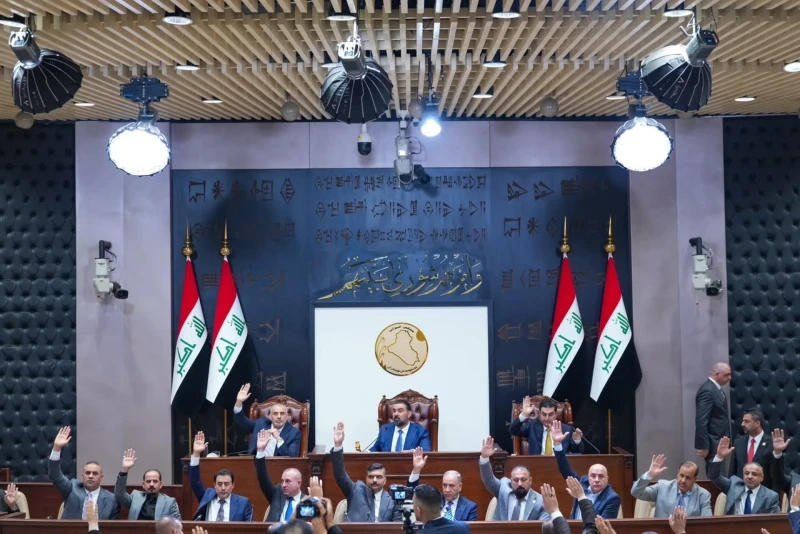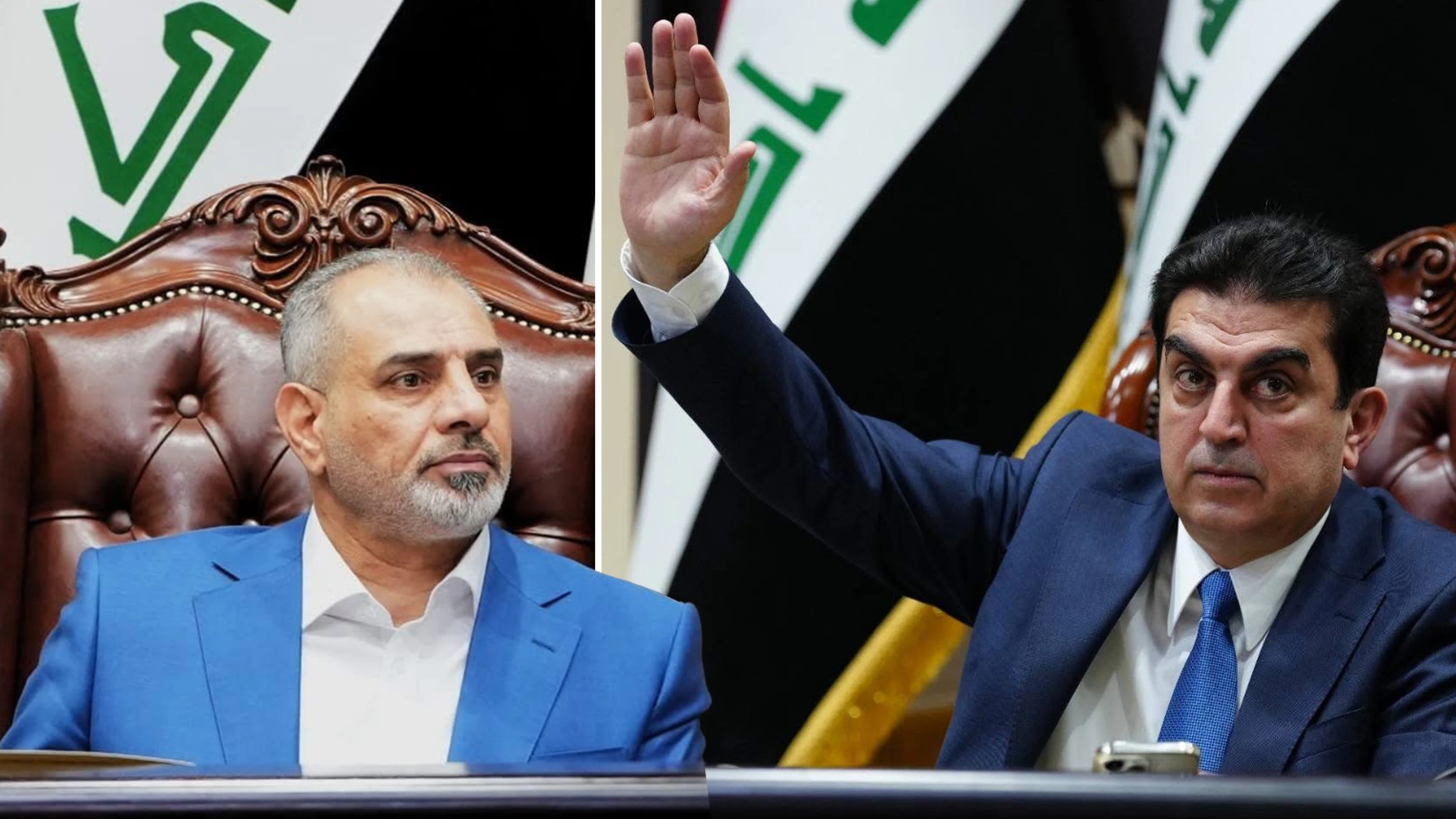
ERBIL, Kurdistan Region of Iraq - The Iraqi parliament’s second deputy speaker late Monday responded to his fellow deputy’s controversial call to halt financial transfers to the Kurdistan Region, stating that civil servant salaries is “a red line” and that cutting those funds would violate rulings of the top court.
First deputy speaker Adnan Faihan al-Dulaimi on Monday urged the federal government to halt financial transfers to the Kurdistan Regional Government (KRG) until a full settlement is reached over outstanding non-oil revenues owed to Baghdad.
The statement triggered a response from Farhad Atrushi, a Kurdish MP and the parliament’s second deputy speaker.
“Employee salaries are a red line and not a bargaining chip or a tool for political pressure,” read the statement from Atrushi, stressing that Kurdish civil servants are entitled to the same constitutional and livelihood rights as the rest of the Iraqi population.
Dulaimi had claimed that the previous federal government transferred funds equivalent to five months of salaries to the Kurdistan Region in 2025 despite not receiving the non-oil revenues required under Budget Law No. 13.
“Attempting to link the livelihood and entitlements of Kurdistan Region employees to accounting disputes or non-oil revenues blatantly contradicts the decision of the Federal Supreme Court, which clearly ruled to separate the issue of salaries from any political or financial disputes or obligations between Baghdad and Erbil.
Dulaimi further claimed that the previous government made “concessions” by reducing the amount of non-oil revenues the KRG was obligated to pay Baghdad in return for salaries, and accused Erbil of not sticking to its commitments.
Atrushi addressed the allegations, saying the measures taken by the former Baghdad cabinet were not “unauthorized concessions,” but rather the result of realistic technical and legal reviews overseen by specialized ministerial committees, which took into account “the actual nature of the revenues, collection mechanisms, and exclusive and shared powers as stipulated by the Iraqi Constitution.”
Erbil and Baghdad came to an agreement in September to alleviate some of their budgetary disputes and ensure that civilians do not bear the brunt of the conflict, with the KRG agreeing to export its oil through Iraq's oil marketing firm (SOMO) and to hand over 120 billion dinars every month as Baghdad's share of the Region's non-oil revenues, in exchange for monthly dues of the Kurdistan Region's civil servants.
“The KRG has never shirked its obligations. It has consistently delivered 120 billion dinars to the federal government,” said Atrushi, noting that the previous government’s so-called “flexibility” is a constitutional commitment, not a violation of the law, and that threatening legal action against the former cabinet over it would be “a clear politicization of the law.”
The Kurdish lawmaker pointed out that the Kurdistan Region has yet to receive a comprehensive settlement that includes “its outstanding dues from the general budget, oil production and transportation expenses, and compensation for decisions that have caused economic harm to the Region.”
Salaries of the Kurdistan Region’s civil servants and the Region’s share of the federal budget have long been a point of contention between the federal and regional governments. Years of conflict and unresolved issues between Erbil and Baghdad, and economic sanctions and pressure on Erbil by federal authorities, have pushed employees in the Region to live from paycheck to paycheck.
“The legislative institution and its leadership represent the will and voice of all components and segments of the Iraqi people. It cannot be biased towards any party or group over another, for any reason whatsoever, regardless of the circumstances,” Atrushi concluded, stressing that Erbil-Baghdad disputes must be resolved on the basis of “national partnership and the preservation of the rights of all citizens without discrimination,” not through threats and escalatory language.
A KRG delegation is expected to visit the Iraqi capital soon for talks with government officials on Erbil-Baghdad issues over the implementation of the ASYCUDA customs system in the Kurdistan Region, the Region’s non-oil revenues, and other financial disputes between the two sides.
 Facebook
 LinkedIn
 Telegram
 X
X