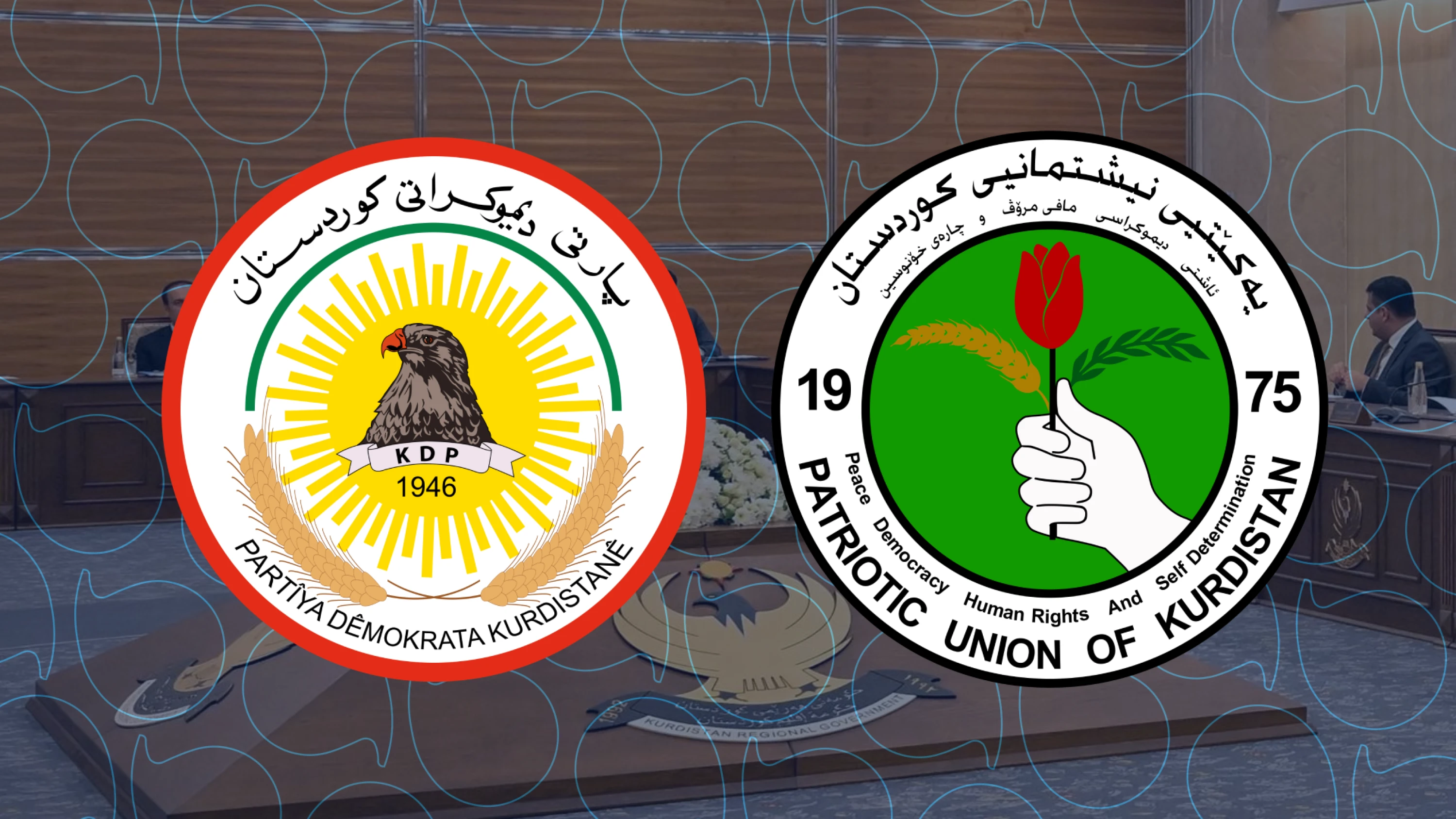
ERBIL, Kurdistan Region of Iraq – Tensions between the Kurdistan Democratic Party (KDP) and the Patriotic Union of Kurdistan (PUK) have witnessed a reescalation in recent days, with both sides accusing the other of hindering the formation of the next Kurdistan Regional Government (KRG) cabinet, nearly two years after elections were held.
Eighteen months of fruitless negotiations
On October 20, 2024, the Kurdistan Region held its long-delayed parliamentary elections, in which the KDP secured 39 seats in the 100-spot legislature, placing first, while its longtime rival and government partner, the PUK, grabbed 23 seats and placed second.
The implications of the election results were clear: The KDP had scored over 400,000 votes more than its nearest competitor in an election that had under 2.1 million ballots cast in total. Now controlling around 40 of the legislature, the KDP seemed poised to reassume its role as the main party in the upcoming government, emboldened by the renewed declaration of faith from the Kurdistan Region’s voters.
The PUK, on the other hand, had overpromised and underperformed. While the KDP had centered its electoral rhetoric on providing greater services for the people and vowing to fight for Kurdish rights in Baghdad, PUK leader Bafel Talabani had built his party’s electoral campaign on antagonizing the KDP and its leadership, promising to overtake the KDP as the main party in the Region.
Out of 62 possible seats in Erbil, Duhok, and Halabja, the PUK only managed to snatch eight. The PUK picked up 15 seats in Sulaimani, its historic stronghold, but still gave up eight seats to the relatively young New Generation Movement (NGM).
Yet, despite falling short of its ambitious objectives, the PUK and its leadership maintained their fiery rhetoric.
On December 2, 2024, the newly-elected Kurdish lawmakers were sworn in during the first session of the new parliament cycle. Despite this, no subsequent sessions have been held since, and the parliament has remained inactive for over a year and a half.
In the following months, the KDP and the PUK, as the elections’ chief victors, held several rounds of negotiations aimed at forming the next KRG cabinet, but the efforts failed to bear fruit. The KDP blamed the non-agreement on the PUK’s insistence on securing several top posts which the ruling party deemed not reflective of the results of the elections and the vote of the Kurdish public.
In the midst of all this, in August 2025, a court in Sulaimani sentenced NGM leader Shaswar Abdulwahid to six months in prison on charges of criminal threat/intimidation against a former lawmaker of his party.
Formed in 2017, the Sulaimani-based NGM had until then positioned itself as a reformist force capable of challenging the entrenched political dominance of the KDP and PUK. This anti-PUK and KDP stance had continued even during the campaigning for the 2024 elections, in which NGM scored 15 seats.
Abdulwahid was released on bail on January 14, after more than five months in a Sulaimani prison.
On January 17, three mere days after his release, Abdulwahid met with Talabani and later appeared alongside the PUK leader before the press, where they announced they were uniting forces in a bid to form the next KRG cabinet.
Abdulwahid’s sudden shift in attitude coinciding with his recent release led many critics to question whether legal and political pressure on the NGM leader had influenced the move, considering the party had been very outspoken against the PUK and Talabani for years.
Nonetheless, with PUK and NGM now united, the parties jointly controlled 38 seats in the parliament; still less than the KDP’s 39.
In mid-May, Kurdistan Islamic Union (KIU) leader Salahaddin Bahaddin met with both KDP and PUK leadership to present an initiative aimed at ending the political stalemate. Bahaddin, whose party has four seats in parliament, said at the time that both parties have been receptive to the initiative and that the KIU expects a positive response.
Days later, KDP President Masoud Barzani called on the Kurdistan Region’s political parties to meet and end internal conflicts that have delayed the political process. The Kurdish leader urged the parties to “cease the futile conflict and self-destruction that has burdened the political process in the Region for some time.”
Throughout the negotiations, Kurdistan Region Prime Minister Masrour Barzani, a senior KDP leader, has stressed the importance of reactivating the Kurdistan parliament, emphasizing the need to respect the demands of the people of Kurdistan, and urging all the parties to negotiate in good faith.
“The election was held for a purpose, the people trusted the [political] sides so that they can, with responsibility, serve the people of Kurdistan,” Barzani has said, stressing that any party that aims to hinder the government formation must answer to the people of Kurdistan.
On June 1, PUK spokesperson Karwan Gaznayi told reporters that there have recently been efforts to hold meetings, expressing hope it will lead to results. Gzanyai stressed that the reactivation of the parliament requires both parties, and any unilateral attempt to do so will not be successful.
“We are two distinct political parties, with distinct visions and mechanisms of governance. It is true that we have differences, because we are two distinct parties, but we have a lot in common as well, and we can set aside our disputes for the greater good of our nation,” said Gaznayi.
The re-emergence of fiery rhetoric
On June 21, the PUK held a meeting of the party’s leadership council, followed by a press conference of Gaznayi, during which the spokesperson’s remarks displayed a noticeable far cry from his earlier statements.
Gaznayi expressed “deep sorrow” over the delay in forming the KRG cabinet, denying the KDP accusations and holding the rival party responsible for the delayed process.
“Since the beginning of negotiations on forming the tenth cabinet, the PUK has never fought over a certain post or position inside the tenth KRG cabinet. On the contrary, we have made serious effort, we were keen and insistent on implementing the principles of settlement and genuine partnership,” said Gaznayi.
“The KDP bears responsibility for the delay in forming the tenth KRG cabinet, and they must bear the different consequences and repercussions,” said the PUK spokesperson, accusing the party of imposing its will, and noting that the PUK will hold meetings with other parties, and that the deal with NGM would be signed in early July and go into effect.
The KDP fired back at Gaznayi’s comments a day later through a statement attributed to the party spokesperson Mahmoud Mohammed, who stated that the PUK has “become an obstacle to the democratic process and the reactivation of parliament.”
“After the election of the sixth cycle of the Kurdistan Parliament, while the KDP had intensified its visits and negotiations to re-activate the parliament and form a new cabinet, the PUK began to waste time not to elect the presidency and form the tenth cabinet. Because they do not believe in the voting process and elections in their hearts, they started making excuses,” read the statement.
“It is precisely the PUK that seeks a policy of imposition by force on the outcomes and results of the election, without regard for the votes and will of the people of Kurdistan, disregarding any consideration for the votes,” it added.
Speaking to reporters during the inauguration of a major park in Erbil, Prime Minister Barzani on Tuesday stressed that “there is no excuse to obstruct the reactivation of the [Kurdistan] parliament.”
“Any party which obstructs the reactivation of the parliament, must answer to the people of Kurdistan,” he added.
During the recent PUK leadership council meeting, the attendees reportedly discussed potentially filing a lawsuit at the Iraqi Federal Supreme Court, calling on the top court to issue a ruling to suspend the ninth KRG cabinet.
KRG spokesperson Peshawa Hawramani on Wednesday noted the KDP-PUK dispute has not transferred into the meeting room of the Council of Ministers, and that: “There are no problems within the Council of Ministers… We all work alongside each other… If you’re sitting there, you would not feel there are any issues outside that hall.”
“We formed this government together several years ago… Even now, within the structure, the KDP and the PUK have the main roles and everyone practices their own authority,” said Hawramani.
The PUK maintains the second-highest presence in the KRG, and has historically worked alongside the KDP in the Council of Ministers.
“I don’t understand who the PUK would file a lawsuit against. Could it be that they want to file a lawsuit at the Federal Supreme Court against Mr. Qubad [Talabani]? Because Mr. Qubad is part of this government, and I mention his name with utmost respect. So, I don’t understand their purpose, their words are unclear. Who are they filing a lawsuit against, and how?” Hawramani questioned.
Qubad Talabani, a senior PUK member and brother of Bafel Talabani, has served as Kurdistan Region deputy prime minister since 2014, sitting next to and working alongside two separate prime ministers from the KDP since: Nechirvan Barzani from 2014 to 2019 and Masrour Barzani from 2019 until now.
“With all due respect, there’s an element of hypocrisy in there. There’s hypocrisy in these kinds of statements... We must be truthful, first and foremost with the people of Kurdistan, and not attempt to deceive them,” the KRG spokesperson stated.
 Facebook
 LinkedIn
 Telegram
 X
X