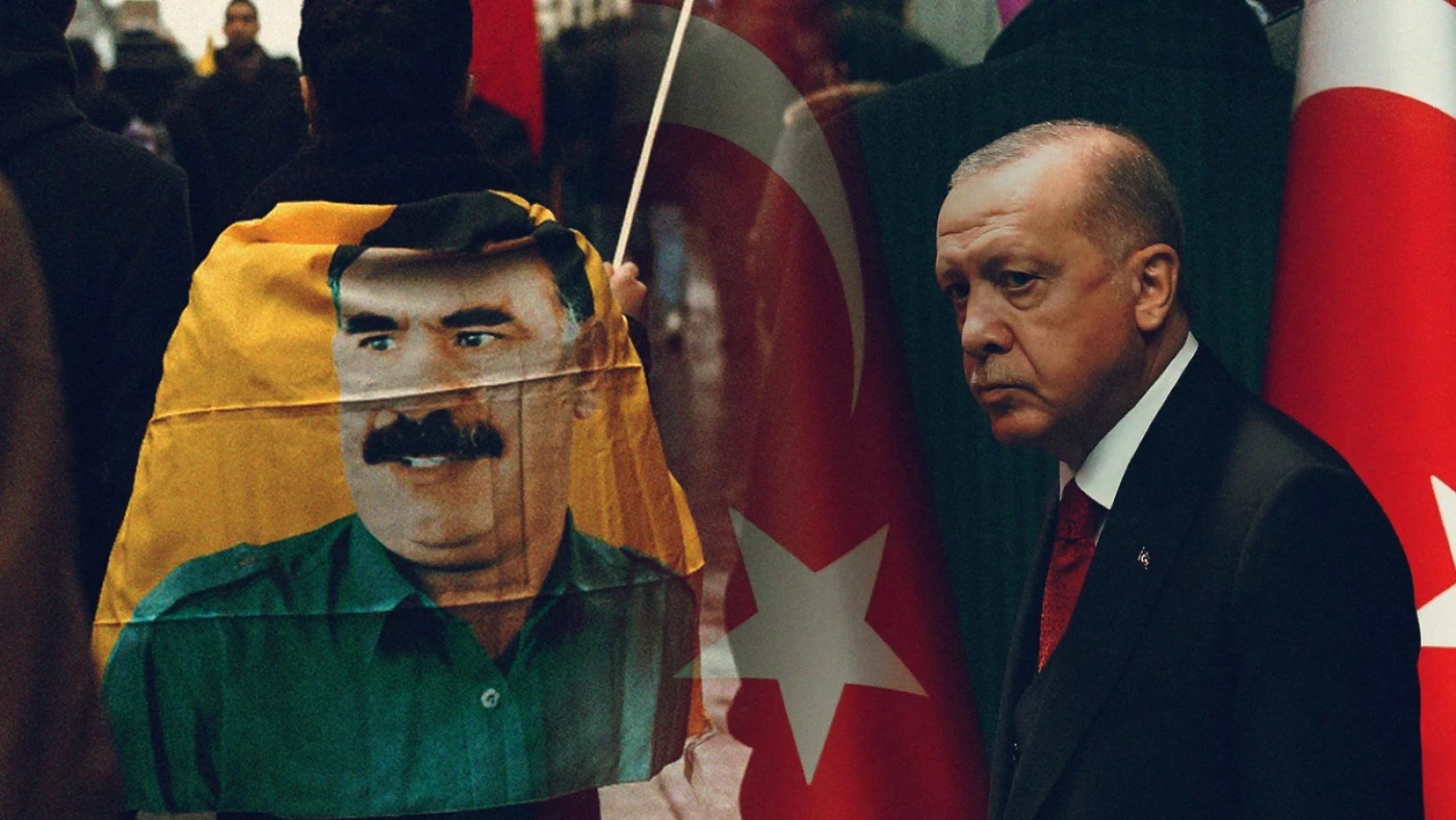
ERBIL, Kurdistan Region of Iraq – Turkish President Recep Tayyip Erdogan announced last Wednesday that a legal framework will soon be submitted to parliament as part of the peace process between the Kurdistan Workers’ Party (PKK) and the Turkish state, which has been underway for nearly two years.
The Ankara-PKK peace process was initiated in October 2024 by Devlet Bahceli, leader of the far-right Nationalist Movement Party (MHP), when he called on imprisoned PKK leader Abdullah Ocalan to address the Turkish parliament and call on his group to disarm in exchange for his conditional release.
The new legal framework is expected to be presented to parliament in mid-July, following the NATO Summit in Ankara on 6-7 July.
“This is a critical threshold. If the legal framework has a core understanding of reconciliation and positive integration, it can lead to democratic reforms. The country needs a new milestone to rewrite the second century of the republic,” Ceylan Akca, lawmaker for the pro-Kurdish Peoples’ Equality and Democracy Party (DEM Party) for Diyarbakir in the Turkish parliament, told The New Region.
DEM Party, Turkey’s main pro-Kurdish party, is the main mediator in the talks between Ankara and the PKK.
The new legal framework, according to Akca, should resemble a “stem cell that makes way for subsequent, much-needed amendments and legal reforms.”
“Rather than being in expectation from the government, we are holding town halls, rallies, conferences, and workshops to discuss what people expect from the talks and what sort of legal framework would remedy a century-long oppression,” she explained.
The PKK held a congress in May last year, wherein the PKK decided to dissolve and disband upon the call of Ocalan. In July last year, 30 PKK fighters in Iraqi Kurdistan laid down and burned their weapons in a ceremony, and in October 2025, the PKK announced it had completely withdrawn from Turkish territory. Since then, the process has largely stalled.
READ MORE: DEM Party urges concrete peace process steps in ‘important’ Erdogan meeting
In February, a DEM Party delegation met with President Erdogan and urged Ankara to take “concrete steps” to advance the process.
Limited amnesty
According to Gonul Tol, founding director of the Middle East Institute's Turkish Program, an agreement between the state and the DEM Party on a limited legal framework that includes amnesty for PKK members is a possibility.
READ MORE: Legal reform to come after PKK disarmament confirmed: Turkish parliament speaker
“The government and DEM/PKK have overlapping interests at this stage: Ankara wants to formalize and control the PKK’s disarmament, while the Kurdish side wants legal guarantees that the process will not simply end with disarmament and then a return to repression,” Tol told The New Region.
She explained that both Ankara and the DEM Party want each other to take the first step. “The government wants verified disarmament first, [while] the Kurdish side wants political and legal steps first, or at least in parallel.”
Aslı Aydıntasbas, a fellow at the Washington-based Brookings Institution, argued that Kurds have done everything they need to do, politically and strategically, for a meaningful reconciliation with Turkey and it is now up to President Erdogan — and him alone — to respond.
She linked the Ankara-PKK peace process to the January 29 integration agreement between the Syrian Democratic Forces (SDF) and Damascus, and the fact that Iranian Kurds did not get involved in the recent US-Israeli war on Iran last February.
“Let’s consider what has been done so far. Abdullah Ocalan disbanded the PKK, greenlighted the Kurdish integration into Syria’s new structures, and declared that the age of armed struggle was over. More recently, Kurds have made a very deliberate strategic choice not to go along with the Israeli-American war against the regime in Iran. According to my sources, all that was in consultations with Turkey. It is time for Turkey to respond,” Aydintasbas said.
The fellow also added that there is a growing expectation that Erdogan will finally sign off on the law of returns, which would allow PKK members who have not committed acts of violence against Turkish citizens to come back to Turkey.
“It seems Ankara has been slow-walking this process due to political and geopolitical considerations, but there is no more room to delay. This law should pass before the parliament goes into recess to maintain faith in the peace process,” she said. “This would be an important legacy project for him [Erdogan] at a time when geopolitical headwinds are unpredictable.”
Recognition
However, Aliza Marcus, author of Resurgence and Revolution: The PKK and the Kurdish Fight in Turkey and Syria, argues that it is unlikely that the PKK would be satisfied only with a limited amnesty for PKK fighters.
“The group expects legal changes that recognize Kurdish identity and allow Kurdish freedoms when it comes to political activities and language rights. They also demand Ocalan’s freedom, although that can be finessed without having him actually leave the prison island,” she said.
“The thing is, is AKP looking for a total solution, or are they focusing only on how to formalize the end of the PKK? If it’s the latter, that won’t satisfy the rebels.”
READ MORE: PKK fighters committed no crimes, do not need amnesty: KCK
Zagros Hiwa, spokesperson for the Kurdistan Communities Union (KCK) - an umbrella organization that includes the PKK - told The New Region in May that they “will not proceed without guarantees,” such as “legal and political steps” from Ankara.
“The Turkish state no longer denies the existence of the Kurds in rhetoric and everyday politics. But it has not given the Kurds any status in its legal and constitutional system,” he said.
On Wednesday, Erdogan delivered a speech to his Justice and Development Party (AKP) parliamentary group, saying that they are working on a legal framework “that will accelerate the liquidation process of the PKK."
READ MORE: Demirtas calls for justice, democratic reforms during peace process
Marcus also argued that Ankara could make symbolic moves, like reinstating Kurdish mayors who were removed from their posts following the July 2016 failed coup attempt and releasing Kurdish politicians from jail, like Selahattin Demirtas, who has been jailed for almost ten years despite international calls for his release.
However, DEM Party’s Akca added that the Turkish government has so far shown very little willingness to take confidence-building steps, including implementing the "right to hope" principle, which would allow a parole hearing for jailed PKK leader Abdullah Ocalan.
“I think there’s a general resistance to making democratic improvements. And when it comes to the right to hope, the ball is in the committee of the Minister's yard. They need to make a binding decision when it comes to the lack of implementation,” the Kurdish lawmaker said.
“Europe should not grant Turkey a blank check just because they have security cooperation.”
President Erdogan earlier denied reports suggesting the possible conditional release of Ocalan.
Supporters of the DEM party have been holding rallies in several Kurdish towns calling for the release of the PKK leader, who has been jailed since 1999.
Possible delays
DEM Party lawmaker and former journalist Cengiz Candar, who served as an advisor to Turkish President Turgut Özal between 1991 and 1993 and authored a 2020 book on the failed peace talks between the PKK and the Turkish state, told The New Region that the Kurds and the wider Turkish public expect such a legal framework.
“That means before the parliament gets into summer recess until the new legislative year, that is before the end of upcoming July. It is already delayed and many people without much confidence in the state authorities think that as much as it is delayed or postponed the process may be derailed given the uncertainties prevailing in the Middle East that naturally affects the referred process in Türkiye [Turkey],” he said.
Candar noted that everything surrounding the legal framework is currently “only speculations,” stressing, “Very soon, we will be able to talk and comment on the developments. What needs to be noted at this juncture is that the process seems irreversible. Sooner or later, it will move on.”
It remains to be seen whether the Turkish government will take the legal steps that the DEM Party and the PKK consider acceptable, or whether the process will continue to be stalled for a longer period.
 Facebook
 LinkedIn
 Telegram
 X
X