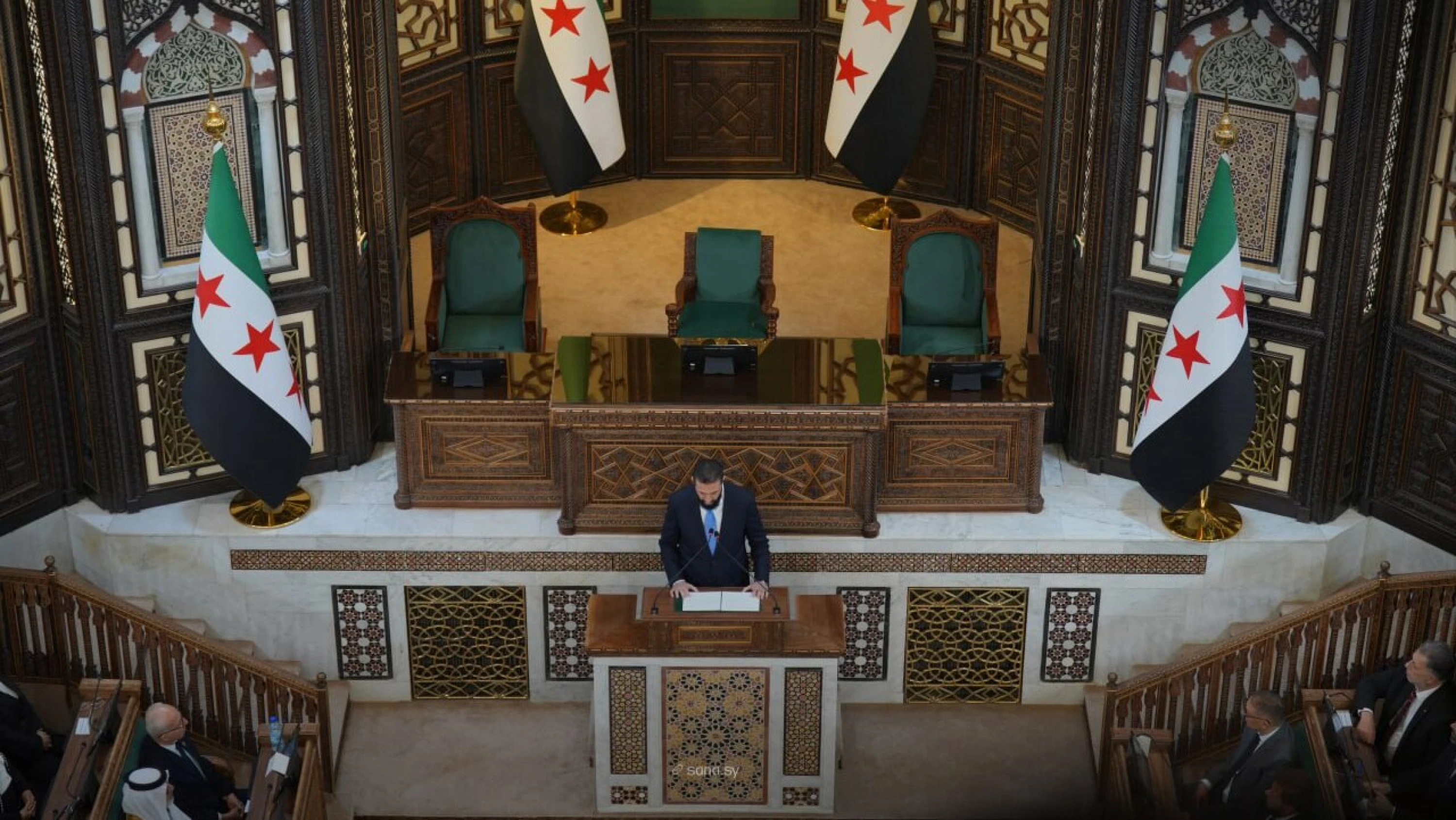
ERBIL, Kurdistan Region of Iraq – Syria's parliament on Sunday held its first session since the fall of the Assad regime, with interim President Ahmad al-Sharaa calling on lawmakers to strengthen the rule of law and help shape the country's future.
“I invite you to make this council a model of responsibility and competence, and to contribute to entrenching a culture of dialogue, the rule of law, and respect for institutions,” Sharaa said during his speech at the session, state media reported.
“Syria today is writing a new history that expresses its civilization, values, and heritage — let us together make the history of modern Syria,” Sharaa added.
The session, originally scheduled for Monday, was opened by Mohammed Taha al-Ahmad, head of Syria's Higher Committee for People's Assembly Elections.
Osama al-Assaf, the oldest member of the legislature, called on members to form a temporary legal committee to oversee the election process and establish regulations for electing the parliament speaker.
The new parliament is widely seen as a test of Sharaa's pledge to establish an inclusive government, with particular attention focused on the representation of Syria's ethnic and religious minorities, many of whom have clashed intermittently with the Sunni Arab-led government in Damascus.
The 210-member legislature includes 70 lawmakers directly appointed by Sharaa, who will serve a renewable 30-month term.
Sharaa's direct role in selecting lawmakers has drawn criticism, particularly from Kurdish political groups, which argued in May that the process relied on political appointments rather than competitive elections.
Also in May, 24 Kurdish political parties issued a joint statement condemning what they described as an attempt to marginalize Kurdish political representation through the mechanism used to form the assembly.
People's Assembly Secretary-General Mohammed Hamza Shamout said earlier this month that of the 70 appointed lawmakers, seven are from the Kurdish-majority Rojava (northeast Syria) province of Hasaka, four from the Alawite-majority province of Latakia, and two from the Druze-majority province of Suwayda.
Among those appointed from Suwayda was Laith al-Balous, a Druze leader with close ties to Damascus. The province has witnessed repeated clashes between Druze militias and Syrian government forces over the past year.
Syrian officials have not clarified how many of the appointed lawmakers belong to ethnic or religious minorities.
Sharaa also appointed 15 additional women, increasing female representation in parliament to 21 members from six selected earlier.
 Facebook
 LinkedIn
 Telegram
 X
X