
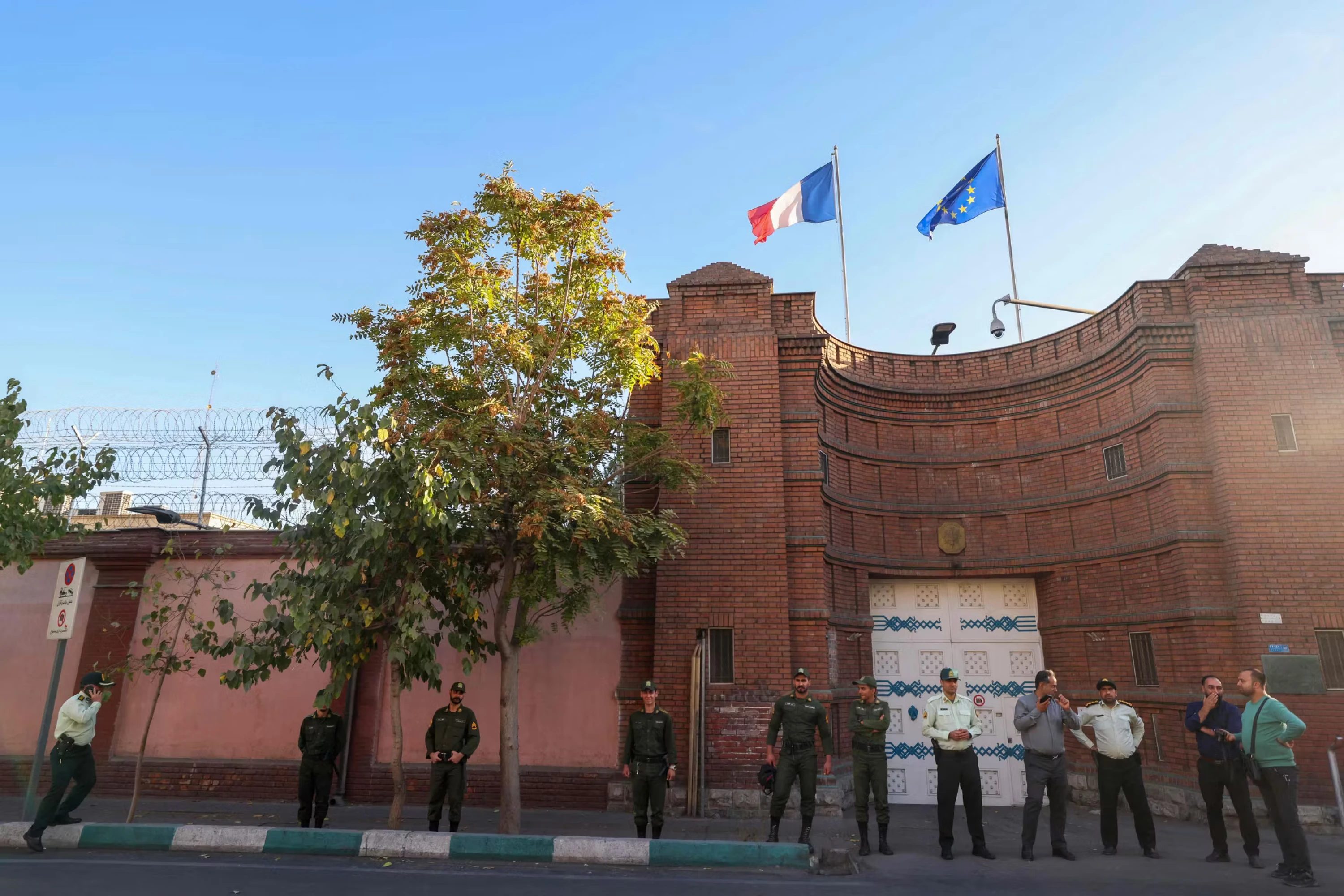
ERBIL, Kurdistan Region of Iraq – Iranian Foreign Minister Abbas Araghchi on Tuesday accused two French diplomats previously detained in Tehran of engaging in "unconventional” conduct and alleged that their actions were not in accordance with the Islamic Republic's regulations.
On Monday, French Foreign Minister Jean-Noel Barrot said that two officials from France's embassy in Tehran were detained by Iranian security forces "without reason" for several hours and interrogated.
Barrot claimed that one was "assaulted" and described the incident as an "extremely serious" act of intimidation by Tehran.
Araghchi, during a Tuesday phone call with Barrot, protested against what he described as “the unconventional and unprofessional actions of two French diplomats in Tehran,” read a statement from his office.
Araghchi described the French diplomats' conduct as "unacceptable," saying it was not in accordance with the laws and regulations of the Islamic Republic.
The two French officials were reportedly overseeing programs supporting Iranian civil society, including artists and scientists.
Paris said Monday that the two officials are safe and are expected to return to France in the coming hours.
In April, two French nationals who had been detained in Iran for more than three years were released after Tehran allowed them to leave the country under an agreement with Paris to withdraw its case before the International Court of Justice (ICJ).
The pair were sentenced to 31 and 32 years' imprisonment in October by Iran’s judiciary on charges of spying for French intelligence, cooperation with Israel, and compromising the country's security.
The two French academics were held in Iranian custody after being detained in 2022 during a trip to the country, at a time when Iran was witnessing one of its largest nationwide uprisings following the death of Mahsa (Jina) Amini in police custody, known as the “Woman, Life, Freedom” (Jin, Jiyan, Azadi) movement.
Tehran has frequently accused European nationals traveling to Iran of espionage or fomenting unrest, allegations that critics say are part of a broader pattern of Iran’s hostage diplomacy.
 Facebook
 LinkedIn
 Telegram
 X
X