ERBIL, Kurdistan Region of Iraq – Iraqi Prime Minister Ali al-Zaidi is expected to share his views on his recent visit to Washington during talks in Tehran, Iranian Foreign Minister Abbas Araghchi said Thursday, playing down the prospect of Baghdad emerging as a mediator between the US and Iran.
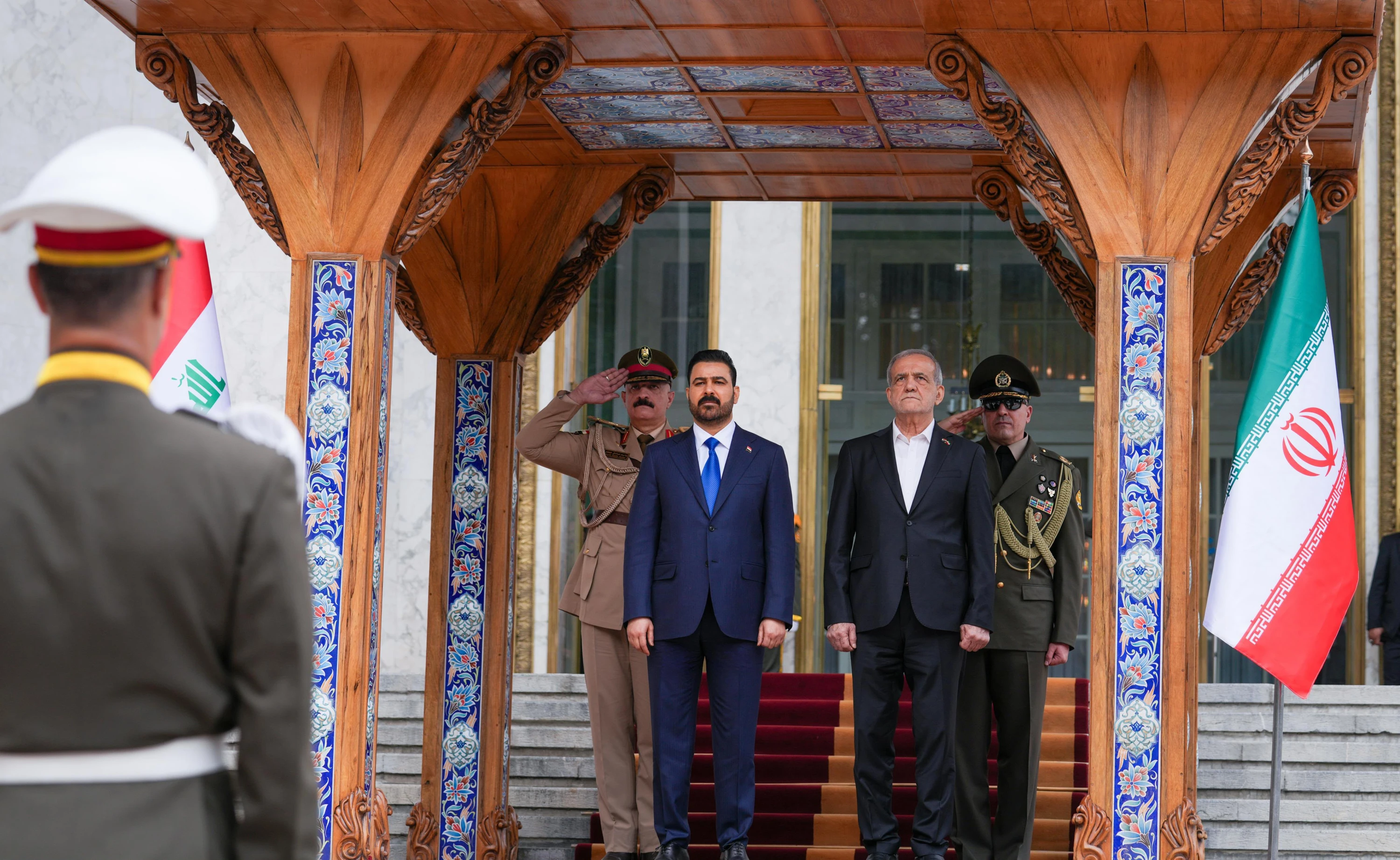
Zaidi arrived in Tehran on Thursday for an official visit at the invitation of Iranian President Masoud Pezeshkian. He was received by a senior Iranian delegation before holding separate meetings with Pezeshkian and Araghchi.
According to Iranian state media, the premier and the Iranian president emphasized strategic relations and the pursuit of enhanced bilateral cooperation during their tete-a-tete.
"The leaders of Iran and Iraq, emphasizing the deep historical, cultural, religious, and people-to-people ties between the two countries, stressed the importance of preserving and strengthening this valuable asset as a foundation for expanding strategic cooperation," IRNA reported.
Prior to his arrivial in the Iranian capital, Zaidi wrote on X that "Iraq and Iran are bound by historic and civilizational ties, shared borders, and common interests. These enduring bonds call for continued engagement in a spirit of dialogue, cooperation, and mutual respect... while contributing to security and stability at the regional and international levels."
The visit comes just four days after Zaidi returned to Baghdad from Washington after concluding a five-day visit to the US, where he met with senior US officials, including President Donald Trump, and oversaw the signing of numerous agreements.
"Of course, he [Zaidi] traveled to Washington. It is natural for him to convey his views and impressions from that trip to us, which is normal," Araghchi told reporters when asked whether the Iraqi premier was carrying a message for Iran from the US.
Araghchi added that "there are enough mediators" between Tehran and Washington, saying "the problem of exchanging messages does not really exist," but did not directly say whether Zaidi had conveyed any US message.
Baghdad has long maneuvered a diplomatic tightrope between Tehran and Washington – the two foreign powers with the most influence in Iraq – and has struggled to maintain balanced relations with the arch-rivals.
Araghchi said there would be "no possibility" of Iran taking any action regarding the exchange of messages with the US until Washington respects Tehran's "interests."
The developments follow as the US and Iran have exchanged strikes for more than ten consecutive nights after Washington declared an end to the peace deal, accusing Tehran of violating the ceasefire by targeting commercial shipping in the Strait of Hormuz
Since taking office, Zaidi has led a renewed drive to disarm armed groups and restrict weapons to state control. The initiative is heavily backed by Washington, which has long pushed for the groups – many of which have strong ties to Iran – to be disarmed.
The Iran-backed groups in Iraq have continuously claimed attacks on US interests in Iraq and the Kurdistan Region during the recent regional war, mainly focused on the US diplomatic missions and the airports housing a US military presence as part of the international coalition against the Islamic State (ISIS).
 Facebook
 LinkedIn
 Telegram
 X
X