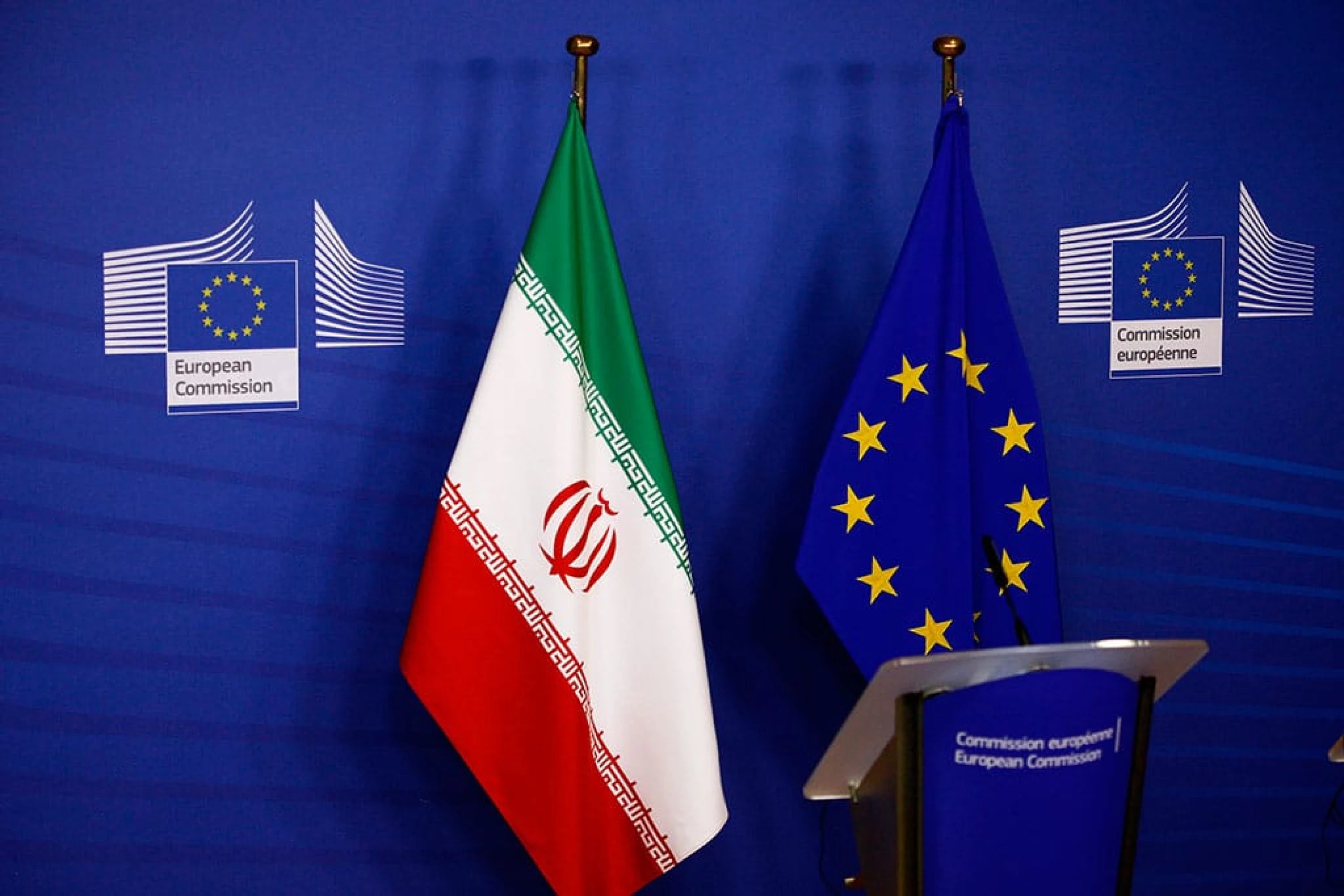
ERBIL, Kurdistan Region of Iraq - The European Union on Friday announced that it had imposed sanctions on six Iranian individuals, including five judges accused of "targeting religious minorities and political dissidents" and an alleged hacker implicated in several cyber-attacks.
"While the world’s attention is on the war in the Middle East, we can’t lose sight of Iran’s repression against its own people," EU foreign policy chief Kaja Kallas said of the measures taken.
"Today, the EU imposed new restrictive measures on Iranian judges responsible for serious human rights violations, including the persecution of political dissidents and religious minorities."
The European Council, an executive institution of the bloc, said that the judges targeted by the sanctions package convicted defendants "on the basis of vaguely defined national security and religious charges," citing the example of Nobel Peace Prize winner Narges Mohammadi, who has been repeatedly arrested on account of her political activism.
"In those instances, they have imposed death sentences and long prison sentences, flogging, fines or supplementary punishments on political dissidents and human rights activists."
In October, Amnesty International warned that Iran’s 2025 execution rate was the "highest figure recorded in decades" and said "thousands more are at risk," accusing Tehran of weaponizing the death penalty against its own citizens.
The Council noted that many of those convicted by the legal officials in question were detained in connection with the 'Woman, Life, Freedom' protests sparked by the death of Mahsa (Zhina) Amini in police custody in 2022.
The package also includes Nima Salehi, a "hacker" and founder of Ashiyane Digital Security, who is accused of working with the EU-sanctioned Iranian Cyber Police and Islamic Revolutionary Guard Corps (IRGC) to carry out "intensive cyber-attacks on both domestic opponents and reformists and foreign institutions, thereby assisting the regime’s crackdown against the opposition."
The new measures bring the total number of Iranian individuals and entities sanctioned by the EU to 269 and 53 respectively.
Having refused to participate in the ongoing US military campaign against Iran, the EU has repeatedly voiced criticism of domestic repression in the country and urged Tehran to facilitate free transit in the now-restricted Strait of Hormuz.
Nationwide protests in Iran and a subsequent crackdown by security forces in January led Kallas to say at the time that "by ignoring their rightful demands, the regime shows its true colors."
The US-based Human Rights Activists in Iran NGO reported that it had confirmed the deaths of 6,388 protestors, as well as 236 children, during the period between December 2025 and February 2026, with an unknown amount of arrested demonstrators having faced the death penalty in the protests' aftermath.
In the same month, the EU designated Iran's IRGC as a terrorist organization, prompting Tehran to apply the same designation to "the navy and air force of all member states of the European Union."
The Iranian foreign ministry stressed that the measure is based on its reciprocal action law adopted in 2019, which states that any country that supports the US in designating the IRGC as a terrorist organization shall be subjected to reciprocity.
 Facebook
 LinkedIn
 Telegram
 X
X