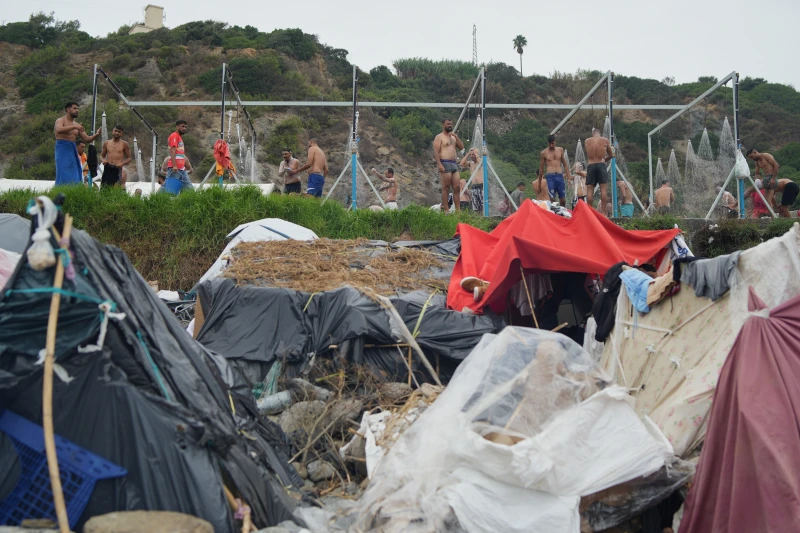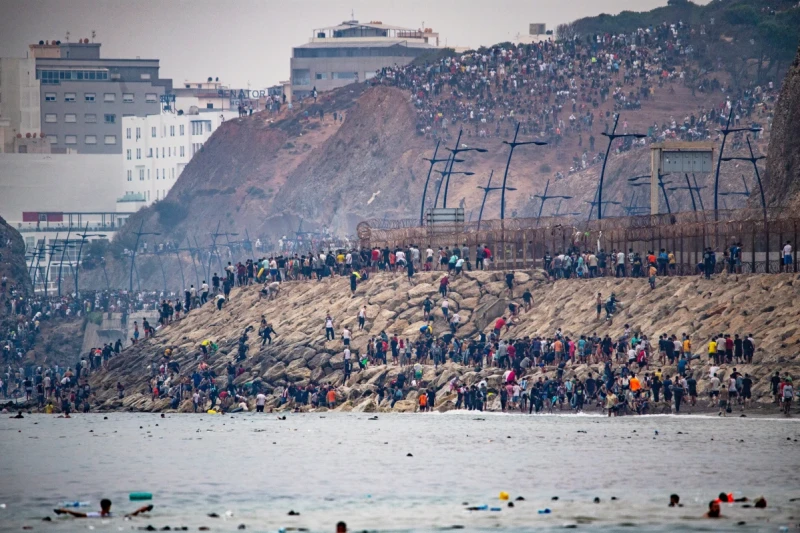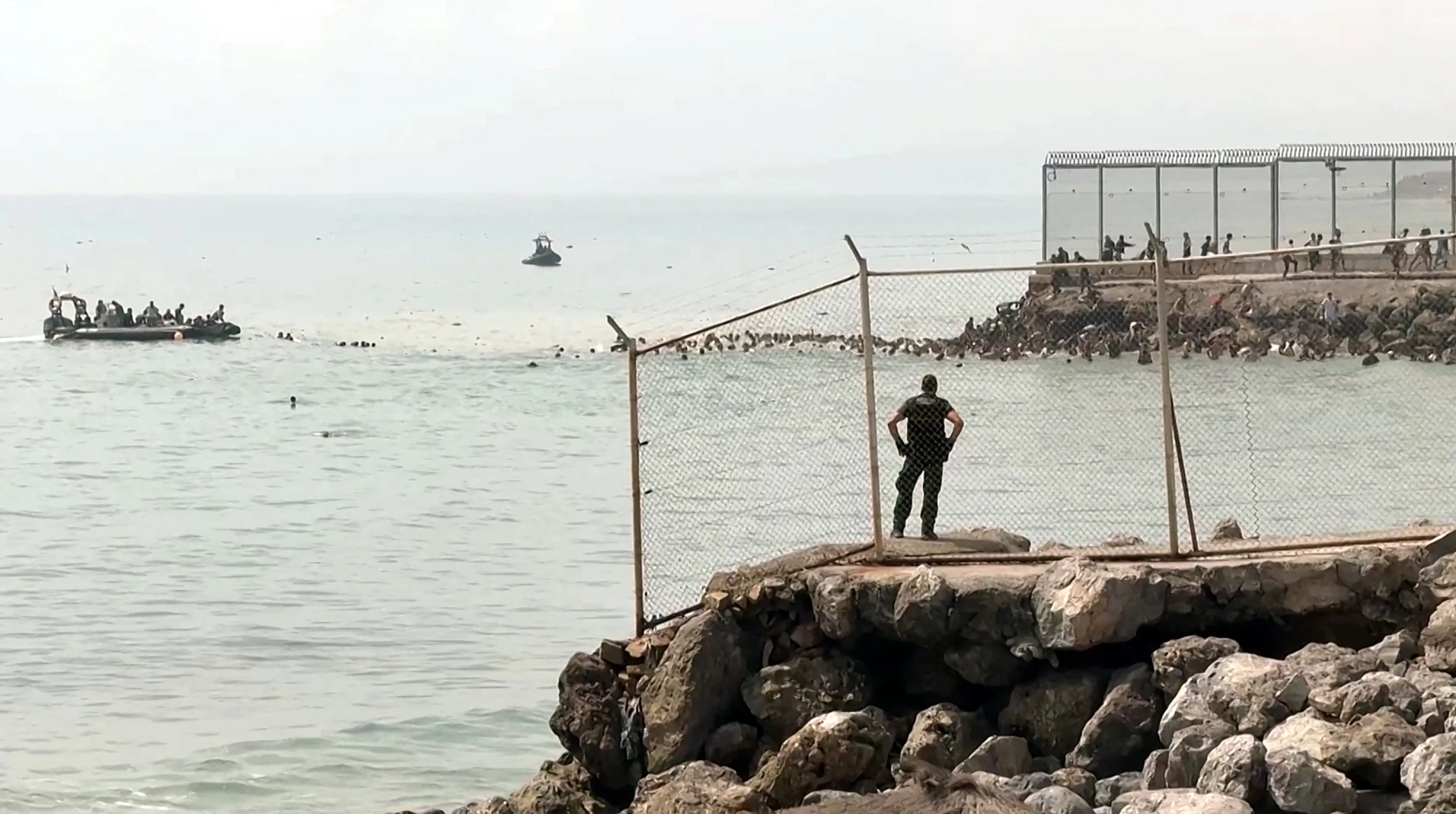
ROME, Italy – Thousands of migrants from Morocco breached the borders of Ceuta on Thursday, sparking chaotic scenes in the Spanish exclave and prompting Madrid to announce it will send military reinforcements to the North African territory.
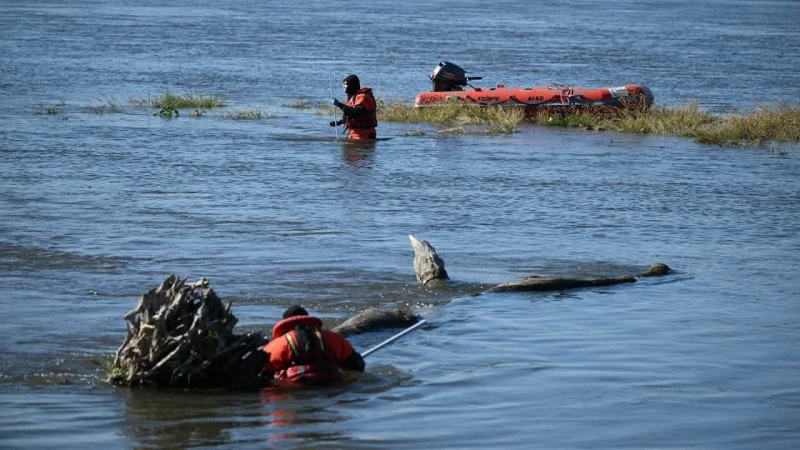
The border escalation follows a spike in migration attempts on Wednesday, when thousands, mostly swimming, tried to reach the small autonomous city, leaving at least three dead in the waters off Ceuta.
"The Armed Forces will reinforce the Guardia Civil in the exercise of its powers and any others necessary to maintain security in the city of Ceuta," the Spanish interior ministry said in a statement after ruling out a national emergency declaration.
Footage captured crowds of people, including young men as well as families with women and children, navigating the breakwaters at Tarajal beach to reach local roads, with some heard shouting "Viva España!" as they arrived.
Large crowds of migrants were seen breaching the borders of Ceuta, a Spanish exclave in North Africa enveloped by Moroccan territory, on Thursday, with the small autonomous city serving as a gateway to the European Union and having often been at the center of Rabat-Madrid… pic.twitter.com/9gSODF12bn
— The New Region (@thenewregion) July 30, 2026
“The situation is absolute chaos,” said Rachid Sbihi, head of the association that represents Spain's Guardia Civil officers in Ceuta, who are responsible for policing the border. “It's not possible to give precise numbers, but there are thousands of migrants crossing,” he said, adding that the border had “totally collapsed.”
While Moroccan authorities have not publicly commented on the matter, Spain’s interior ministry stated that the Moroccan government is “closely cooperating” to manage the situation, noting that Moroccan police are stopping “numerous people” and both nations have agreed to work together “for the return, as soon as possible, of all the people who entered Ceuta illegally.”
Italian Foreign Minister Antonio Tajani called for the closing of the EU's Schengen free travel area to Spain in light of the incident, writing on X that "irregular and uncontrolled immigration poses a danger to national security."
The timing has fueled debate in Spain, coming just 10 days after Prime Minister Pedro Sanchez visited Algiers on July 20 to repair ties with Algeria, Morocco’s longtime rival regarding the future of Western Sahara.
The disputed territory has remained a regional flashpoint for nearly five decades: Morocco claims sovereignty, while the Algeria-backed Polisario Front seeks independence and has proclaimed the Sahrawi Arab Democratic Republic.
In 1975, over 300,000 Moroccan settlers, with government and military support, marched into the then-Spanish controlled Western Sahara in a bid to engender demographic change and bring the territory under Rabat's control, while Polisario were waging an anti-colonial war seeking wholesale independence.
After decades of neutral support for the UN-led peace process, Spain’s 2022 decision to endorse Morocco’s autonomy proposal for Western Sahara prompted Algeria to recall its ambassador, suspend a bilateral friendship treaty, and restrict trade.
Spanish media are now divided over whether the latest arrivals in Ceuta reflect a broader migration crisis or a diplomatic signal from Rabat, recalling May 2021, when about 8,000 people entered the exclave over two days in what Madrid described as retaliation for Spain’s decision to host Polisario leader Brahim Ghali.
 Facebook
 LinkedIn
 Telegram
 X
X