MILAN, Italy – After US President Donald Trump was quoted as saying that the large-scale American-Saudi strikes on pro-Iran groups in Iraq were coordinated with the Iraqi government, the Iraqi cabinet spokesperson officially denied foreknowledge of the attacks.
The Saudi defense ministry and the US Central Command (CENTCOM) announced in the early hours of Wednesday that they had coordinated to carry out large-scale strikes against militias in Iraq allegedly responsible for attacks on Saudi oil facilities in the days before, accusing the factions of acting at the behest of Iran’s Islamic Revolutionary Guard Corps (IRGC).
The strikes targeted several bases of the state-integrated but Iran-backed paramilitary umbrella group, the Popular Mobilization Forces (PMF), across seven provinces of Iraq, killing at least 20 fighters and injuring 32 others.
US President Donald Trump said the American-Saudi strikes had been coordinated with the Iraqi government during a private interview with Fox News.
“I also asked the President about those US and Saudi airstrikes against Iran-backed Iraqi Shia (Shiite) militias overnight. He says those strikes were coordinated with the Iraqi government,” Fox News correspondent Trey Yingst said during a news bulletin on Wednesday morning.
The claim of coordination with Iraq was not repeated in any future statements from the Trump administration, but was never denied either.
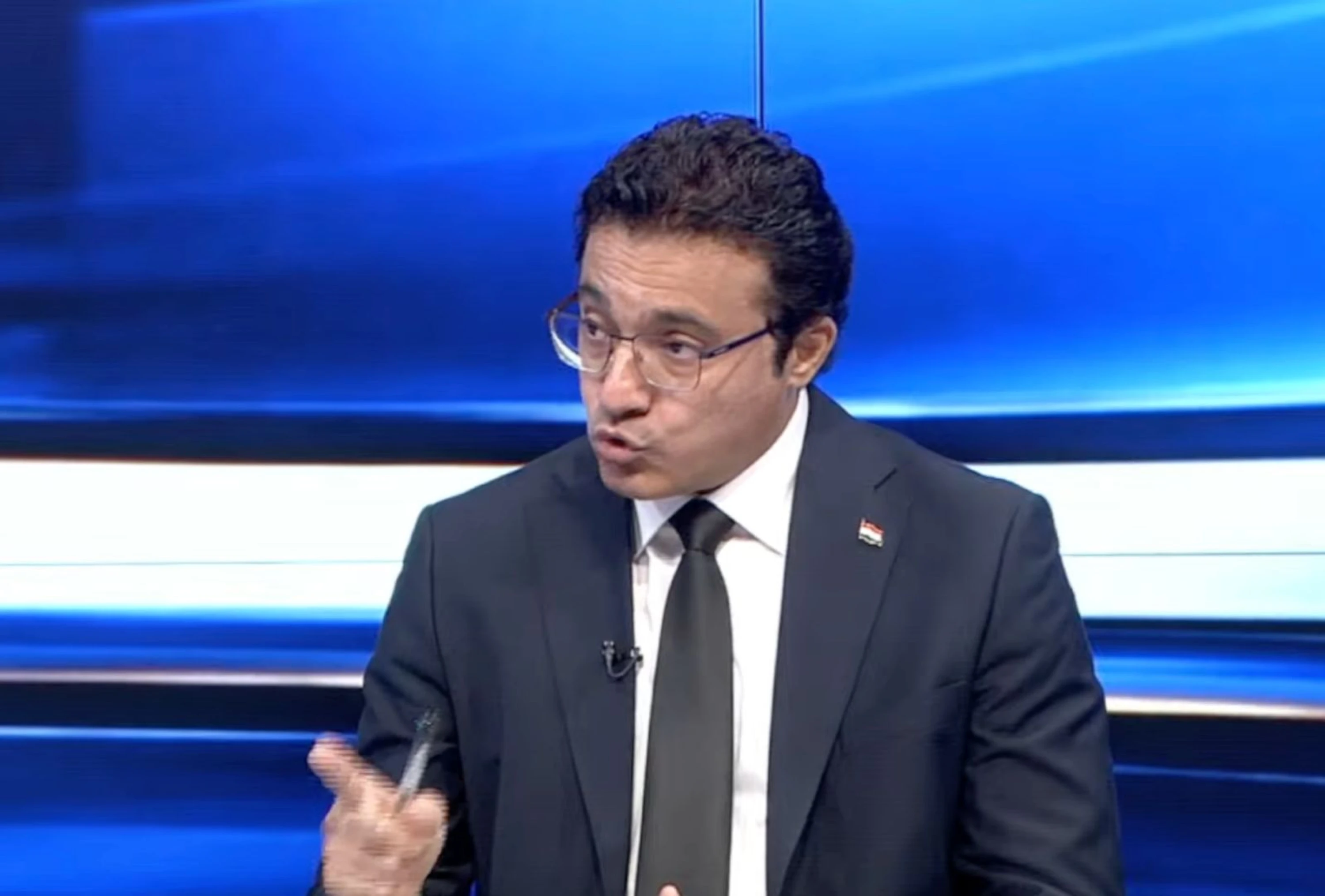
In an interview with the state-owned al-Iraqiya TV a day after the attacks, immediately after welcoming government spokesperson Haider al-Aboudi to the program, presenter Ali Emad asked the spokesperson if Prime Minister Ali al-Zaidi knew beforehand that the US and Saudi Arabia would launch this attack on Iraqi territory.
“Iraq adopted clear, constitutional, and legal principles that it will not and did not allow the use of Iraqi lands as a launching pad or passage to attack neighboring countries. And also will not allow the Iraqi land and the environment of the Iraqi state to be a stage for military operations without the knowledge of the Iraqi government and without its approval,” said Aboudi.
The spokesperson’s response to the first question lasted three minutes and largely focused on summarizing the strikes and the consequent government actions, rather than addressing the question head on.
The presenter then asked seemingly the same question in a paraphrased manner, mentioning Trump’s comments, and asking the spokesperson if there indeed had been coordination and foreknowledge from the Iraqi side.
“The Iraqi government has not granted any approval for attacks on specific locations or groups within Iraqi territory. The Iraqi government is clear that it is responsible for the sovereignty of the state and for protecting all Iraqi territory. Yes, it has security and intelligence cooperation, but this does not contradict the fundamental principle adopted by the Iraqi government: that it will not allow the execution of any military operations or allow Iraqi territory to be used as a theater for military operations without the knowledge of the Iraqi government and without the approval of the Commander-in-Chief of the Armed Forces [Zaidi],” Aboudi stated in another lengthy response.
Emad then finally asked Aboudi directly: “Were we aware of these strikes before they were carried out?” six minutes after the show had begun airing.
“No, excuse me, I said the government had no knowledge and did not grant any approval to any party whatsoever for the execution of these violations,” Aboudi responded.
The remainder of the show saw the spokesperson reiterate official statements and stances that have been previously publicized, including that the Iraqi government still seeks diplomacy and dialogue to avoid further escalation in the region, and that Iraq will not be dragged into the conflict.
Hours before the Wednesday attacks, the Saudi defense ministry said late Tuesday that it intercepted numerous drones allegedly launched by pro-Iran militias in Iraq seeking to target oil infrastructure, emphasizing “the Kingdom's inherent right to defend itself and its assets and its right to respond at the appropriate time and place.”
The Saudi authorities had released similar statements with similar stances a day earlier after intercepting another similar attack, which prompted Zaidi to order a probe into the Saudi statement and the attacks mentioned therein, while reiterating that Baghdad will not allow Iraqi territory to become a source of threat to its neighbors.
Aboudi did stress that: “The [Iraqi] government contacted Saudi Arabia to provide evidence regarding the claims of attacks, and asked it to share security information to verify them, while it formed investigative committees, and those claims were not proven true.”
 Facebook
 LinkedIn
 Telegram
 X
X