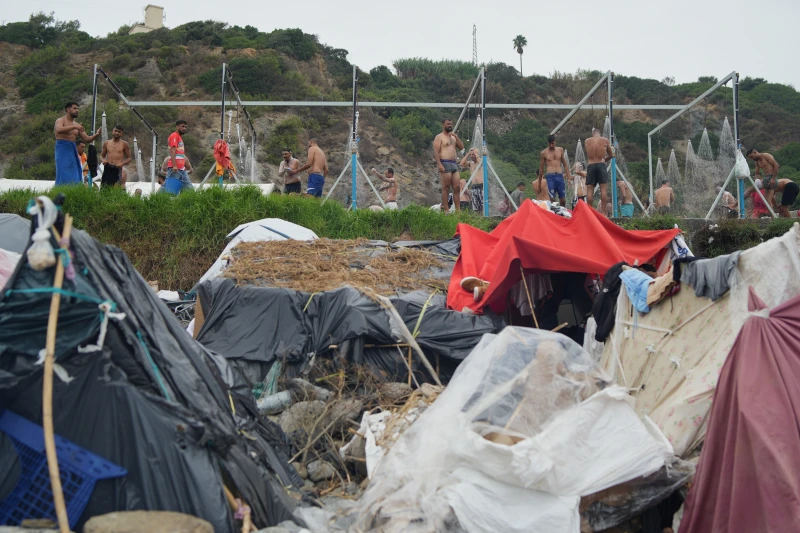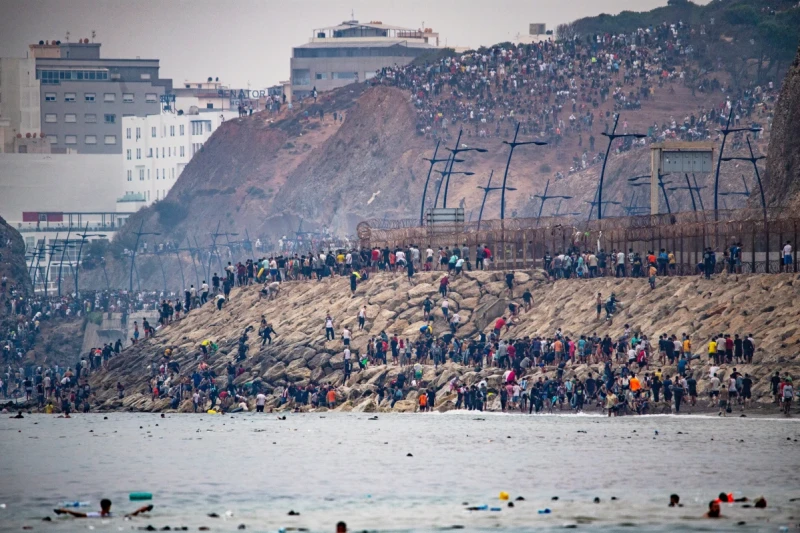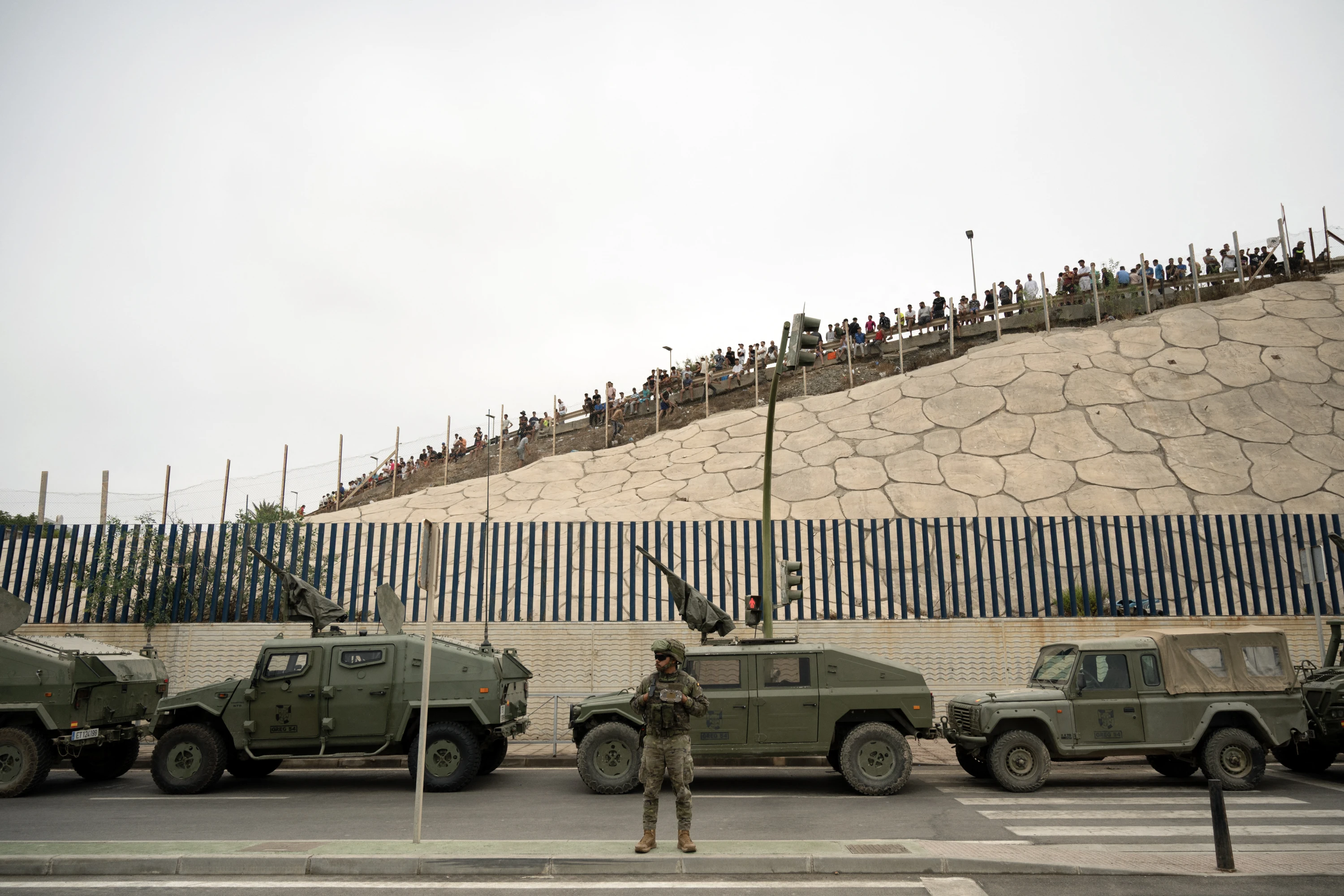
ERBIL, Kurdistan Region of Iraq – Tensions flared in Ceuta on Friday as Spanish Prime Minister Pedro Sanchez arrived in the North African exclave, with the latest official figures showing that more than 60,000 people have entered via the border with Morocco and at least 18 have died.
Sanchez characterized his country’s largest migration crisis as a "violation of Spain's territorial integrity," asserting that such actions "deserve our reproach and our condemnation at the strongest possible level."
"The government of Spain will use all the resources of the state, all the tools of the state to guarantee the safety of the citizens of Ceuta," he professed in a video statement.
"Estimates indicate that around 60,000 people have entered our city as a result of this event," Ceuta’s Mayor-President Juan Jesus Vivas said Friday. "This figure shows that it is impossible to absorb such pressure. It is absolutely impossible," he added.
Spanish Prime Minister Pedro Sanchez on Friday promised to use "all the tools of the state to guarantee the safety of the citizens of Ceuta," coming as over 60,000 migrants have entered the Spanish North African territory in the past two days. pic.twitter.com/KYjT5rVAXj
— The New Region (@thenewregion) July 31, 2026
People who successfully crossed the border reportedly claimed that Moroccan authorities made no attempt to stop them, even as Ceuta police struggled to hold back the surge.
EU Commission President Ursula von der Leyen on Friday slammed the images coming out of Ceuta as “unacceptable.”
“We cannot allow anyone to enter our Union without abiding by our rules. Dangerous crossings must stop immediately. Smuggling networks must be dismantled. And returns must be swift, as our rules allow,” she said, adding that she has tasked two commissioners with "supporting and controlling the situation."
Ceuta and Melilla, another Spanish territory in North Africa, constitute the only two land borders between the EU and Africa.
Relations between Madrid and Rome came under strain after Italian Foreign Minister Antonio Tajani called on Thursday for the closure of the EU's Schengen free-travel area to Spain, writing on X that "irregular and uncontrolled immigration poses a danger to national security."
Madrid countered by summoning Italy’s ambassador and accusing Rome of exploiting the crisis for political mileage.
Criticism also poured in from other fronts, as Finland supported the push to suspend Spain from the Schengen zone, the French interior minister ordered an immediate border clampdown, and Trump administration officials pointed to the footage from Ceuta to reinforce their own hardline immigration policies.
Sanchez, one of Europe’s most outspoken leaders about the Israeli genocide in Gaza and violations in the West Bank, has been facing growing criticism over his lax immigration policies. Nonetheless, he stated Friday that his administration’s policies “have seen a systematic reduction of more than 30 percent in irregular arrivals.”
The timing has fueled debate in Spain, coming just 10 days after the premier visited Algiers on July 20 to repair ties with Algeria, Morocco’s longtime rival, regarding the future of Western Sahara.
The disputed territory has remained a regional flashpoint for nearly five decades: Morocco claims sovereignty, while the Algeria-backed Polisario Front seeks independence and has proclaimed the Sahrawi Arab Democratic Republic.
Morocco is one of the few Arab-Muslim nations to have normalized relations with Israel, having signed the US-brokered Abraham Accords in December 2020 in exchange for US recognition of its Western Sahara claims, and it has now committed to deploying troops to the International Stabilization Force (ISF) in Gaza as part of the Trump administration’s Board of Peace.
A recent investigation by Ha’aretz revealed that Morocco targeted top French and Spanish officials with phone hacking, uncovering a network of Israeli surveillance firms that had been equipping the kingdom's intelligence services years before the two nations formally normalized ties under the Abraham Accords.
In 1975, over 300,000 Moroccan settlers, with government and military support, marched into the then-Spanish-controlled Western Sahara in a bid to engender demographic change and bring the territory under Rabat's control, while Polisario were waging an anti-colonial war seeking wholesale independence.
After decades of neutral support for the UN-led peace process, Spain’s 2022 decision to endorse Morocco’s autonomy proposal for Western Sahara prompted Algeria to recall its ambassador, suspend a bilateral friendship treaty, and restrict trade.
Spanish media are now divided over whether the latest arrivals in Ceuta reflect a broader migration crisis or a diplomatic signal from Rabat, recalling May 2021, when about 8,000 people entered the exclave over two days in what Madrid described as retaliation for Spain’s decision to host Polisario leader Brahim Ghali.
 Facebook
 LinkedIn
 Telegram
 X
X