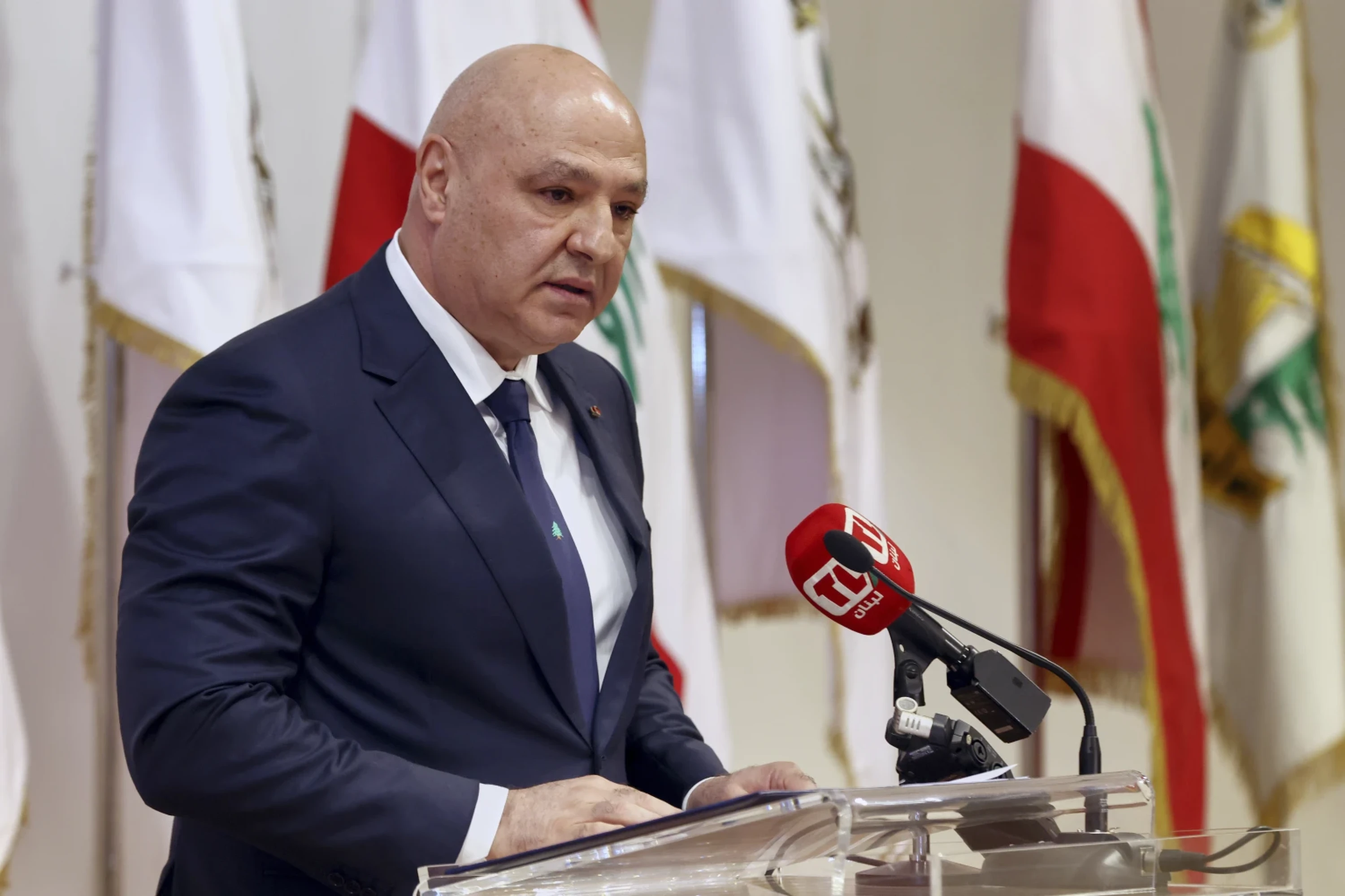
ERBIL, Kurdistan Region of Iraq – Lebanese President Joseph Aoun on Friday condemned ongoing Israeli violations of the recent US-brokered truce, slamming detonations near Beaufort Castle as a "direct threat" to ongoing peace talks, as Israeli troops demolished alleged Hezbollah tunnels in the area.
Lebanon’s National News Agency (NNA) reported on Friday that "Israeli forces triggered very powerful explosions" overnight, specifically "in the area of the Beaufort fortress” in the country’s south.
Israeli Defense Minister Israel Katz wrote Thursday on X that the army detonated 700 tons of explosives in the area to destroy alleged Hezbollah tunnels, adding that Israeli forces “will remain in the security zone in southern Lebanon and will continue to destroy every terror infrastructure in order to prevent any attempt by Hezbollah to restore its capabilities.”
Beaufort Castle – known in Arabic as Qalaat al-Shaqif – has historically served as a theater for some of the bloodiest clashes between Israel and the Palestine Liberation Organization (PLO) and, later, Hezbollah. Israeli troops previously occupied it after taking it from the PLO in 1982, holding the site until their withdrawal from Lebanon in 2000. Located on a high ridge in southern Lebanon with a clear view of the Litani River, the site has served as a strategic military asset for decades due to its proximity to the northern Israeli border. Tel Aviv seized the historic Castle again in late May, despite the ceasefire between Israel and Hezbollah nominally being in effect.
Aoun denounced “the ongoing violations and [Israeli] attacks” in southern Lebanon, “particularly the explosions targeting infrastructure and archaeological sites inscribed on the UNESCO World Heritage List,” stating that the blasts are causing “extensive damage and serious repercussions across most villages in southern Lebanon and threatening the safety and security of citizens."
UNESCO last week designated Beaufort Castle as a site on its List of World Heritage in Danger.
He further characterized the explosions as "an extremely dangerous escalation and a clear violation of existing commitments", as well as "a direct threat to the process which was launched as part of the framework agreement" reached with Israel during US-sponsored talks last month.
The detonations created ground waves equivalent to a 3.8 magnitude earthquake on the Richter scale, according to Lebanon's National Centre for Geophysics.
The blasts came as the Lebanese Armed Forces (LAF) began assuming control of so-called pilot zones in southern Lebanon from which Israeli forces have started to withdraw, coming against the backdrop of a US-brokered agreement signed in June that is being implemented through follow-up negotiations in Rome.
Under the provisions of the framework, the LAF are expected to restrict Hezbollah activity in the zones in question, with Israel and the US having repeatedly stressed that monitoring mechanisms are in place to ensure this takes place.
The sensitive timing "sends negative messages and undermines international efforts aimed at consolidating stability," Aoun said, as Israel and Lebanon are set to meet in Rome next week for another round of talks.
Hezbollah leader Naim Qassem has repeatedly criticized the framework with Israel, calling it a "humiliation, shame, and a surrender of sovereignty" in late June. Nevertheless, the Iran-backed group has not claimed any attack since a ceasefire with Israel took effect on June 20.
Despite the talks, Lebanon’s position remains uncertain after Hezbollah rejected the agreement and no formal withdrawal timetable was established, especially as Israeli officials have repeatedly vowed to maintain a 10-kilometer-deep “security zone” along the frontier as long as the group remains armed.
The peace process in Lebanon is inextricably linked to the state of US-Iran relations, with Tehran having included a cessation of Israeli hostilities in its northern neighbor as a core element of the now-shattered memorandum of understanding it signed with Washington.
Even with a nominal truce between Hezbollah and Israel, Lebanon remains deeply unstable as continued Israeli strikes have driven the death toll from the onslaught to 16,545 since March 2, including more than 4,300 killed and over 12,200 wounded. The conflict has also displaced more than one million people amid widespread infrastructure damage and the continued Israeli occupation of parts of southern Lebanon.
 Facebook
 LinkedIn
 Telegram
 X
X