
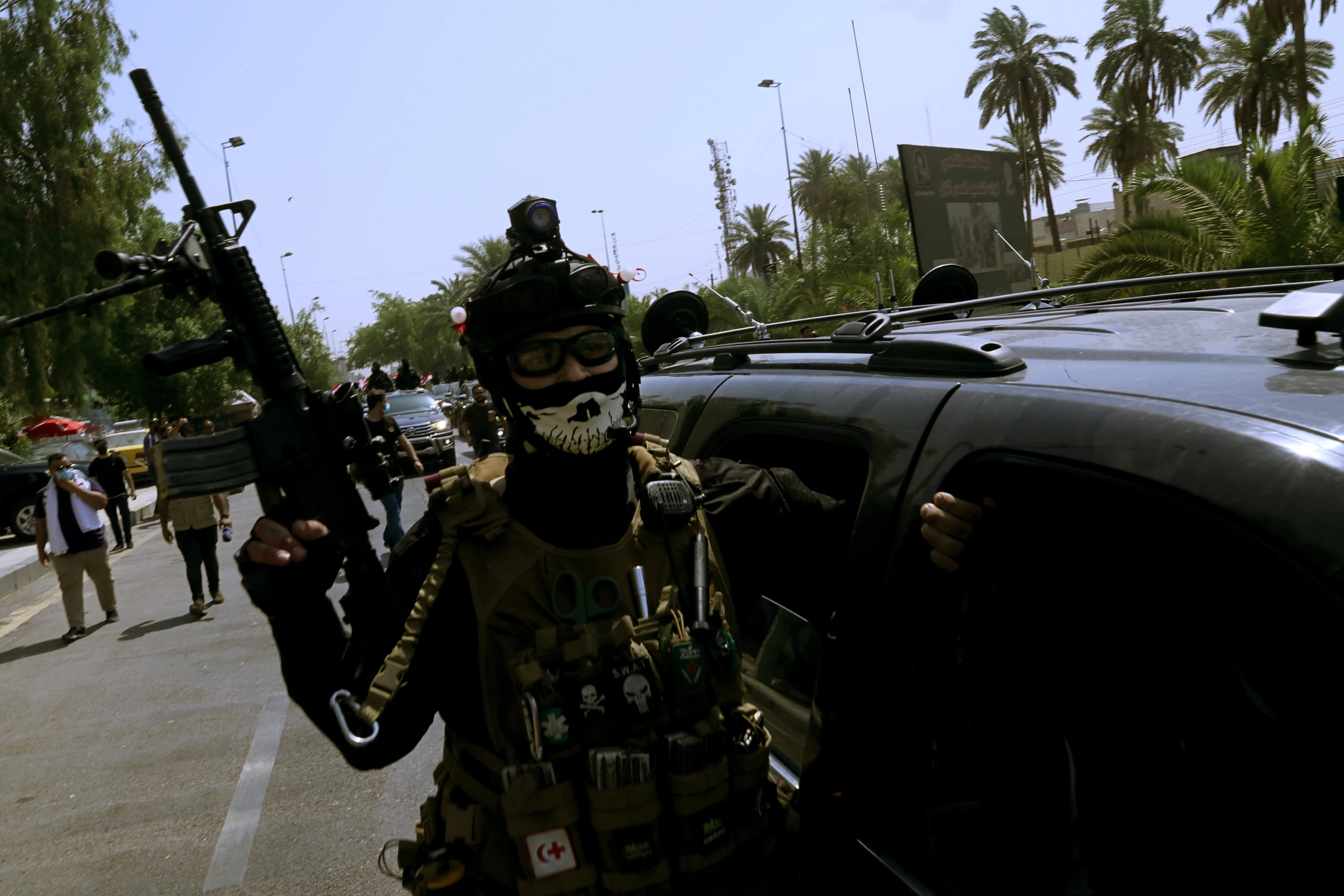
ERBIL, Kurdistan Region of Iraq - Iraq's Security Media Cell on Friday said that "there is no turning back" from the government's policy to restrict weapons to the hands of the state, asserting that the process will ensure "a more stable environment for future generations."
Since assuming office, Iraqi Prime Minister Ali al-Zaidi has made the disarmament campaign a key priority of his government, coming as attacks by pro-Iran Iraqi militias on neighboring countries have been detrimental to the country's diplomatic prestige and provoked retaliatory strikes.
In late July, Saudi Arabia and the US conducted large-scale joint airstrikes targeting pro-Iran armed groups across Iraq, drawing condemnation from Baghdad and heighting the urgency to control actors operating outside of state control.
"The national policy to restrict weapons to the state is a task approved by a decision within the National Security Council No. 21 of 2018, which is a government document aimed at restricting weapons to the state and using them only in security and military institutions, regulating weapons licensing, combating the illegal trade in weapons, collecting unlicensed weapons and reducing their spread," Lt. General Saad Maan of the Security Media Cell told Iraqi state media on Friday.
"The government is proceeding with this matter and there is no turning back because this project is capable of raising the level of community security, enhancing confidence in institutions, supporting the economy and investment, consolidating the prestige of the state, and providing a more stable environment for future generations."
Zaidi set a deadline for the end of September, by which time all armed groups must have handed over their weapons to state forces. The ruling State Administration Coalition on Thursday reaffirmed the final date, stressing "the importance of preventing the use of Iraqi territory as a launching pad for attacks against neighboring countries or for dragging Iraq into conflicts that do not serve its people’s interests."
Thus far, several factions have expressed willingness to break from the state-sanctioned but heavily Iran-influenced Popular Mobilization Forces (PMF) and hand over their arms, while influential militias such as Kataib Hezbollah have rejected the process outright.
In his Friday remarks, Maan also stressed the importance of confronting Iraqi tribes, who comprise the bulk of civilian weapon ownership in the country. He asserted that tribal disputes that escalate to physical violence will be treated as "terrorism" under the provisions of Iraqi counter-terrorism legislation.
 Facebook
 LinkedIn
 Telegram
 X
X