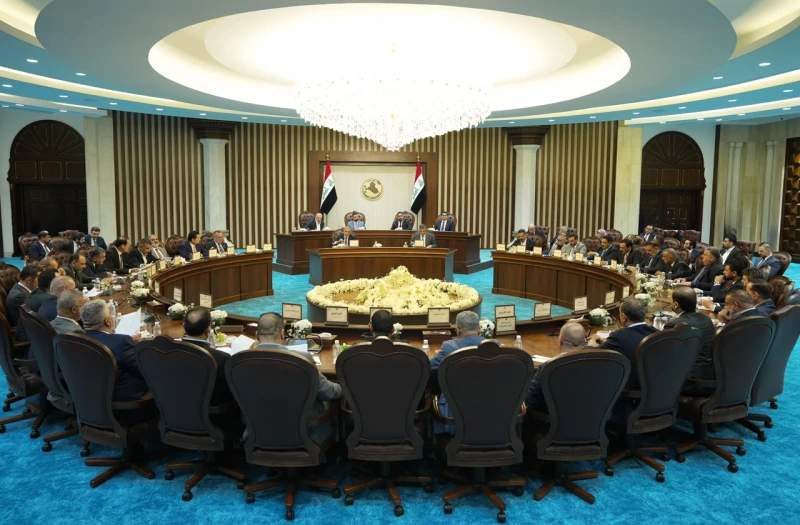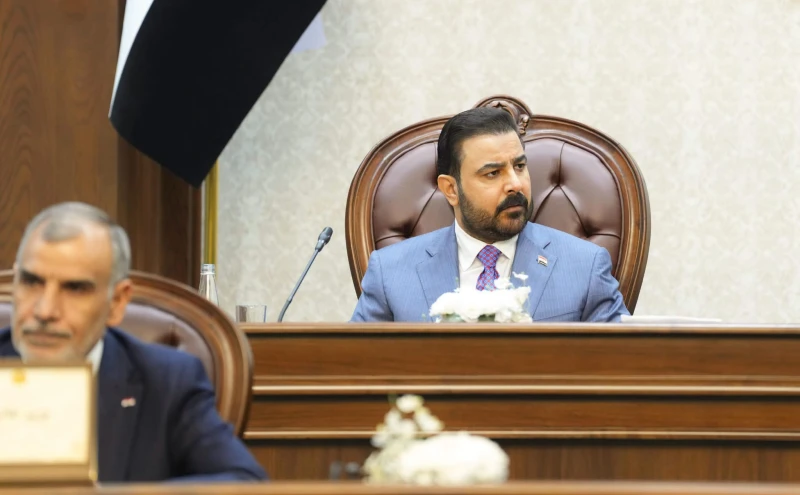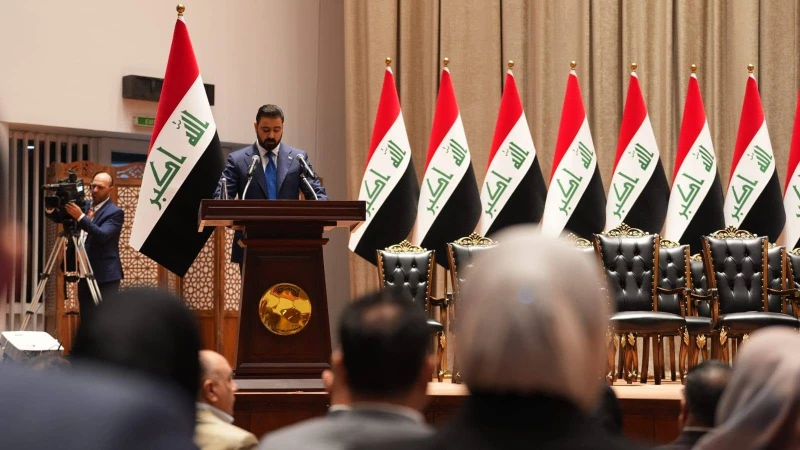
ERBIL, Kurdistan Region of Iraq – Baghdad has stated that it would complete a landmark initiative of restricting weapons to the state and disarming groups outside the state apparatus by end-September. The prime minister has doubled down on the effort, despite analysts arguing that it will have minimal impact.
Iraq has long struggled with the presence of powerful armed groups outside state control. These militias – many of which have strong ties to Iran – initially helped defeat the Islamic State (ISIS) but then shifted to attacking American personnel and interests as tensions soared between Washington and Tehran in the following years.
Their actions have prompted significant diplomatic pressure from Washington, which has long called for their disarmament and has threatened sanctions on Baghdad unless it reins them in. In the present day, many of these militias form the Islamic Resistance in Iraq, an umbrella network closely aligned with Iran’s Islamic Revolutionary Guard Corps (IRGC).
The government has repeatedly affirmed adherence to a September 30 deadline for armed groups outside state control to hand over weapons to the government, stressing that elements using Iraqi territory as a launching pad for attacks will be considered “criminals” and prosecuted under the counter-terrorism law after the date.
Prime Minister Ali al-Zaidi has been particularly vocal about the disarmament initiative, asserting that the armed groups must lay down their weapons, especially as US-led coalition troops, who were brought to help defeat ISIS, are set to also complete their withdrawal by the end of September.
“In the event of refusal or attempts to violate the law, the state will treat the matter as a direct threat to itself and national security,” Sabah al-Numan, spokesperson for the prime minister, told The New Region on Monday.
He asserted that the Iraqi government will “not hesitate to utilize its decisive factor of applying the law through the judiciary and official security agencies to protect the state’s prestige and stability.”
“There is no alternative to the state’s monopoly on the use of force,” Numan stated.
Iraqi security forces have long completed their “operational readiness” to deal with the withdrawal of the US-led coalition and completely assume responsibility of the security file, according to Numan.
“We have sufficient forces with the necessary readiness, human resources, and logistical capabilities,” he said. “Security belts have been reinforced, and proactive intelligence coordination has been strengthened to address any threat before it materializes.”
However, analysts argue that the Iraqi government’s disarmament initiative will have minimal impact.
Muhanad Seloom, assistant professor of international politics and security at the Doha Institute for Graduate Studies, told The New Region that the armed groups are largely part of the Iraqi government and it is “very difficult” to distinguish between the army and the Popular Mobilization Forces (PMF).
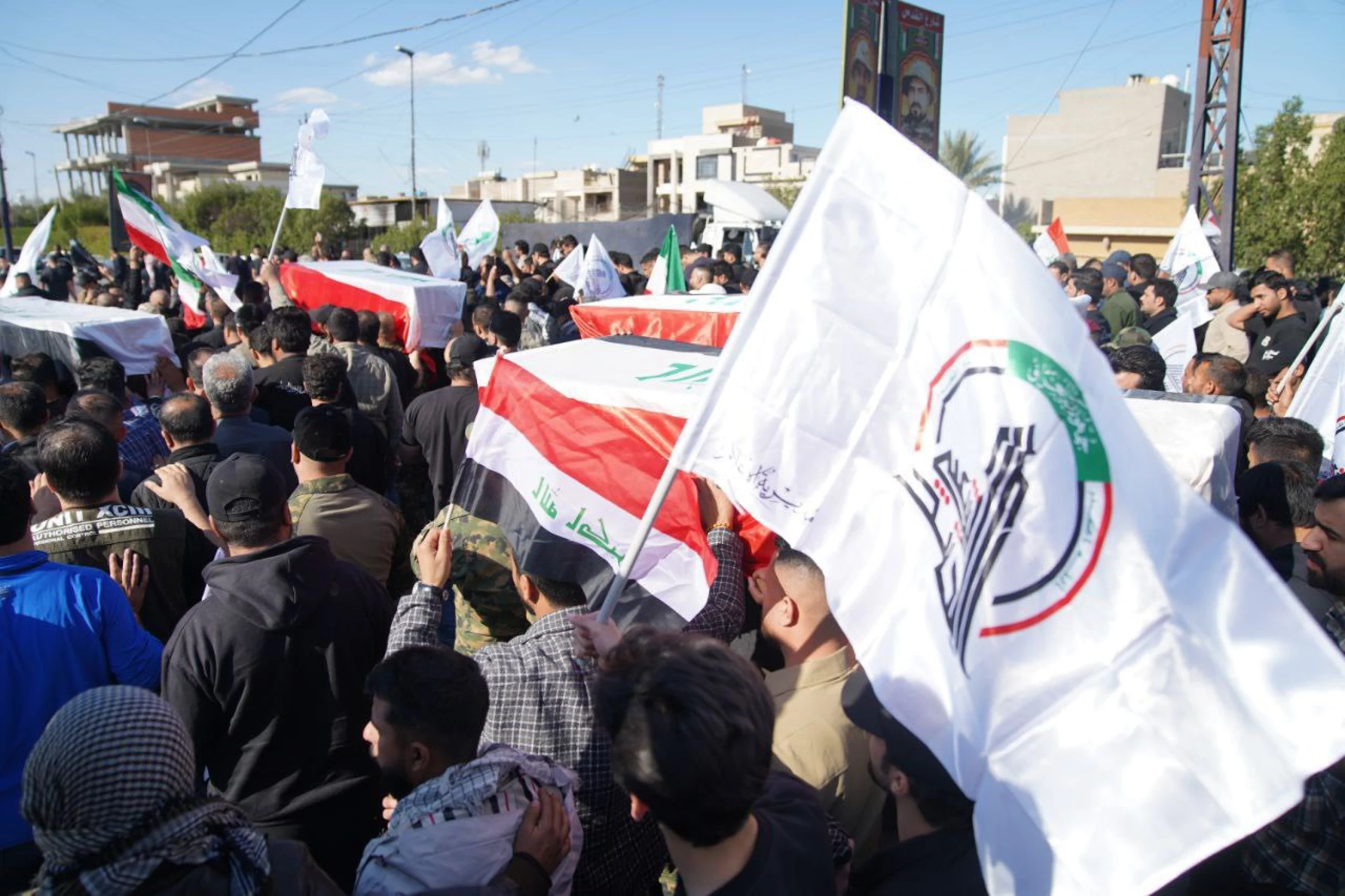
The PMF, or Hashd al-Shaabi, is a network of Iraqi armed groups that was founded by former Prime Minister Nouri al-Maliki and organized following a fatwa - or religious call - from Iraq’s highest Shiite authority, Grand Ayatollah Ali al-Sistani, in 2014 to repel the lightning advance of ISIS in Iraq.
Although the PMF has been incorporated into the official Iraqi security apparatus, many of its factions continue to act with impunity and maintain strong ties to Iran. Some of these factions have been responsible for drone and missile strikes on US interests in the region, as well as the Kurdistan Region.
“The armed factions have integrated themselves. It will not have much of an effect because, frankly, the factions are part of the government. It is very difficult now to distinguish between the PMF and the government,” Seloom said.
“This game, the game of having factions outside the PMF but also within the PMF, doesn’t fool anyone who knows Iraq. Its aim was to maintain the power it gained through what is called plausible deniability,” he explained.
According to Seloom, the real actors in Iraq who “make the decision of war or peace” are the ruling political parties with close ties to the armed factions, “but there is a third player, and that is Iran.”
“There are factions within Iraq that have IRGC officers, meaning they don’t take their orders from Baghdad, but directly from Tehran, from the IRGC. This is well-known,” he said, claiming that Iraqi state forces have also carried out unannounced arrests against IRGC officers who were later released.
Iraq has not formally announced the arrest of IRGC officers inside its territory. However, four IRGC advisors were among the fatalities of joint US-Saudi strikes on PMF positions late last month that killed at least 20 PMF members.
The disarmament initiative in Iraq is heavily backed by the US, which has long pushed for those groups – many of whom have attacked American bases in the region – to be disarmed.
While several pro-Iran armed factions have announced their willingness to hand over their weapons and integrate into the state security apparatus, others have expressed skepticism.
On Friday, Iraq’s Security Media Cell affirmed that “there is no turning back” from Baghdad’s policy to restrict weapons to the state, saying the process will ensure a “more stable environment for future generations.”
 Facebook
 LinkedIn
 Telegram
 X
X