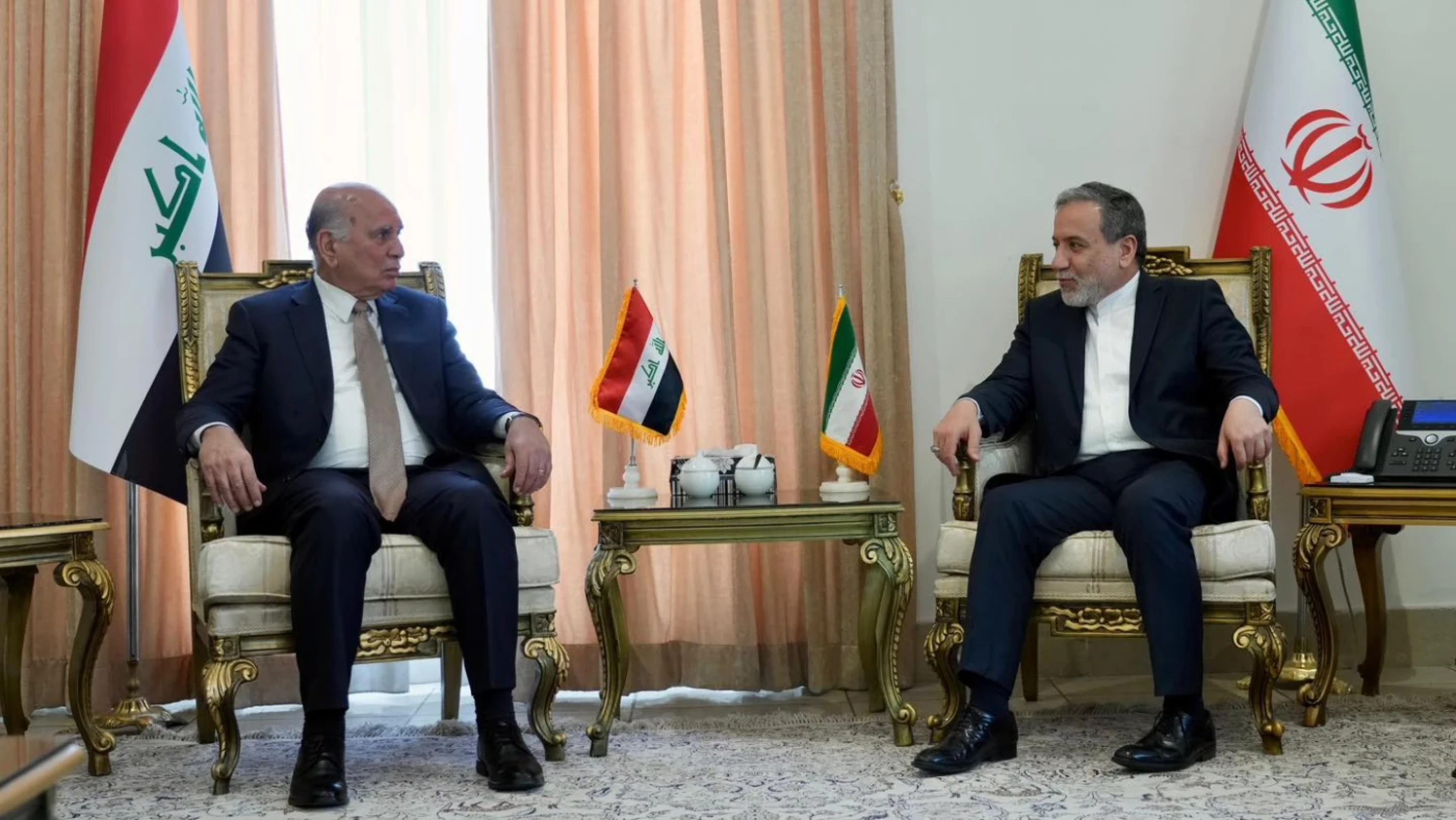
ERBIL, Kurdistan Region of Iraq - Iraqi Foreign Minister Fuad Hussein on Monday held a phone call with his Iranian counterpart Abbas Araghchi in which he demanded clarification on the drone attack on Kurdistan Region Prime Minister Masrour Barzani’s office earlier in the day, which Erbil's counterterrorism forces blamed on Iran.
The Iraqi top diplomat voiced his concern that such an escalation sets a "dangerous precedent that could increase tension and threaten stability in the region," coming after the attack was roundly condemned by Kurdish, Iraqi, and international actors.
During the call, Araghchi “expressed his surprise at the occurrence of such an attack, explaining that he had no information indicating that the attacks were launched from Iranian territory, and stressing that there was no justification for such actions, given the positive and strong relations that bind the Iranian government to the Kurdistan Regional Government,” the Iraqi foreign ministry said.
“Fuad Hussein called on the Iranian side to issue an official statement clarifying the Islamic Republic of Iran's position on the attack and the parties or reasons behind it,” it added.
Kurdish counterterrorism forces said that two Iranian explosive-laden drones targeted the premier’s office and the residence of the Region’s security chief in Erbil province. The attacks caused no casualties and purportedly entailed the use of the advanced Hadid-110 unmanned aerial systems.
“Araghchi expressed his surprise at the attack, explaining that he had no information indicating that the attacks originated from Iranian territory. He emphasized that there was no justification for such actions, given the positive and strong relations between the Iranian government and the Kurdistan Regional Government, particularly with the two main political parties in the region,” the foreign ministry said.
In a subsequent tweet, Araghchi wrote that "nothing justifies" the attack, warning Kurds to be "vigilant against false-flag ploys to sow discord between neighbors."
The Iranian minister referenced Tehran's support for Kurds against former Iraqi dictator Saddam Hussein and in the fight against the Islamic State (ISIS), adding that "we're thankful for security they've provided on our border."
Earlier in the day, Iraqi Prime Minister Ali al-Zaidi ordered the formation of an investigative committee to uncover the details of the drone attack.
Iran and Iran-backed armed groups have claimed previous attacks that targeted US interests in the Kurdistan Region as well as vital infrastructure, including oil and gas facilities and residences of the Region’s leaders.
Since assuming office, Zaidi has sought to clamp down on violations of Iraqi sovereignty, coming as the country has been repeatedly targeted by Iranian strikes on US military bases and Kurdish opposition groups, as well as US, Israeli, and Saudi strikes on pro-Iran Iraqi militias.
President Masoud Barzani said in late March that his residence was targeted five times, adding that he "remained silent to avoid provoking public anxiety and anger."
Kurdish security forces have also been the subject of attacks. In late March, six Kurdish Peshmerga soldiers were killed and 30 others injured in an Iranian ballistic missile attack in Erbil’s Soran administration.
Updated at 21:48 with Araghchi tweet
 Facebook
 LinkedIn
 Telegram
 X
X