BAGHDAD, Iraq – Iraq Prime Minister Ali al-Zaidi is directly supervising the investigation into the recent drone attack on Kurdistan Region Prime Minister Masrour Barzani’s office as it is “violation” against the country’s sovereignty, said the Iraqi government spokesperson.
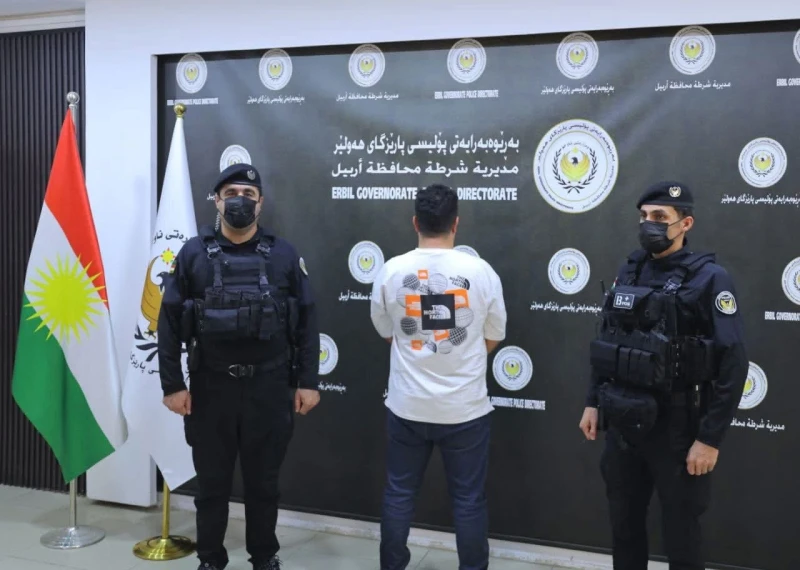
Kurdish counterterrorism forces on Monday said that two Iranian explosive-laden drones targeted Prime Minister Barzani’s office and the residence of the Region’s Security and Intelligence (Parastin) chief in Erbil province. The attacks caused no casualties and purportedly entailed the use of the advanced Hadid-110 unmanned aerial systems.
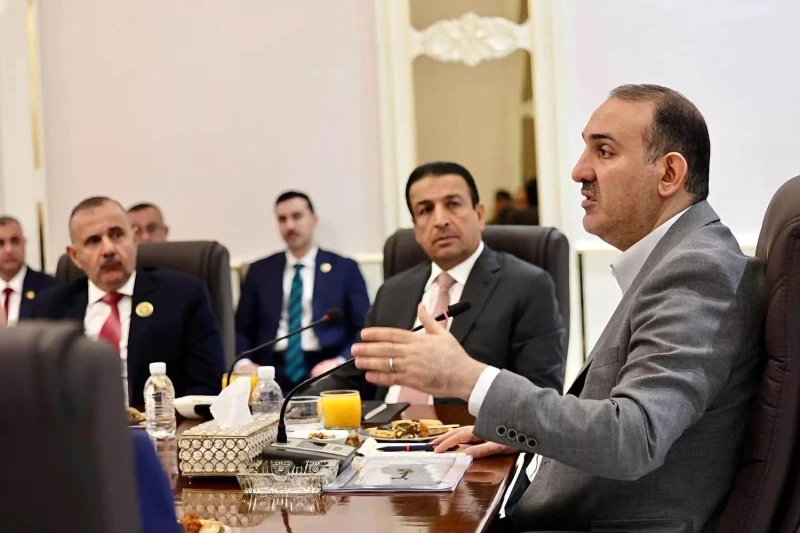
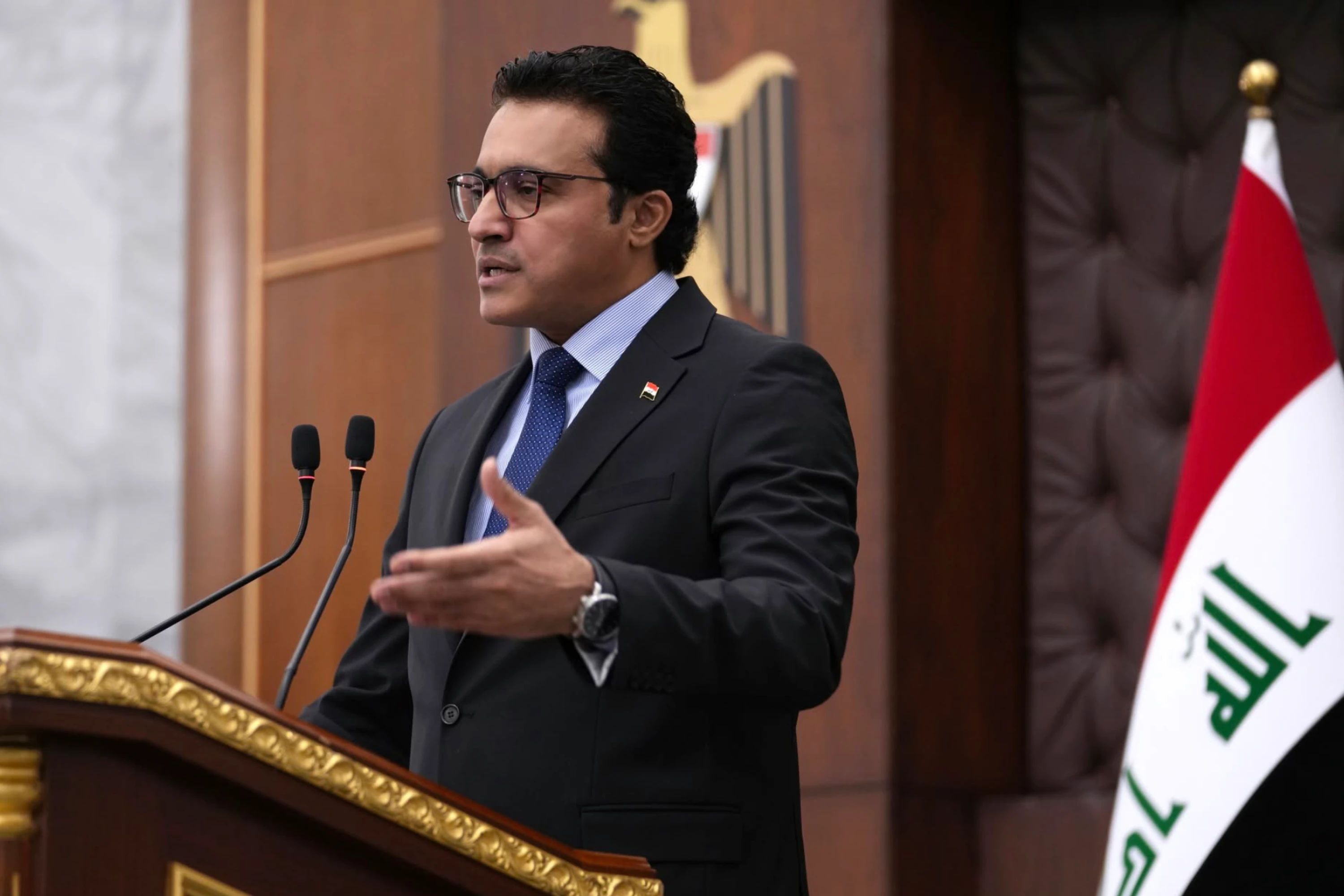
In an exclusive interview on Tuesday, Iraqi government spokesperson Haider al-Aboudi reiterated Baghdad’s condemnation of the attack, adding that an official probe has been launched to determine the causes and perpetrators.
“The statement issued yesterday by the Prime Minister, Mr. Ali Faleh al-Zaidi, describing the incident as a violation and ordering an investigation to determine the course of this violation and the parties behind it, undoubtedly reflects the unprecedented tension and instability in the region today due to the war. Iraq is at the heart of this equation,” said Aboudi.
“All political forces that placed their trust in the Iraqi government, through a ministerial program that received the confidence of the Iraqi parliament, have committed to the government's principled and unwavering stance that it will not be part of the conflict and will not allow Iraq to become an arena for settling scores. Iraq remains far removed from the axes of conflict.”
“What happened yesterday was indeed a violation, and it is condemned. Likewise, any attack that infringes upon Iraqi sovereignty in any part of Iraqi territory receives the same attention and follow-up to determine its causes and those behind it,” the spokesperson noted.
In a statement on Monday, Zaidi condemned the attack and ordered the formation of an investigative committee to ascertain details regarding the strikes.
“We have now begun the investigation, and we must await its results. The statement clearly indicated that these results will be announced to the public, as this matter is not open to compromise. This pertains to the sovereignty of the Iraqi state, and therefore, this file, like other security files in this complex situation, is under the direct supervision and follow-up of the Prime Minister,” said Aboudi.
Iraqi Foreign Minister Fuad Hussein on Monday called on Iran to “issue an official statement clarifying the Islamic Republic of Iran's position on the attack and the parties or reasons behind it,” during a phone call with his Iranian counterpart Abbas Araghchi.
Araghchi said that “nothing justifies the reckless attack,” denying any involvement and suggesting the attack was a false-flag operation.
Attacks on Kurdistan’s oil fields
The Kurdistan Region, despite maintaining a neutral stance, has come under hundreds of drone and missile attacks targeting civilian infrastructure, energy facilities, and Peshmerga forces throughout the US-Iran conflict that began in late February.
The frequent attacks have led many of the Region’s main foreign oil and gas producers to halt production, citing continued security risks.
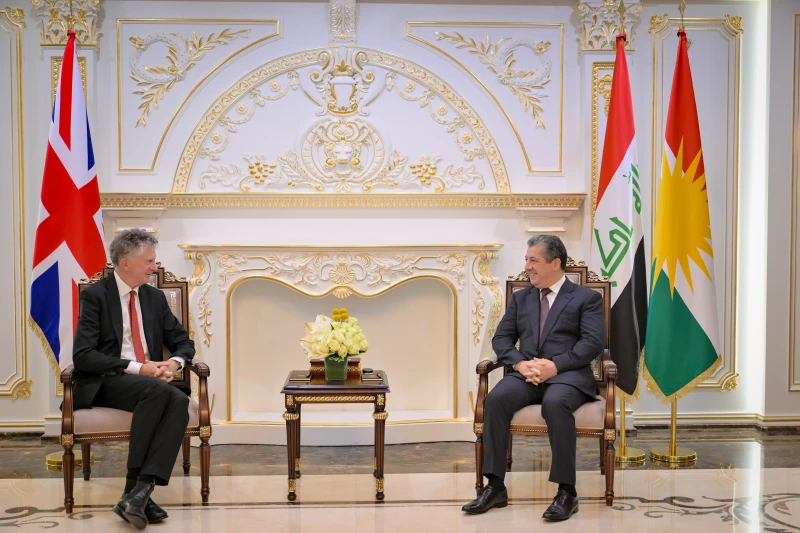
Aboudi stated that the Iraqi premier has met with representatives of oil companies operating in the Kurdistan Region, giving them “state guarantees” that Baghdad remains committed to strengthening Iraqi sovereignty and “does not allow anyone to act on its behalf in this field.”
“The state is the guarantor because these companies, when they invest and operate within the Iraqi state's environment, whether in the Kurdistan Region or outside it, represent a part of the Iraqi economy, and protecting the economy is the responsibility of the Iraqi state and its relevant institutions,” the spokesperson stated.
Erbil-Baghdad outsanding issues
Budget and salaries, along with domestic revenues and oil exports, have been a focal point of contention between Erbil and Baghdad for years, with the former criticizing the latter for repeatedly failing to hand over funds for the Kurdistan Region's civil servants' entitlements on time.
Additionally, Since the start of the year, the Iraqi government has placed a dollar embargo on the Kurdistan Region’s businessmen, withholding US dollar access from Kurdish traders at the official exchange rate set by the Central Bank of Iraq (CBI), citing what they regard as Erbil’s non-compliance with the ASYCUDA international customs system.
The Iraqi government spokesperson said Zaidi is seeking “sustainable” solutions to these problems, adding that there is “almost daily” contact between the Iraqi premier and the Kurdistan Region’s leadership, including Prime Minister Barzani, “to discuss shared issues and to maximize the scope of the public interest that serves the Iraqi people, whether in the Kurdistan Region or in other provinces.”
“Yes, there are outstanding political issues, and these are under discussion. However, the convergence of viewpoints and the high sense of responsibility among all parties, especially at this stage, makes resolving problems a significant priority on the ground. The Region’s leaders attend the meetings of the State Administration Coalition and are actively involved in proposing solutions,” said Aboudi.
Iraq has been facing a worsening financial crisis since the start of the US-Israeli war with Iran, with the closure of the Strait of Hormuz massively cutting off Iraq’s main source of income: oil exports.
The continuation of the war has sparked fears that the current measures the Iraqi government has implemented to make up for the decreased income cannot be seen as viable long-term solutions and that Baghdad will face difficulties paying civil servant salaries over the next few months.
Aboudi said that the government has “a legal obligation” to ensure the provision of salaries for state employees, including those in the Kurdistan Region.
“The Iraqi government assures all Iraqi state employees that their salaries are a priority and are receiving the government's full attention. Indeed, the relevant ministries are working diligently to ensure this, contributing significantly to our economy during these challenging times. Therefore, we affirm that employee salaries are secured in a manner that reassures the Iraqi people,” the cabinet spokesperson added.
Disarming militias and ending the coalition’s mandate
Under Zaidi’s leadership, the Iraqi government has launched a renewed drive to disarm militias and restrict weapons to state control, vowing to complete all disarmament by the end of September; a decision which has drawn the ire of pro-Iran armed factions in the country.
Coinciding with the deadline set by the government to disarm all non-state actors, the mandate of the US-led global coalition forces is also set to expire on September 30, and both Baghdad and Washington have stressed their commitment to abide by that deadline.
Aboudi said that the September 30 deadline has been set since 2024, asserting that state armed forces, both in federal Iraq and the Kurdistan Region, are at a “high level of readiness,” removing any justifaction for the presence of non-Iraqi forces.
“What comes after September 30th represents a natural return to the state's constitutional framework. We are not striving to create new foundations for the Iraqi state. Every country in the world is based on its constitutional provisions, and Iraq has had a constitution since 2005, which stipulates that Iraq is a fully sovereign state. No military or armed formation is permitted outside the framework of the Iraqi armed forces,” he noted.
In the face the lightning advance of the Islamic State (ISIS) in Iraq, in June 2014, Iraq’s top Shiite authority Ayatollah Ali al-Sistani issued a historic fatwa, calling on all able-bodied Iraqis to volunteer and join the security forces in combating the extremist threat.
Many of the groups that were formed following Sistani’s call have since been been officially incorporated into the Iraqi armed forces as part of the Popular Mobilization Forces (PMF), enjoying similar privileges as the Iraqi army.
Many of the Iran-aligned groups continuously cite the fatwa for their legitimacy.
Aboudi claimed that even the groups that have rejected the calls for disarmament are doing so based on their declared concern for Iraqi sovereignty. “This is a positive thing because everyone shares the goal of preserving and strengthening the state.”
The spokesperson noted that the government’s bid to restrict weapons to the state is not simply a matter of weapons being under the the control of official state institutions, as many of the factions have been formally incorporated into the state’s security apparatus, but rather to unify security decision-making.
“Even the groups covered by this decision fall under the umbrella of the PMF, which is part of the Iraqi security forces and receives its salaries from the Iraqi state… However, the key point, or the philosophy behind restricting weapons, is to unify security decision-making. There is no political or other directive to control these weapons except by order of the Commander-in-Chief of the Armed Forces.”
“Therefore, September 30th will be a date that all Iraqis will cherish, as it represents a serious turning point towards returning to the framework of the state and restoring its independence as stipulated in the constitution,” Aboudi added.
 Facebook
 LinkedIn
 Telegram
 X
X