ERBIL, Kurdistan Region of Iraq – The US Treasury announced Monday that Syria had been removed from the United States’ State Sponsors of Terrorism list after nearly five decades of being blacklisted, coming as Washington continues warming to the new Damascus administration
“The determination regarding Syria as a State Sponsor of Terrorism was rescinded,” the US Department of the Treasury said, adding that “Syria is no longer subject to prohibitions under the Terrorism List Governments Sanctions Regulations.”
"Today's action will help foster additional investment in Syria to promote political and economic stability," Treasury Secretary Scott Bessent said in a statement.
Syrian Fianance Minister Muhammad Yasser Bernia hailed the move as a "major and historic success for Syrian diplomacy," adding that "this represents a significant and final step in strengthening Syria's connection to the global economic and financial system, attracting modern investments and technologies, and supporting development opportunities."
“Hay'at Tahrir al-Sham [HTS] was concurrently removed as a Specially Designated Global Terrorist organization from the SDN List,” the Treasury statement added.
Syrian rebel groups, spearheaded by the Ahmed al-Sharaa-led HTS, launched operation “Deterrence of Aggression” on November 27, 2024, seizing the capital Damascus after a 12-day blitz offensive, and ending Assad’s 24-year reign.
In the wake of Assad’s fall, HTS and affiliated groups dissolved and its membership took up the reins of governance in Syria, forming a transitional government led by Sharaa as the country’s interim president.
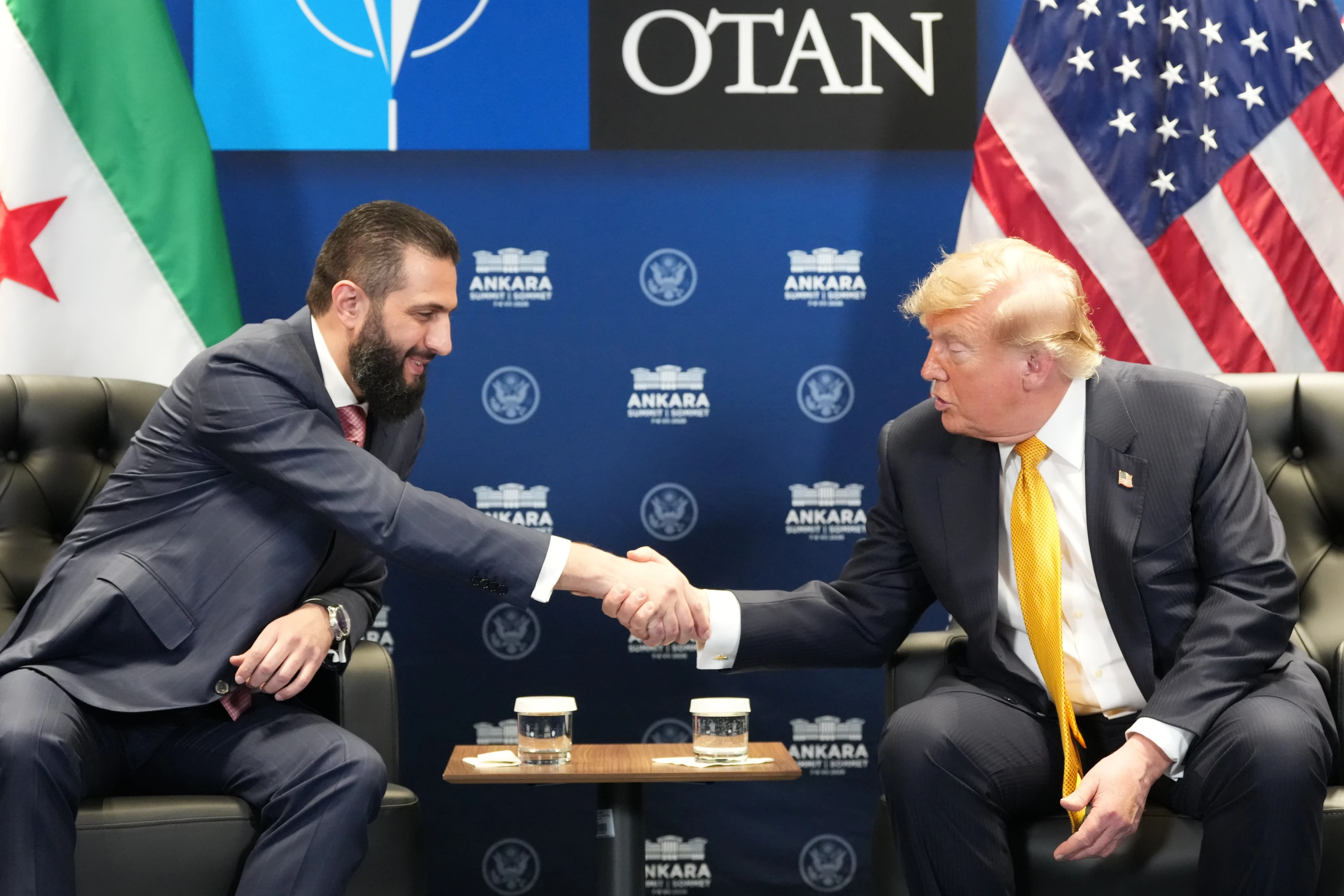
In November, Washington removed Sharaa from its list of Specially Designated Global Terrorists ahead of his visit to the White House. Syria also became the 90th partner to join the international coalition to defeat ISIS that month.
The US also temporarily suspended key Caesar Act sanctions on Damascus, a sanctions system that targeted the Syrian government and those involved in business with Damascus, cutting the country off from the global economy. The law was enacted during the rule of the deposed Baathist regime under Bashar al-Assad, while Syria was designated as a state sponspor of terror since the reign of Hafez al-Assad, the father of Bashar.
Despite criticism of Sharaa’s vision for a centralized Syria, fear of his jihadist past, and concerns over the marginalization of minorities, his government has received strong support from the US and the West.
In 2025, the UK and Canada removed HTS from their lists of terrorist organizations and vowed to cooperate with Damascus following what they described as positive steps by Syria’s new government after the fall of Bashar al-Assad.
Up until December 2024, Sharaa, then going by Abu Mohammad al-Jolani was on the US’ “most wanted” list with a $10 million bounty for his arrest.
Sharaa joined al-Qaeda in Iraq in 2003, just weeks before the American invasion of Iraq, and quickly rose through the group’s ranks. He was arrested by US forces in the country in 2006 and imprisoned for over five years.
His release in 2011 coincided with the start of the Syrian civil war, and he would go on to form Jabhat al-Nusra, a Jihadist front affiliated with al-Qaeda. fighting against the Assad government during the Syrian civil war. The HTS was formed in 2017 as a result of a merger of several opposition factions.
 Facebook
 LinkedIn
 Telegram
 X
X