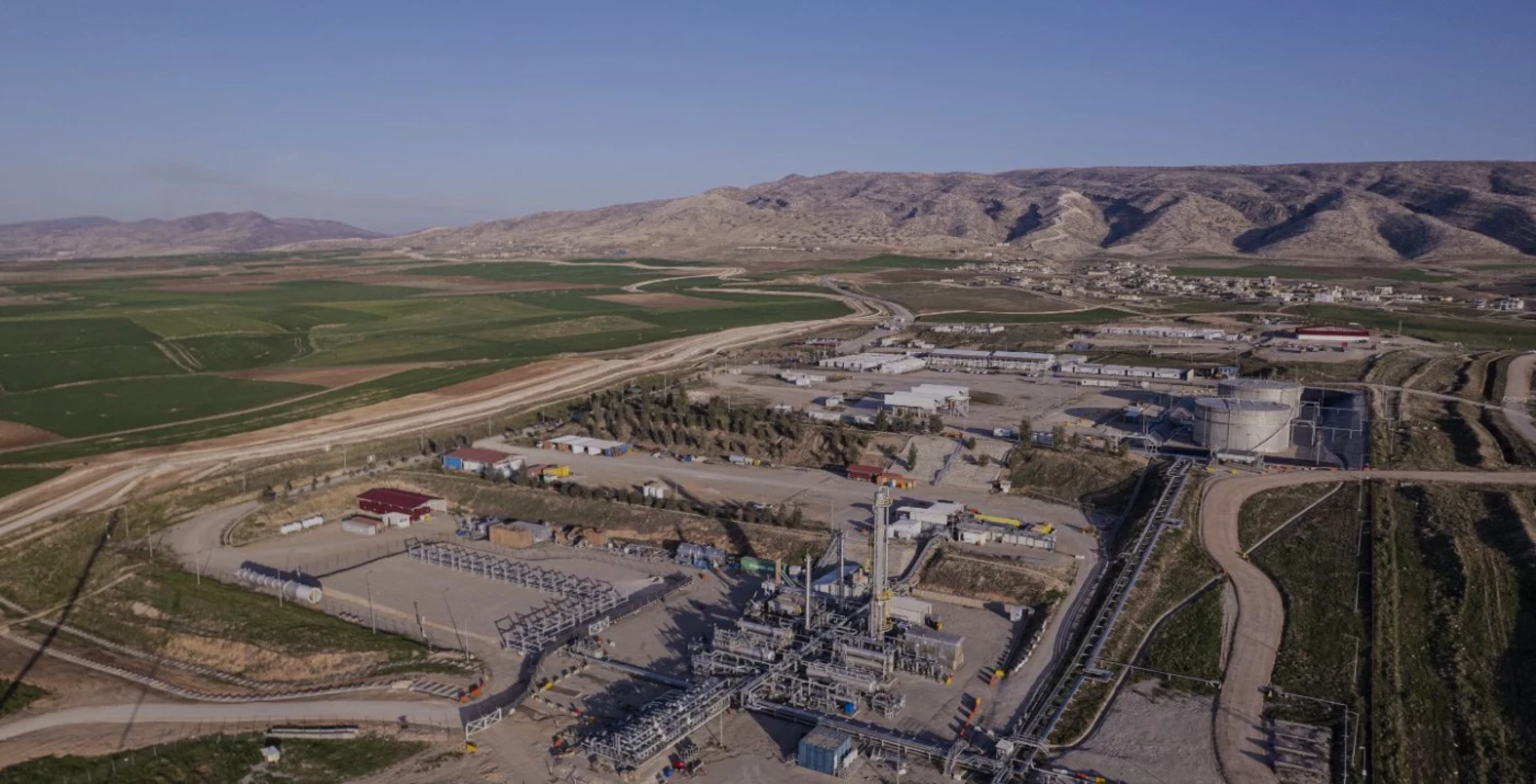
ERBIL, Kurdistan Region of Iraq – The UK-listed Gulf Keystone reported $82.8 million in half-year revenue, despite production falling two-thirds from the same period last year, as its production in the Kurdistan Region’s Sheikhan field continues to ramp up following shutdowns linked to the regional conflict.
“We are pleased to have recently restarted production and exports following the extension of the tripartite interim export agreements, with volumes continuing to ramp up to prior levels,” said Jon Harris, Gulf Keystone’s chief executive officer, in the company’s half-year results report.
Despite security concerns from the US-Iran war and more than 1,000 missiles and drones targeting the Kurdistan Region and its energy infrastructure, the company said “the interim export agreements have worked effectively, with improved remuneration relative to local sales and consistent payments without delay following crude liftings.”
A tripartite deal between Erbil, Baghdad and international oil companies (IOCs) has also been extended through January “to enable the negotiation of longer-term agreements for export sales at international prices,” according to the report.
Gulf Keystone reported average gross production of 14,600 barrels per day in the first six months of 2026, down from 44,100 bpd during the same period in 2025.
Despite the production disruptions, Gulf Keystone reported $82.8 million in revenue based on entitlement invoices in the first half of 2026, broadly unchanged from $83.1 million during the same period last year. The company attributed the result in part to “higher realised prices” of $83.5 per barrel, compared with $27.8 per barrel in the first half of 2025.
Production at the Sheikhan field resumed on August 16 after a second precautionary shutdown that began July 19. The company said production had previously resumed on June 24 following a first shutdown that lasted from late February because of the US-Iran war, eventually exceeding 45,000 bpd.
Gulf Keystone said production is continuing to ramp up, with “well activities underway” to bring additional volumes online and return production to “prior production levels soon.”
Kurdistan Regional Government (KRG) spokesperson Peshawa Hawrami said in a statement in June that several major energy companies had resumed production at oil fields across the Kurdistan Region after completing repairs to damage caused by airstrikes during the recent Middle East war, including Gulf Keystone.
At the time, Erbil and Baghdad reached an agreement aimed at protecting oil companies and ending attacks targeting the Region’s energy infrastructure, following a high-level Iraqi security delegation’s visit to Erbil and meetings with senior Kurdish leaders at the direction of Prime Minister Ali al-Zaidi.
Looking ahead, Gulf Keystone said its ability to maintain stable production and exports remains “subject to the security environment.”
The company said it is also engaging with the KRG Ministry of Natural Resources regarding the Sheikhan field and “preparing for a potential return to field development and drilling in 2027,” subject to “receiving full” Production Sharing Contract (PSC) “entitlement for export sales.”
The Kurdistan Region’s energy infrastructure has been targeted by drone strikes from Iran and its allied militias for several years, causing a significant decline in the Region’s oil production and export capacity.
Before the war began in late February, the Region produced around 250,000 barrels per day, with 50,000 barrels allocated for domestic consumption and the remainder transferred to Iraq’s State Organization for Marketing of Oil (SOMO) for export. Before 2023, the Kurdistan Region produced around 400,000 barrels per day.
 Facebook
 LinkedIn
 Telegram
 X
X